The 2000s File Feature
Girls In Their Summer Clothes
"Girls in Their Summer Clothes" — Bruce Springsteen The Boss at the Corner of Memory and Music There is something almost aching in the way that Bruce Springs…
01 The Story
"Girls in Their Summer Clothes" — Bruce Springsteen
The Boss at the Corner of Memory and Music
There is something almost aching in the way that Bruce Springsteen can transform an ordinary street scene into something enormous. By 2007, when he was recording Magic for Columbia Records, Springsteen had been doing this for more than three decades. The album arrived at a moment when his cultural standing was arguably as high as it had ever been, sustained by continued touring with the E Street Band and a series of critically respected records through the 2000s. Among the tracks on Magic, one stood out for a particular quality of bittersweet observation: "Girls in Their Summer Clothes."
The song was written by Springsteen alone and produced by Brendan O'Brien, who had worked with the artist on his previous two studio albums, The Rising and Devils & Dust. O'Brien's production sensibility suited the material precisely, finding a way to give the track a lush sonic warmth while keeping the emotional center clear and unobstructed. The arrangement draws on the classic Wall of Sound approach, guitars and keyboards layered with melodic care, but the scale never overwhelms the intimate emotional core of the lyric.
The Sound of Late Summer
What Springsteen achieves on "Girls in Their Summer Clothes" is a specific sonic atmosphere, something that evokes the end of a season, the last warm days before autumn closes in, viewed from a position of solitude. The song's narrator watches the street from what seems to be a fixed vantage point, the world moving past while he remains still. The production supports this dynamic beautifully: a rolling, almost circular melodic structure, strings entering at key moments, the E Street Band providing an ensemble warmth that contrasts with the narrator's loneliness.
Danny Federici's organ contributes a quietly luminous texture to the arrangement, one of his final recorded contributions before his death from cancer in April 2008. That biographical fact gives the recording an additional layer of poignancy for listeners who know it, though the song earns its emotional weight entirely on its own terms without such external context.
One Week on the Hot 100
The song's chart history is brief but notable. It debuted on the Billboard Hot 100 on February 2, 2008, entering at number 95 and spending just one week on the chart. This single-week appearance at number 95 reflected the commercial dynamics of rock radio in 2008, where traditional album-oriented rock had a limited footprint on the all-genre Hot 100. It was not a measure of the song's artistic quality, which critics recognized almost unanimously as exceptional. Magic itself reached number one on the Billboard 200, and several reviews cited "Girls in Their Summer Clothes" as one of the album's finest moments.
The song won the Grammy Award for Best Rock Song at the 51st Grammy Awards in 2009, a recognition that aligned with critical consensus about its quality. The gap between its chart performance and its critical reception illustrates how imperfect the Hot 100 was as a measure of artistic achievement in the streaming-transitional era of 2008.
Springsteen and the Craft of the Everyday
Springsteen's career has been built on his ability to find the universal in the particular, to take the details of working-class American life and render them in language that resonates far beyond their geographic and social specificity. "Girls in Their Summer Clothes" operates in this mode. The street scene it describes is almost aggressively ordinary: people passing, lights going on, the ordinary movements of an ordinary evening. The emotional weight comes entirely from the position of the narrator within this scene, someone who has been left behind, watching the vitality of others from a point of stillness.
The E Street Band, performing with the loose, warm precision that decades of collaboration produce, gives the track a fullness that would be impossible with session musicians who did not share its history. The performance communicates something beyond technical skill; it communicates the trust between musicians who know each other completely.
A Song That Grows With Time
For listeners who encountered "Girls in Their Summer Clothes" in 2007 and 2008, the song has matured over the years into something richer. The knowledge of Federici's illness and death, the continued trajectory of Springsteen's career, the way that late-summer feeling the track evokes becomes more precious as time passes: all of these things deepen the listening experience without being required for it. The song worked on first listen and works even better now. Find a quiet evening, find the right volume, and let Springsteen show you what it means to watch the world go by.
"Girls in Their Summer Clothes" — Bruce Springsteen's singular moment on the 2000s charts.
02 Song Meaning
"Girls in Their Summer Clothes" — Meaning and Legacy
Solitude in the Crowd
The emotional core of "Girls in Their Summer Clothes" is not, despite what its title might suggest, primarily about the women it describes. The song is about the narrator who watches them, someone positioned outside the flow of life on a warm evening, present but not participating. Springsteen constructs the scene with the eye of a filmmaker: specific street details, the quality of the light, the movement of people through the frame. The narrator is the fixed point around which everything else moves, and that immobility is the emotional subject of the song.
This is one of popular music's recurring themes, the individual who watches rather than participates, who feels the world's beauty and vitality from a position of isolation. What Springsteen brings to it is a specificity and a warmth that prevents the isolation from curdling into self-pity. The narrator does not resent what he sees. He finds it beautiful and is simply, quietly, not part of it. That combination of admiration and distance is one of the more nuanced emotional positions a pop song has ever attempted to hold.
Summer as Symbol and Season
Summer in American cultural imagination carries a weight that extends well beyond weather. It is the season of freedom, of possibility, of youth operating at its most visible and energetic. In Springsteen's work, seasons function as emotional and social markers: winter is hardship and endurance, summer is something to aspire to, something that belongs to those who are young and unencumbered. The title's specification of "summer clothes" is precise and meaningful. The lightness of those clothes represents a kind of freedom the narrator does not share, a ease with the world and with the body that requires a confidence he does not currently possess.
By 2007, Springsteen was in his late fifties, and the song carries within it an awareness of age, of the observer's relationship to a vitality that is no longer quite his. This is not complaint. The song holds no bitterness. The observation is made with something closer to gratitude for being present to witness the scene, even from a distance.
The Working-Class American Landscape
The song's setting draws on the specific geography that Springsteen has always inhabited in his work: the American small town or suburb, the corner of a street where a bar or diner marks the passage of the evening, the kind of place that looks ordinary from outside but contains entire emotional worlds for those who pass through it. This geographic specificity is central to Springsteen's aesthetic and to the meaning of this particular song. The street is not symbolic. It is real, or as close to real as a song can make it, and the emotions it contains are rooted in that reality.
Grammy Recognition and Critical Legacy
The Grammy Award for Best Rock Song that the track received at the 2009 ceremony confirmed what critics had heard immediately on Magic's release. Rolling Stone, among others, listed the track among the album's peaks, and retrospective assessments of Springsteen's late-period work consistently place "Girls in Their Summer Clothes" among his finest compositions. The Grammy recognition also functioned as a corrective to its modest Hot 100 chart position, signaling that the industry's peer-recognition apparatus understood the song's value even if the pop chart had not fully registered it.
The biographical shadow of Danny Federici's final recording contributions, present on this track, gives the song an additional gravity that grows rather than diminishes with time. Music that captures a specific moment in the lives of its makers, particularly a last moment, tends to acquire layers of meaning that the original creation could not have foreseen. "Girls in Their Summer Clothes" is that kind of recording: beautiful on its own terms and enriched by what surrounded it.
→ More from Bruce Springsteen
View all Bruce Springsteen hits →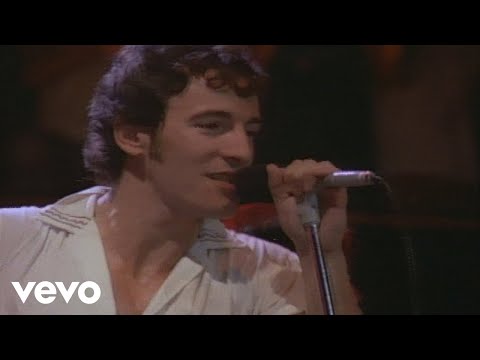




→ More from the 2000s File
View all 2000s hits →




Keep digging