The 2000s File Feature
It's Getting Better All The Time
It's Getting Better All The Time: Brooks and Dunn's Country Number One "It's Getting Better All the Time" was released in 2005 on Arista Nashville as a singl…
01 The Story
It's Getting Better All The Time: Brooks and Dunn's Country Number One
"It's Getting Better All the Time" was released in 2005 on Arista Nashville as a single from Brooks and Dunn, the celebrated duo of Kix Brooks and Ronnie Dunn who had dominated country music since their debut in 1991. The song reached number one on the Billboard Hot Country Songs chart, adding to one of the most impressive charts records in country music history for a duo. By the time the song was released, Brooks and Dunn had accumulated an extraordinary number of chart-toppers and industry honors that placed them among the most decorated acts in the genre's commercial history.
Kix Brooks, born Leon Eric Brooks III in Shreveport, Louisiana, in 1955, and Ronnie Dunn, born Michael Ronnie Dunn in Coleman, Texas, in 1953, had formed their partnership under the direction of producer and label executive Tim DuBois and had been signed to Arista Nashville at its launch in 1991. Their debut single "Brand New Man" immediately announced the arrival of a major new act, and the years that followed confirmed the original impression. Through the 1990s and 2000s, Brooks and Dunn released a steady stream of hits that combined honky-tonk energy with polished production values, occupying a space in country music that was both commercially viable and artistically credible.
The duo's approach to country music drew on a range of influences, from the honky-tonk tradition of Merle Haggard and Hank Williams Jr. through the uptempo country rock of the 1980s. Ronnie Dunn's voice, a powerful baritone with significant range and emotional expressiveness, was the primary sonic signature of the project, while Kix Brooks's songwriting contributions and his own vocal work as a duet partner gave the recordings their collaborative character. The combination proved both commercially and aesthetically successful across an extended run that few acts in any genre could match.
"It's Getting Better All the Time" fit within the tradition of optimistic relationship songs that had been a recurring presence in Brooks and Dunn's catalog alongside their more dramatic honky-tonk material. The title phrase expressed a forward-looking confidence about the trajectory of a romantic partnership, a sense that time and commitment had produced something richer than the relationship's beginning had promised. This was a perspective that resonated with an audience that had grown up with the duo and was itself in various stages of long-term partnership.
The production on the track was characteristically polished, reflecting the standard of Arista Nashville's work with the duo across their career. The label had invested significantly in building Brooks and Dunn's commercial profile from their earliest releases, and the production infrastructure they had access to was among the best in Nashville. The sound balanced the duo's roots-oriented instincts with the radio-friendly clarity that commercial country success in the mid-2000s required.
By 2005, Brooks and Dunn had won the Country Music Association's Duo of the Year award a remarkable number of consecutive times, a streak that had become one of the more discussed running stories in country music coverage. The consistency of this recognition reflected both the genuine quality of their work and the loyalty of an audience that had made them one of the format's most reliable commercial performers over more than a decade.
The mid-2000s in country music were defined by a range of sounds and approaches, from the neo-traditional leanings of artists like Brad Paisley and Dierks Bentley to the more pop-inflected work of artists seeking crossover appeal. Brooks and Dunn occupied a position in this landscape that was anchored in established country values while remaining current enough in production to compete on commercial radio. "It's Getting Better All the Time" demonstrated their ability to operate in this space effectively, combining the sonic markers of their established identity with the qualities that radio required in the contemporary moment.
The song's commercial success was part of the final chapter of Brooks and Dunn's recording career as a duo. They announced their decision to stop recording together as a duo in 2009, and a farewell tour followed. Their dissolution came not from commercial failure but from a mutual decision that the partnership had run its natural course, a relatively rare and dignified conclusion for an act of their stature. The subsequent years saw both artists pursue solo projects, and they reunited periodically for performances that demonstrated the affection their audience retained for the duo's catalog.
Looking back at "It's Getting Better All the Time" from the vantage point of their complete catalog, the song occupies a position in the closing years of their peak commercial output, part of a final period of strong chart performance that confirmed the durability of their audience relationship even as the duo approached their announced conclusion. The chart success of the single was consistent with their historic performance and suggested that, at least commercially, things were indeed continuing to improve up to the moment they chose to step back.
Brooks and Dunn were inducted into the Country Music Hall of Fame in 2019, with the honor reflecting a career whose scale and consistency placed them among the defining acts in the genre's second half century. "It's Getting Better All the Time" was among the recordings that contributed to that legacy, a solid example of what the duo did consistently well across their extended recording career on Arista Nashville.
02 Song Meaning
Themes and Meaning in "It's Getting Better All The Time" by Brooks and Dunn
"It's Getting Better All the Time" belongs to a category of relationship song that country music has returned to across its history: the celebration of sustained partnership as a source of ongoing revelation rather than settled comfort. The premise of the lyric is that the passage of time in a committed relationship produces not diminishment but deepening, that the qualities that made the relationship valuable at its beginning have continued to develop and that the present moment is, in fact, the best moment yet. This is an optimistic premise that resists the more dramatic narrative conventions of much country music, which has historically been more drawn to the pain of loss or betrayal than to the quieter satisfactions of endurance.
The progressive structure implied by the title is central to the song's emotional argument. "Getting better" suggests a direction rather than a state, an ongoing process rather than a plateau. This framing keeps the lyric from feeling complacent or self-satisfied, because the improvement described is not completed but continuing. The couple in the song is still on a journey that is going well, not one that has arrived at a final destination. This distinction matters for the emotional register of the song, giving it a quality of active appreciation rather than passive contentment.
Brooks and Dunn's catalog had included both uptempo honky-tonk celebrations and emotionally complex narrative songs, and "It's Getting Better All the Time" sat at the more celebratory end of that spectrum. The duo's ability to inhabit different emotional registers across their discography gave any single track a context that shaped how it was received by long-term listeners, and this song registered as a deliberate tonal choice rather than a default position. The duo was capable of darkness and complexity, and their choice of sustained optimism here was therefore meaningful.
Ronnie Dunn's vocal performance was the primary carrier of the song's emotional meaning. His voice, which could convey vulnerability and power in roughly equal measure, deployed both qualities in service of the lyric's argument. The warmth of his delivery communicated that the appreciation described in the lyric was genuine rather than performed, that the speaker actually believed the relationship was improving and wanted the listener to share that conviction. In the context of country music, where vocal authenticity is a primary criterion of credibility, this kind of committed delivery was essential to the song's function.
The honky-tonk tradition from which Brooks and Dunn drew had always contained within it a strand of celebratory optimism alongside its more famous strand of heartbreak and loss. The dance-hall origin of much of that tradition meant that music had to be capable of producing joy as well as catharsis, and the celebratory songs in that tradition carried their own kind of emotional weight. "It's Getting Better All the Time" connected to this celebratory strand, using the sonic markers of the tradition to amplify an emotional message that was itself about joy rather than its absence.
In the broader context of mid-2000s country music, the song's straightforward romantic optimism contrasted with a trend toward more elaborate narrative complexity in the format. The era produced a significant number of story-songs with dramatic narrative arcs, and a song that simply celebrated the ongoing improvement of a relationship had a clarity that stood out within that context. Sometimes the simplest emotional statement is the most powerful, and the directness of this song's premise gave it an accessibility that more complicated constructions might have sacrificed.
The song's position in Brooks and Dunn's catalog, coming toward the end of their recording career as a duo, gave it a retrospective resonance that was not available to the original listeners. Knowing that the duo was approaching the end of a partnership that had lasted nearly two decades, the lyric's optimism about the ongoing improvement of a long relationship acquired an additional emotional dimension, a quality of appreciation for something still present but finite. Their own professional relationship, at its best during these final years, was itself an example of two people whose collaborative partnership had gotten better all the time.
→ More from Brooks & Dunn
View all Brooks & Dunn hits →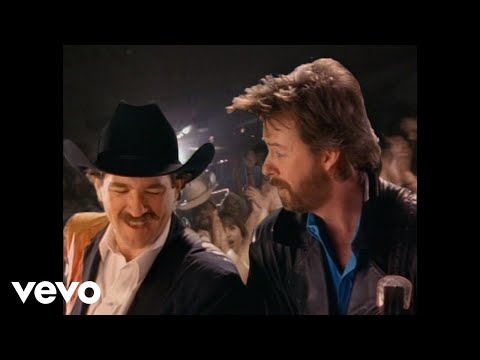


→ More from the 2000s File
View all 2000s hits →



Keep digging