The 2000s File Feature
Lucky
Recording and Release History of "Lucky" by Britney Spears "Lucky" was written by Max Martin, Rami Yacoub, and Alexander Kronlund, and produced by Max Martin…
01 The Story
Recording and Release History of "Lucky" by Britney Spears
"Lucky" was written by Max Martin, Rami Yacoub, and Alexander Kronlund, and produced by Max Martin and Rami for Britney Spears' second studio album, Oops!... I Did It Again, released in May 2000. The song was recorded at Cheiron Studios in Stockholm, Sweden, the facility that had become synonymous with the late-1990s and early-2000s pop sound that Max Martin helped define. Cheiron was the birthplace of much of the polished, hook-driven pop that dominated global charts during that era, and "Lucky" bore all the hallmarks of the studio's meticulous production approach.
The song's arrangement was crafted with deliberate lightness, featuring acoustic guitar elements, gentle percussion, and layered vocal harmonics that gave it a more introspective quality than the dance-oriented material dominating pop radio at the turn of the millennium. This tonal choice was intentional, designed to give Oops!... I Did It Again variety beyond its uptempo tracks and to demonstrate that Britney Spears could carry a mid-tempo narrative piece with emotional credibility. The production balanced accessibility with a slight wistfulness that set the song apart from the brighter, more exuberant singles on the same album.
Spears' vocal delivery on "Lucky" was widely praised as one of the more nuanced performances on the album. The song required a storytelling register rather than the energetic projection needed for dance tracks, and her interpretation met that requirement with a measured, clear-toned approach that suited the material's reflective content. Max Martin's production framing ensured that the vocal sat front and center in the mix, allowing the lyrical narrative to register clearly without distraction from overly busy instrumentation.
Oops!... I Did It Again was one of the best-selling albums of 2000, debuting at number one on the Billboard 200 with first-week sales that set records for a solo female artist at the time. The album's commercial success created an exceptionally competitive environment for its singles, with the title track and "Don't Let Me Be the Last to Know" also vying for radio attention. "Lucky" was released as the third American single from the album and entered the Billboard Hot 100 on August 12, 2000, debuting at position 61.
The single climbed steadily week by week, moving from 61 to 41, then to 28, 26, and eventually reaching its peak of number 23 on September 9, 2000. It spent a total of 11 weeks on the Hot 100. While the chart performance was more modest in the United States than some of the album's other singles, "Lucky" performed significantly stronger in international markets, reaching the top five in the United Kingdom, Australia, Germany, and several other European countries, where it became one of the year's most prominent pop releases.
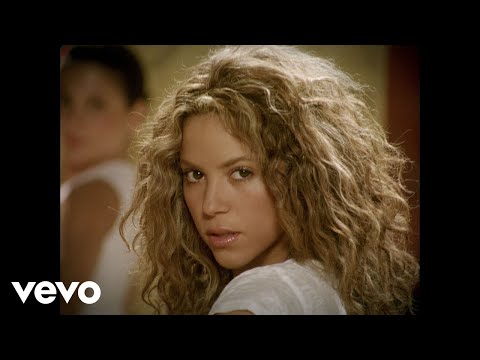
The accompanying music video was directed by Dave Meyers and drew on the song's thematic content to construct a visual narrative set in a classic Hollywood golden age aesthetic. The video featured Spears in dual roles, appearing both as a fictionalized pop star named Lucky and as herself, the real performer behind the public persona. The cinematic production quality and the doubled identity conceit made the video a frequent fixture on MTV and other music video channels throughout the summer and autumn of 2000.
"Lucky" won the Grammy Award for Best Female Pop Vocal Performance at the 43rd Grammy Awards in February 2001, a recognition that affirmed the song's artistic standing beyond its commercial metrics. The Grammy win provided an important counternarrative to the perception of Britney Spears as purely a commercial entertainer, lending critical legitimacy to the work. The song has remained a celebrated entry in her discography and a reference point in discussions of early-2000s pop music and the culture of celebrity scrutiny that surrounded the industry at that time.
02 Song Meaning
Meaning and Themes of "Lucky" by Britney Spears
"Lucky" presents a meditation on the gap between external success and internal fulfillment, framed through the story of a fictional pop star named Lucky who possesses every marker of celebrity triumph while remaining privately unhappy. The song operates on two levels simultaneously: as a conventional narrative about a young woman in Hollywood, and as a self-referential commentary on the experience of fame at a time when Britney Spears herself was one of the most scrutinized public figures on the planet.
The central figure of the song is described as beautiful, talented, and adored by the public, yet her inner life is defined by loneliness and a sense of disconnection. The contrast between the world's perception of her and her own private reality is the song's animating tension. This theme of the isolated celebrity surrounded by admirers but fundamentally alone was a recognizable cultural archetype, but "Lucky" gave it an emotional specificity and musical directness that resonated with broad audiences.
The question repeated throughout the song, asking why the star cries if she is so lucky, distills the song's philosophical inquiry into a single, accessible phrase. It challenges the popular equation of wealth and fame with happiness, suggesting that the currency of celebrity does not automatically translate into the emotional satisfactions that most people seek. Loneliness within success was a theme with deep roots in Hollywood mythology and pop culture, and the song drew on that tradition to construct a critique of the entertainment industry's tendency to reduce individuals to performing images.
Cultural critics have noted the song's particular resonance within the context of Britney Spears' own public life. At the time of its release, she was subject to an extraordinary degree of media scrutiny and public fascination, with every aspect of her personal life examined and speculated upon. Whether or not the songwriters intended "Lucky" as autobiographical commentary, audiences and critics alike interpreted it through the lens of Spears' own experience, lending the narrative an additional layer of meaning that went beyond its surface pop premise.
The Hollywood setting functions as more than mere backdrop. The golden age imagery evoked in the music video and the song's lyrical references to cameras and spotlights frame the entertainment industry itself as the environment in which the character's dilemma plays out. This environment is presented as simultaneously enabling and imprisoning, a space that grants access to extraordinary privilege while demanding constant performance and denying the performer ordinary human privacy. Celebrity as a double-edged condition is the song's most enduring thematic contribution to popular music discourse.
The song's reception over time has deepened considerably beyond its original chart context. As Britney Spears' biography became publicly documented through legal proceedings, journalism, and the broader cultural conversation around the conservatorship she lived under for over a decade, "Lucky" took on additional layers of retrospective significance. The song has been cited repeatedly in that discourse as an early, prescient articulation of the pressures and costs of fame that she was experiencing even at the height of her commercial success. This retrospective recontextualization transformed it from a successful pop single into a document with genuine cultural weight, one that speaks to the human cost of manufactured celebrity with a clarity that grows rather than diminishes with time.
→ More from the 2000s File
View all 2000s hits →



Keep digging