The 2000s File Feature
Don't Make Me
Don't Make Me — Blake Shelton (2007) Blake Shelton had already established himself as a reliable presence on country radio by the mid-2000s, scoring a debut …
01 The Story
Don't Make Me — Blake Shelton (2007)
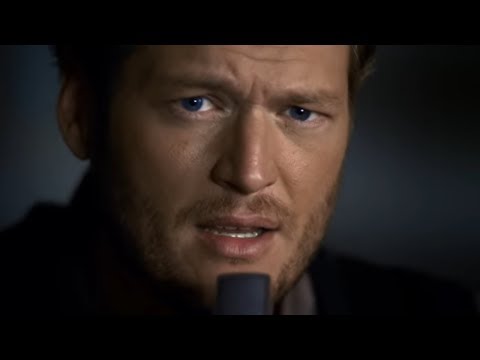
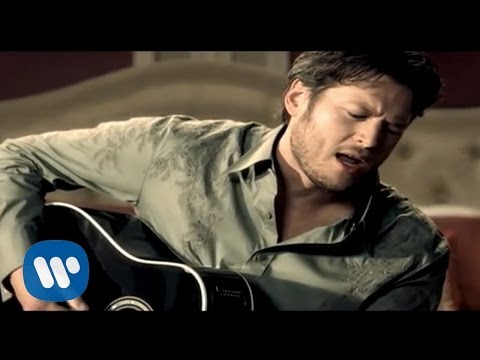
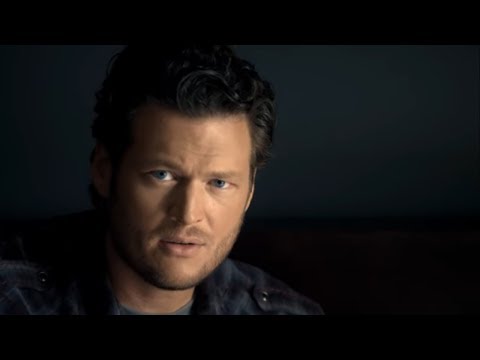
Blake Shelton had already established himself as a reliable presence on country radio by the mid-2000s, scoring a debut number-one with "Austin" in 2001 and building a catalog of radio-friendly singles through the early part of the decade. By 2007, however, he was searching for material that could push him further up the commercial ladder and cement him as a top-tier male vocalist in Nashville's crowded marketplace. "Don't Make Me" became the vehicle that helped him do exactly that.
The song was written by Jason Sellers and Paul Overstreet, two respected Nashville songwriters with deep roots in country music's professional writing community. Overstreet in particular had a long track record of crafting emotionally resonant country material, and the combination of his instincts with Sellers's contemporary sensibility produced a song that felt both timeless and radio-ready. The track appeared on Shelton's album "Pure BS," released in 2007 on Warner Bros. Nashville, which marked something of a creative turning point for the artist as he pursued a harder-edged honky-tonk sound.
Produced by Scott Hendricks, who had worked with Shelton throughout much of his career, the recording leaned on the kind of traditional country production values that Shelton favored: acoustic instruments layered beneath electric guitar textures, a steady rhythm section, and prominent steel guitar coloring that kept the track firmly in country territory even as it reached for mainstream appeal. Shelton's baritone voice, one of the most distinctive in the format, anchored the performance with a combination of frustration and emotional vulnerability that gave the lyric its dramatic weight.
Released as a single in 2007, "Don't Make Me" climbed steadily up the Billboard Hot Country Songs chart, a reflection of both strong radio airplay and the grassroots support Shelton had accumulated across the South and Midwest. The song reached the top ten on the country charts, continuing Shelton's pattern of consistent commercial performance even if it did not match the explosive debut success of "Austin." For an artist building a long-career arc, that kind of sustained radio viability was arguably more valuable than a single breakthrough moment.
The album "Pure BS" itself received positive attention from country music press, with reviewers noting Shelton's confident delivery and the album's willingness to blend traditional and contemporary country production approaches. "Don't Make Me" was frequently cited as one of the album's highlights, a song that showcased Shelton's ability to inhabit an emotionally complex moment without tipping into melodrama. Country radio programmers responded accordingly, giving the track significant rotation across the format's major markets.
Shelton's chart position during this period was noteworthy in the context of a country music landscape that was increasingly divided between the crossover pop-country sound dominating mainstream radio and a traditionalist backlash centered on artists who wanted to preserve acoustic and honky-tonk elements. Shelton navigated this tension skillfully, and "Don't Make Me" exemplified his approach: contemporary enough to compete on mainstream country radio, but rooted enough in traditional sounds to satisfy listeners who felt the format was drifting too far toward pop.
By the time "Don't Make Me" completed its chart run, Shelton had reinforced his reputation as one of country music's most dependable male stars, a performer who could deliver radio hits without sacrificing the vocal character and musical identity that had distinguished him from the beginning of his career. The song would later be overshadowed in the public memory by his run of massive crossover hits in the 2010s and his high-profile celebrity profile as a coach on "The Voice," but within the context of his 2007 catalog it represented a genuine artistic and commercial achievement. Warner Bros. Nashville positioned the single with strong promotional support, and the label's investment paid off in chart performance that kept Shelton's commercial momentum alive through a pivotal period in his career development.
The track also demonstrated the enduring value of skilled professional songwriting in Nashville's music economy. In an era when many artists were being pushed toward more heavily produced, electronic-influenced sounds, "Don't Make Me" proved that a well-constructed song delivered by a committed vocalist could still find a substantial audience on country radio without chasing trend cycles.
02 Song Meaning
The Emotional Stakes of "Don't Make Me"
At its core, "Don't Make Me" is a song about the precarious moment in a romantic relationship when one partner senses the other pulling away and issues what amounts to a desperate plea for the connection to hold. The narrator addresses a lover who appears to be drifting, expressing a raw unwillingness to face the prospect of losing the relationship. The emotional register is one of controlled anguish, the kind of feeling that sits between hope and resignation without fully committing to either state.
What gives the song its particular texture is the way it frames emotional need not as weakness but as a form of honesty. The narrator is not begging in a pathetic sense; rather, the words convey the kind of vulnerable directness that country music has long treated as a masculine virtue, a willingness to say out loud what other genres might leave implicit. Blake Shelton's vocal delivery reinforces this reading, lending the performance a gravity that keeps the sentiment from sliding into sentimentality.
The theme of emotional dependency runs through the lyric without apology. This is a song that takes seriously the idea that people can become genuinely essential to one another, that the prospect of their absence is not merely inconvenient but destabilizing. Country music has returned to this well repeatedly because it speaks to a genuine human experience, the terror of loving someone who might not love you back with equal intensity or commitment.
Songwriters Jason Sellers and Paul Overstreet constructed the lyric so that the stakes escalate across the song's arc without becoming melodramatic. The narrative progression moves from a statement of desire to something closer to a warning, not a threat but an acknowledgment of emotional reality: if the lover leaves, the damage will be profound. This kind of emotional honesty resonated with country music audiences who responded to straightforward expressions of feeling over ironic distance or pop-music gloss.
For Shelton's catalog, "Don't Make Me" fits into a pattern of choosing material that gives him room to demonstrate emotional range alongside his considerable vocal power. His career had been built partly on upbeat, good-time country anthems, but songs like this one revealed a more serious dimension of his artistry, a capacity for inhabiting emotional pain with authenticity. That duality, between the lighthearted and the deeply felt, would remain a consistent feature of his recording output through the following decade.
The song also reflects a Nashville songwriting tradition that prizes craft over novelty, the belief that a well-observed emotional situation, rendered in clear and direct language, will always find an audience because it mirrors real human experience. "Don't Make Me" does not rely on novel metaphors or clever wordplay; its power comes from the directness of its emotional statement and the skill with which Shelton gives that statement voice. In this sense the song is almost classically country, standing in a lineage that runs back through decades of relationship-centered storytelling that has defined the format's emotional identity.
→ More from Blake Shelton
View all Blake Shelton hits →

→ More from the 2000s File
View all 2000s hits →
Keep digging