The 2000s File Feature
One
Adam Lambert's "One": American Idol Stardom and a U2 Cover That Charted on Its Own In the spring of 2009, Adam Lambert was in the midst of one of the most wa…
01 The Story
Adam Lambert's "One": American Idol Stardom and a U2 Cover That Charted on Its Own
In the spring of 2009, Adam Lambert was in the midst of one of the most watched American Idol competitions in the show's history. His performances across the season had demonstrated a vocal range and theatrical intensity that set him apart from previous contestants, and by the time the finale approached, he had become one of the most discussed entertainment figures in the country. The show's practice of releasing contestant recordings as digital singles allowed multiple Lambert performances to enter the Billboard Hot 100 simultaneously, an unusual commercial circumstance that reflected both the show's enormous viewership and the increasingly direct connection between television broadcast and digital download purchasing behavior.
Among the recordings that entered the chart during this period was Lambert's cover of "One," the landmark 1991 song by U2 that appeared on the Irish band's Achtung Baby album. U2's original "One" had been written by Bono, The Edge, Adam Clayton, and Larry Mullen Jr. during the sessions that produced Achtung Baby in Berlin and Dublin, and it had become one of the most covered and celebrated songs in the rock canon. Its sparse, emotionally devastated arrangement and Bono's vocal performance of extraordinary restraint had made it an enduring standard.
Lambert's version entered the Billboard Hot 100 on June 6, 2009, debuting and peaking at number 82 in a single week. The chart entry was driven by digital downloads from the American Idol fan base in the immediate aftermath of its broadcast performance. This pattern was characteristic of Idol recordings during the show's peak years: the combination of mass television viewership and the ease of digital purchasing created a mechanism by which a single performance could generate sufficient download activity to register on a national chart within days of its airing.
The arrangement Lambert brought to "One" was consistent with the American Idol aesthetic: a contemporary pop-rock production that preserved the emotional architecture of the original while updating its sonic presentation for a new decade and a new audience. Lambert's vocal approach on the track emphasized the powerful upper register that had made him a standout contestant throughout the season. Where Bono's original had communicated brokenness through restraint, Lambert's interpretation communicated it through the dramatic deployment of vocal intensity, a different but entirely defensible interpretive strategy.
The broader context of Lambert's 2009 Idol run is essential to understanding the chart entry. He finished as the runner-up to Kris Allen in the season eight finale, a result that surprised a significant portion of the viewing public and generated considerable media discussion. The outcome did not, however, limit Lambert's subsequent commercial or artistic trajectory. His debut album For Your Entertainment, released in November 2009 and produced largely by Max Martin and other top-tier producers, established him as a major recording artist independent of the Idol apparatus, reaching number three on the Billboard 200.
The choice to cover "One" in an Idol context was significant. The song occupied a specific place in popular music consciousness as a work of profound emotional seriousness, associated with themes of fractured relationships, compromised loyalty, and the difficulty of genuine connection. For a contestant seeking to demonstrate interpretive depth rather than merely vocal technique, it was a meaningful selection, signaling that Lambert aspired to engage with the canon rather than simply perform crowd-pleasing material.
U2's "One" had accumulated an extraordinary cover history by 2009, with notable versions by artists including Mary J. Blige, Johnny Cash, and Joe Cocker among the dozens who had recorded it. Lambert was therefore entering a crowded field of interpreters, and the brief chart life of his version reflects both the enthusiasm of his specific fan base and the absence of the promotional infrastructure that would have been necessary to sustain a longer chart run.
Within the history of American Idol's commercial impact on the music charts, Lambert's "One" is one entry among many that illustrate how the show functioned as a chart-generating machine during its peak years. The combined effect of Lambert's multiple chart entries during the 2009 season placed him among the most simultaneously charting artists of that year, a statistical achievement that corresponded with genuine public fascination with his talent and persona.
02 Song Meaning
Hurt Together: Adam Lambert's Reading of U2's "One"
U2's "One" is a song about the difficulty of love when love is not enough on its own to repair what has broken. Written during the fractious sessions for Achtung Baby in 1991, the song emerged from a moment of near-collapse within the band itself, and that origin gives it an emotional authenticity that has made it extraordinarily durable across the decades since its release. When Adam Lambert chose to cover "One" during his 2009 American Idol run, he was selecting a song with an already rich and layered meaning, one that he was invited to inhabit rather than originate.
The song's central argument is that hurt, when shared, does not necessarily heal but does acquire company. The famous line suggesting that people carry one another without necessarily carrying each other is a paradox that sits at the heart of the song's meaning: connection is real, but it does not automatically produce the understanding or the relief that one might hope it would. Relationships can persist through damage without resolving the damage they carry. This is sophisticated emotional territory for a pop song, and Bono's original lyric navigates it with remarkable precision.
Lambert's interpretation in the Idol context necessarily brought a different set of associations to the material. Where Bono's original was heard against the background of band disintegration and personal crisis, Lambert's version was heard against the background of a competition in which personal vulnerability was partially theatrical, shaped by the demands of broadcast entertainment. This does not diminish Lambert's vocal sincerity but it does shift the interpretive frame in ways that a listener aware of both contexts must acknowledge.
What Lambert's version demonstrated was his capacity to take serious source material seriously, to resist the temptation to impose vocal pyrotechnics at the expense of the song's emotional economy. His vocal choices on the recording showed an understanding of the song's architecture: that its power depends on restraint in the early passages and on the strategic deployment of intensity as the emotional content builds. This interpretive intelligence was part of what distinguished him in the 2009 competition.
The meaning of "One" as covered by Lambert also intersected with his public identity as an openly gay performer in a mainstream entertainment context. The song's themes of complicated intimacy, of relationships that are genuine but strained, and of the difficulty of achieving real understanding between people who genuinely try, carried resonances that were personal without being narrowly autobiographical. The song's refusal to assign simple blame or promise easy resolution made it available to multiple kinds of emotional experience simultaneously.
The song's durability across so many cover versions testifies to the breadth of the territory it maps. Any interpretation of "One" necessarily participates in a conversation not only with the original but with all the previous covers, and Lambert's version took its place in that lineage. For the audience that encountered it through American Idol, it may have been their introduction to the song itself, which means his version also functioned as a gateway to U2's original for a new generation of listeners. That transmission of musical heritage through competitive television performance was one of American Idol's unacknowledged cultural functions during its most watched years.
→ More from Adam Lambert
View all Adam Lambert hits →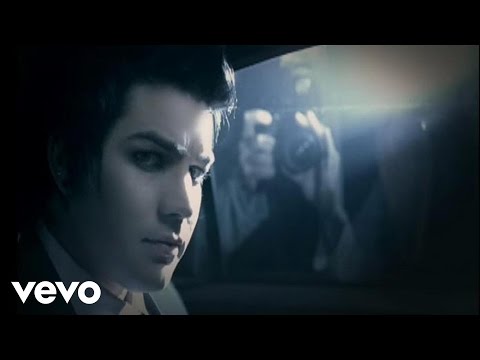




→ More from the 2000s File
View all 2000s hits →
Keep digging