The 2000s File Feature
Mad World
Mad World — Adam Lambert: Chart History and Commercial Journey Note: This entry concerns Adam Lambert's recording of "Mad World," originally written by Rolan…
01 The Story
Mad World — Adam Lambert: Chart History and Commercial Journey
Note: This entry concerns Adam Lambert's recording of "Mad World," originally written by Roland Orzabal of Tears for Fears (1982) and revived in a spare, piano-led arrangement by Gary Jules for the 2001 film Donnie Darko. Lambert's version was performed during Season 8 of American Idol and released commercially in 2009.
Adam Lambert's performance of "Mad World" on American Idol Season 8 stands as one of the most discussed and debated moments in the show's long history of memorable musical moments. When Lambert performed the song during the competition, the effect on viewers, judges, and the broader television audience was immediate and substantial. The performance circulated rapidly through the then-emerging ecosystem of social media sharing and YouTube clips, reaching an audience far beyond the show's traditional viewership and sparking conversation about whether Lambert was not merely an Idol contestant but an artist of genuine exceptional ability.
"Mad World" was originally recorded by the British new wave group Tears for Fears, written by Roland Orzabal and released in 1982. The original version had a synth-pop arrangement characteristic of its era. In 2001, singer-songwriter Gary Jules recorded a radically stripped-down version for the soundtrack of the cult film Donnie Darko, featuring spare piano accompaniment and a hushed, aching vocal quality that transformed the song's emotional register from the urgent anxiety of the original into something closer to resigned desolation. Jules's version became enormously influential, reaching number one in the United Kingdom in December 2003 and introducing the song to a new generation of listeners who had no awareness of the Tears for Fears original.
Lambert's Idol performance drew more directly from the Jules arrangement than from the Tears for Fears original, embracing the song's reduced, intimate quality while adding his own considerable vocal dramatics. The combination of the song's inherent emotional power, the Jules arrangement's atmospheric sparseness, and Lambert's theatrical control produced something that even the most seasoned music commentators found difficult to dismiss. The performance generated an outpouring of audience response that translated into voting patterns during the competition and eventually into commercial sales when the recording was made available.
The commercial release of Lambert's "Mad World" came through 19 Entertainment/RCA Records, the label partnership that had developed out of the Idol franchise's commercial infrastructure. American Idol had by 2009 become one of the most commercially powerful mechanisms for artist development in the music industry, and recordings tied to the show could access promotional platforms and distribution networks that few independent or boutique labels could match. The release of Lambert's "Mad World" as a digital download allowed the fan enthusiasm generated by his Idol performance to convert into measurable commercial activity.
The single performed strongly on the Billboard Hot 100, reaching a position that reflected the enormous television audience the show commanded and the intensity of fan engagement that Lambert's performances had generated. The song also charted in several international markets where American Idol had a following, demonstrating that Lambert's appeal was not strictly domestic. In digital download format, the track sold at levels that were consistent with the commercial performance of other Idol-adjacent releases from the show's peak years.
The choice of "Mad World" as a vehicle for Lambert's talent demonstration was shrewd. The song's complexity, its emotional depth, and its association with a specific kind of dramatic, introspective performance placed it at the exact intersection of Lambert's vocal strengths and the kind of material that Idol audiences responded to most intensely. His voice, which had an extraordinary range and theatrical quality, was suited to the song's demands in ways that a more conventional pop choice might not have revealed.
Lambert went on to release his debut album "For Your Entertainment" in 2009 through 19/RCA, which debuted at number three on the Billboard 200 and established him as a commercially significant artist in the post-Idol landscape. The memory of his "Mad World" performance was central to the narrative around his debut, cited consistently as the moment that convinced listeners and industry figures alike that he was an artist of unusual potential. The recording thus served a dual function: as a standalone commercial product and as a kind of audition piece that defined the artistic identity Lambert would develop across his subsequent career.
The song's longevity in Lambert's public profile is telling. Years after his Idol season, "Mad World" remained the performance that casual fans most frequently cited as their introduction to his work, and it continued to appear in media retrospectives about the show's most memorable moments. For a competition television program that generates hundreds of notable performances across multiple seasons, this kind of individual performance singularity is genuinely exceptional.
02 Song Meaning
Mad World — Adam Lambert: Meaning, Themes, and Emotional Register
"Mad World" in Lambert's rendering is an exploration of alienation and disorientation experienced by someone who cannot make conventional sense of the world around them. The song, originally written by Roland Orzabal during his early twenties, describes the experience of observing social rituals and collective behaviors from a position of outsider detachment, unable to participate in what others seem to find natural and meaningful. The narrator moves through a world in which the activities and preoccupations of other people seem foreign, even faintly absurd, and that alienation produces an emotional state that the song describes as both painful and strangely clarifying.
The imagery in the original text focuses on the mechanized rhythms of ordinary life: people going about their daily routines, the repetition of familiar patterns, the sense that most human activity is conducted in a kind of dream state rather than genuine wakefulness. The "mad world" of the title is not a world of chaos but a world of meaningless orderliness, a place where everyone follows the prescribed paths without asking whether those paths lead anywhere worth going. This critique of social conformity and numbed routine gave the song its resonance with young listeners in 1982 and has continued to speak to new generations who recognize the same quality of empty repetition in the social worlds they inhabit.
Gary Jules's arrangement, which Lambert draws on directly, shifts the emotional register of the song considerably. Where the Tears for Fears original had a brittle, anxious energy powered by synth-pop production, the Jules version is hushed and defeated, as if the act of observing the mad world has already exhausted the speaker. The spare piano accompaniment creates a sonic equivalent of isolation, a voice and an instrument surrounded by emptiness. Lambert embraced this arrangement because it suited both his vocal capabilities and his understanding of the song's emotional content.
Lambert's specific contribution to the song's meaning is significant. His theatrical vocal approach, which in other contexts could tend toward extroversion and display, is here disciplined into something more interior and restrained. The effect is of enormous vocal power being consciously contained, which itself becomes a dramatic gesture: the sense that there is more feeling available than the performance is choosing to release creates a kind of productive tension that keeps listeners in a state of heightened attention. Lambert's version of alienation is not passive but carefully managed, the alienation of someone who has made an active choice to maintain composure in the face of overwhelming feeling.
For Lambert personally, the song's themes resonated with his experience of being a young gay man navigating a world structured around different assumptions and expectations. While the song does not address sexual identity directly, its preoccupation with feeling fundamentally different from the people around you, with observing from outside a social world that everyone else seems to inhabit naturally, had an obvious personal dimension for Lambert at that stage of his public life. The performance became a kind of coded communication with audience members who recognized in it an experience parallel to their own.
The song also functions in the context of American Idol as a statement about artistic seriousness. By choosing material with the depth and difficulty of "Mad World" rather than a more crowd-pleasing pop standard, Lambert was implicitly making an argument about his artistic ambitions and his resistance to the show's more conventional commercial expectations. The choice communicated that he was interested in emotional truth and interpretive complexity rather than simply in demonstrating vocal range for its own sake, a distinction that separated his Idol tenure from that of many other contestants. The meaning of his "Mad World," then, is inseparable from the context of its performance: an act of self-definition at a moment of public audition.
→ More from Adam Lambert
View all Adam Lambert hits →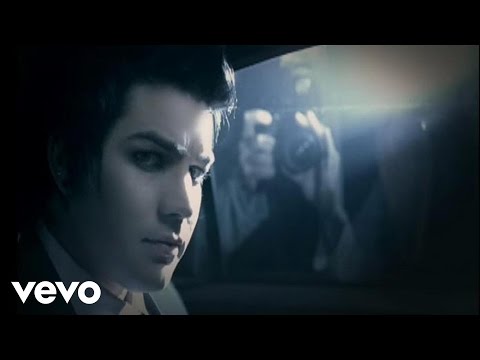




→ More from the 2000s File
View all 2000s hits →


Keep digging