The 1990s File Feature
The Dream Is Still Alive
The Dream Is Still Alive — Wilson Phillips and the Sound of Sustained Belief The Group and Their Remarkable Debut Year Few debut years in contemporary pop hi…
01 The Story
The Dream Is Still Alive — Wilson Phillips and the Sound of Sustained Belief
The Group and Their Remarkable Debut Year
Few debut years in contemporary pop history match the commercial arc that Wilson Phillips traced in 1990 and 1991. The trio, comprising Carnie Wilson, Wendy Wilson, and Chynna Phillips, had arrived in 1990 with a self-titled debut album that immediately established them as one of the most commercially potent vocal groups in the country. Their first single, "Hold On," had reached number one on the Billboard Hot 100. Their second single, "Release Me," climbed to number one as well. By the time "You're in Love" hit the top of the chart in 1991, Wilson Phillips had accomplished something that very few debut acts achieve: three consecutive number one singles from a debut album.
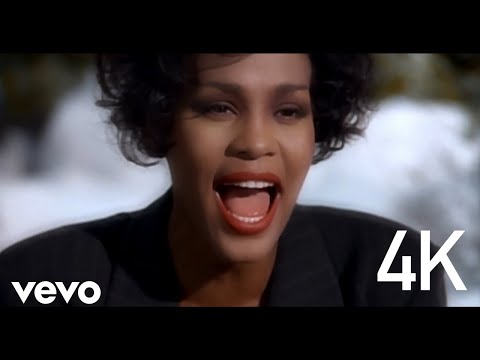
"The Dream Is Still Alive" came next in the single release sequence, debuting in June 1991 as the fourth single from the self-titled debut. The pressure on a fourth single from any album is different from the pressure on a first or second; the audience has already heard most of the album, radio programmers are assessing whether there is anything left to play, and the question of diminishing returns hangs over every new release. The fact that the single reached number 12 on the Hot 100 and spent fourteen weeks on the chart demonstrated that the Wilson Phillips audience had not exhausted its enthusiasm.
The Sound and Production of the Record
The Wilson Phillips debut was produced primarily by Glen Ballard, a Los Angeles-based producer and songwriter who had developed a distinctive approach to pop production that emphasized warmth, melodic clarity, and the kind of pristine engineering that made vocal harmonies sound both natural and perfectly balanced. Ballard understood how to build arrangements that served vocal groups specifically, creating sonic environments where three voices could blend without any one obscuring the others.
"The Dream Is Still Alive" demonstrated this production philosophy in a slightly different emotional register from the earlier singles. Where "Hold On" had a propulsive urgency and "Release Me" a smoother romantic clarity, this track leaned into something more reflective and sustaining. The arrangement gave the trio's harmonies space to expand and breathe, creating a sense of emotional fullness appropriate to a lyric about persisting belief in something worth holding onto. The production was consistent enough with the album's established sound to feel like a natural extension rather than a tonal departure.
The Chart Performance in Detail
The single debuted on the Billboard Hot 100 on June 1, 1991, entering at position 71. Its climb through June and July was steady and confident: 50, 40, 29, 25, and eventually reaching its peak of number 12 during the chart dated August 3, 1991. The fourteen-week chart run reflected sustained radio support and consistent audience engagement.
Achieving a top-15 peak on a fourth single from a debut album is statistically unusual. Most albums exhaust their radio potential well before the fourth release cycle, but Wilson Phillips had built the kind of devoted audience that followed releases attentively throughout an album's lifecycle. Fourteen weeks of chart presence for a track that was the fourth single from an album already well into its commercial run represents a genuine level of sustained audience connection.
The Musical Heritage in the Room
Wilson Phillips carried a particular burden of musical legacy that was simultaneously a marketing asset and an artistic challenge. Carnie and Wendy Wilson were daughters of Brian Wilson of the Beach Boys; Chynna Phillips was the daughter of John and Michelle Phillips of the Mamas and the Papas. The musical DNA in the room when the trio recorded was extraordinary, and the obvious question surrounding their debut was whether they would live up to it or be crushed by it.
The answer, delivered across the commercial success of their debut album, was largely that they found a way to honor the vocal harmony tradition their parents had helped define while creating their own distinct sound and identity. "The Dream Is Still Alive" speaks, in this context, to more than just its lyrical content: it is a group that had been handed both an enormous opportunity and an enormous expectation, and was demonstrating that it could sustain belief in both.
The End of the First Chapter
"The Dream Is Still Alive" effectively concluded the remarkable first chapter of Wilson Phillips' career as a singles act. The group would continue recording and eventually reunite after a hiatus, but the 1990-1991 period defined by their debut album represents their commercial and cultural apex. The final single from that debut performs the particular work of conclusion, looking back at what has been accomplished while affirming that the emotional commitment behind the work remains intact. It is a fitting capstone to one of the more impressive debut campaigns in contemporary pop. Give it a listen and hear three voices that knew, in 1991, exactly what they were doing.
"The Dream Is Still Alive" — Wilson Phillips' singular moment on the 1990s charts.
02 Song Meaning
The Dream Is Still Alive — Persistence, Hope, and the Decision to Keep Believing
What the Title Claims
The central assertion of "The Dream Is Still Alive" is a statement of persistence in the face of time and difficulty. The word "still" does the critical work in the title: it acknowledges that there has been time elapsed, that circumstances have changed, that doubt has been possible, and then insists that the essential animating belief has survived all of that. This is a more complex emotional claim than simple optimism, which never acknowledges doubt in the first place. The song earns its hopefulness by admitting that sustaining it requires effort.
This quality of earned optimism gives the song an emotional resonance that unqualified celebration could not achieve. The listener is invited not into a fantasy of perfect happiness but into the ongoing project of maintaining belief in something worth believing in, whether that something is a relationship, an aspiration, or simply the continued possibility of better things.
The Vocal Harmony as Communal Affirmation
Wilson Phillips performed this kind of material with a natural authority that came partly from the musical tradition they inhabited and partly from the specific chemistry of these three voices. When three people harmonize on a message about sustained belief, the formal properties of the music reinforce the lyrical content: three distinct voices choosing to move together, to sustain a common pitch and tempo, enact in sound the principle the lyric is asserting. Communal vocal harmony is itself an argument for shared belief.
The Beach Boys and the Mamas and the Papas, whose musical DNA flowed directly into the Wilson Phillips sound, had both understood this principle deeply. The wall of vocal harmony has an inherently communal quality; it cannot be produced alone. When Wilson Phillips declared that the dream was still alive, the three-part harmony in which that declaration was delivered was itself a piece of evidence for its truth.
The Early 1990s Context of Quiet Pop Conviction
The early 1990s presented a complicated popular music landscape. Grunge and alternative rock were beginning the commercial ascent that would reshape mainstream radio by 1992 and 1993, but in 1991 they had not yet displaced the polished pop and adult contemporary sounds that had dominated the late 1980s. Wilson Phillips existed squarely within that soon-to-be-challenged mainstream, and "The Dream Is Still Alive" is in some ways an inadvertent document of pop music's last confident moment before the alternative revolution changed the vocabulary.
The song's unironic hopefulness would have felt increasingly out of step with what was coming; the dominant mood of 1991 through 1993 mainstream alternative culture was considerably more ambivalent. Within the moment of its release, however, the track's conviction was perfectly calibrated to an audience that valued exactly what it offered.
Hope as a Practice Rather Than a State
The most interesting reading of "The Dream Is Still Alive" treats hope not as a fixed emotional state but as an active, ongoing practice. The dream is alive not simply because circumstances have been favorable, but because someone has chosen to keep it alive through attention and effort. This reading gives the song an active quality that transforms its apparent passivity into something more demanding and ultimately more meaningful.
This is the song's lasting contribution to the listener's emotional vocabulary: the idea that sustaining belief is itself a form of commitment, an act that requires renewal and choice rather than simply persisting by default. For listeners who have held onto something they valued through periods of doubt or difficulty, the song's central claim feels like recognition rather than instruction. It sees something true about the experience of perseverance and names it with warmth and melodic grace. That combination is rare enough that recordings which achieve it tend to last.
"The Dream Is Still Alive" — Wilson Phillips' singular moment on the 1990s charts.
→ More from the 1990s File
View all 1990s hits →



Keep digging