The 1990s File Feature
Let's Get It On
"Let's Get It On" — Shabba Ranks's 1995 Dancehall Reading of a Classic By 1995, Marvin Gaye's "Let's Get It On" occupied a position of near-untouchable canon…
01 The Story
"Let's Get It On" — Shabba Ranks's 1995 Dancehall Reading of a Classic
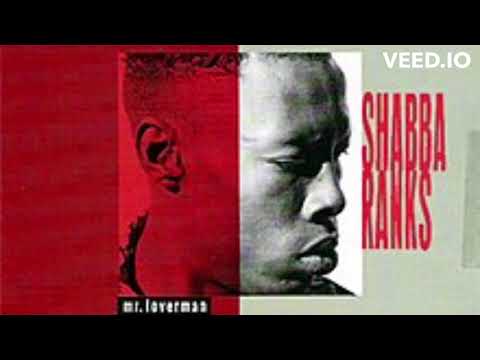
By 1995, Marvin Gaye's "Let's Get It On" occupied a position of near-untouchable canonical status. The 1973 original had become one of the defining recordings of its era, a piece of erotic soul so assured in its intent and so beautifully executed in its production that covering it required either extreme boldness or extreme skill, or preferably both. Shabba Ranks brought a different kind of asset to the project: the specific authority of Jamaica's dancehall tradition, a genre that had been addressing erotic desire with directness and rhythmic conviction since its emergence in the late 1970s.
Shabba Ranks's Commercial Peak
Shabba Ranks had spent the early 1990s becoming the most commercially successful dancehall artist to cross into the American mainstream. His combination of deep, authoritative vocals and rhythmically complex delivery had produced a series of reggae and crossover hits that established him as a genuine international star. He had won two Grammy Awards for Best Reggae Album, in 1992 and 1993, a back-to-back achievement that confirmed his stature in both the reggae world and the mainstream American market. By 1995, he was in the later stages of his peak commercial period, but still working with the confidence of an artist at the top of his game.
Dancehall Meets Gaye
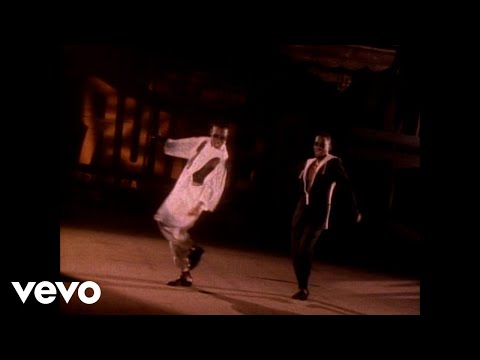
The decision to record a dancehall version of "Let's Get It On" was an interesting one, because the thematic overlap between Gaye's original and the dancehall tradition was substantial. Both operated in the territory of explicit sexual invitation; what differed was the sonic vocabulary and the cultural framework. Gaye's original was soul at its most orchestral and intimate; Shabba's version replaced that sound with the driving rhythms and distinctive production aesthetic of mid-1990s dancehall. The cover was less an interpretation than a translation, moving the song's central proposition into a different linguistic and rhythmic universe while maintaining its essential subject matter.
Nine Weeks on the Chart
The song debuted on the Billboard Hot 100 on March 11, 1995, at position 97. It climbed over the following weeks, moving to 87, then 82, then reaching its peak of 81 on the week of April 1, 1995, before beginning a slow decline. Nine weeks on the Hot 100, peaking at number 81 on April 1, 1995: the chart run reflects the specific dynamics of reggae and dancehall records in the American mainstream. The genre had never fully broken through to the top tier of the Hot 100 on a consistent basis, and its most successful crossover moments tended to peak in the mid-range of the chart rather than at its summit.
Dancehall in the American Mainstream
The mid-1990s represented something close to the high-water mark of dancehall's American commercial presence. Shabba Ranks had blazed a trail, and other artists from the genre were finding crossover audiences. The American hip-hop audience had always had cultural connections to the Caribbean, and the rhythmic sensibility of dancehall had particular appeal to listeners who had been raised on hip-hop and its own Caribbean-influenced elements. Shabba's ability to navigate these overlapping audiences was one of his commercial strengths, and "Let's Get It On" was designed to reach across all of them.
The Legacy of a Cover Choice
Covers of beloved classics are always high-stakes propositions, and Shabba's version of the Gaye original represents his most ambitious commercial crossover attempt. The fact that it reached the Hot 100 and spent nine weeks there is a meaningful result, even if it did not transform the original's canonical status. The record stands as an artifact of a specific moment in dancehall's American commercial history, when the genre's most successful practitioner tried to plant his flag in some of the most contested territory in popular music.
Put them both on, back to back, and hear what 22 years and a genre crossing does to the same fundamental subject.
"Let's Get It On" — Shabba Ranks's singular moment on the 1990s charts.
02 Song Meaning
Desire Across Traditions: What Shabba Ranks's "Let's Get It On" Means
When an artist covers a song as canonical as Marvin Gaye's "Let's Get It On," the cover is always a statement about what the artist brings to the material as much as it is a statement about the original. Shabba Ranks brought to this song a tradition, the Jamaican dancehall, with its own deeply developed vocabulary for addressing desire, and the collision of that tradition with Gaye's soul masterwork produces something worth examining as more than a simple commercial exercise.
Two Traditions, One Subject
Soul music in the Gaye tradition and Jamaican dancehall share a willingness to address erotic desire directly that is not universal in popular music. Both traditions have been criticized at different times for what critics considered excessive explicitness; both traditions responded to such criticism with varying degrees of indifference. The thematic convergence between Gaye's original and the dancehall universe that Shabba inhabited is what makes the cover make sense as an artistic choice rather than merely a commercial one. The song was not a foreign object in Shabba's catalog; it was a natural fit for a performer who had always made desire his central subject.
The Authority of the Voice
Shabba Ranks's vocal quality is central to his artistic identity. His deep, commanding delivery carries an authority that is quite different from the smooth, intimate approach Gaye deployed on the original. Where Gaye's performance was designed to create intimacy, to draw the listener into a private space, Shabba's approach operates at a different register: more public, more declarative, the kind of performance that suits a dance floor rather than a bedroom. Neither approach is more authentic than the other; they are different articulations of the same underlying subject for different sonic and social contexts.
Dancehall's Relationship to Desire
The dancehall tradition has always treated physical desire as an appropriate and important subject for music, rooted in a cultural context that does not apply the same categories of public and private to the body that Anglo-American culture has historically enforced. Songs in this tradition describe desire with specificity and without apology, and they do so in a musical context, the dance, that is itself a physical expression of attraction and connection. When Shabba brings this tradition to bear on the Gaye song, he is not simply covering it; he is showing what it sounds like through a different cultural lens with its own entirely valid relationship to the subject.
The 1995 Context for Crossover
By 1995, the relationship between dancehall, reggae, and the American mainstream had been developing for years, shaped by the commercial breakthroughs of artists like Shabba himself and by the cultural connections between African-American and Caribbean communities in major American cities. The Hot 100 placement of this record reflects a moment when those connections had produced genuine commercial infrastructure for Caribbean artists in the American market. The cover of a beloved American soul classic was a strategic choice within this context, designed to introduce Shabba's voice and style to listeners who might not have encountered dancehall through its original artists.
What the Translation Reveals
Covering a song always reveals something about both the original and the cover version: what is essential in the original (what the new version retains or must retain), and what is specific to the original's historical and cultural context (what the new version cannot replicate without losing authenticity). Shabba's version reveals that the essential element in Gaye's song is the directness of the invitation and the confidence of the desire behind it, not the specific sonic architecture of 1970s soul production. Those qualities translate across traditions. Everything else is context.
→ More from Shabba Ranks
View all Shabba Ranks hits →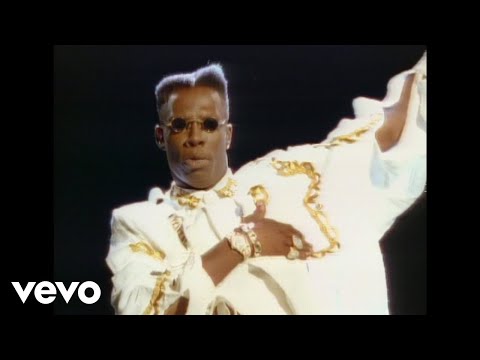
→ More from the 1990s File
View all 1990s hits →
Keep digging