The 1990s File Feature
I Want You
"I Want You" — Jody Watley's Cool Persistence in the Early 1990s After the Breakthrough, the Sustaining Act By the time the winter of 1991 arrived, Jody Watl…
01 The Story
"I Want You" — Jody Watley's Cool Persistence in the Early 1990s
After the Breakthrough, the Sustaining Act
By the time the winter of 1991 arrived, Jody Watley had already established herself as one of the defining voices of late-1980s R&B. Her 1987 debut single "Looking for a New Love" had been a phenomenon, announcing a solo career that fulfilled every promise implied by her years as a member of Shalamar. The self-titled debut album had earned her a Grammy Award for Best New Artist in 1988, a recognition that placed her in the front rank of contemporary R&B and dance-pop performers. The years that followed had been a test of whether that success could be sustained.
Watley had navigated the post-breakthrough period with intelligence, continuing to record music that honored her strengths: meticulous production sensibility, a cool and controlled vocal style, and an image that read as sophisticated rather than accessible in the conventional sense. She was not an artist who chased trends; she set a register and maintained it. That consistency earned her a loyal following even as the R&B landscape around her shifted.
Production and Sound
I Want You arrived as part of Watley's creative output in the early 1990s, a period when the production aesthetics of contemporary R&B were evolving rapidly. New jack swing was reshaping the genre's rhythmic feel, and producers were experimenting with combinations of live instrumentation and electronic programming that the 1980s had not yet fully imagined. Watley's recordings occupied a space adjacent to these trends without being absorbed by them. She retained a polish and a deliberateness that distinguished her work from the more aggressive, rhythm-forward sound that dominated urban radio.
The track's production gave the lyrical declaration of desire a frame that was more yearning than urgent. This was not new jack swing's insistent physicality but something cooler, more measured, a statement of want delivered with the composure of someone who has decided to commit to it rather than be overwhelmed by it.
Chart Run and Commercial Context
The single entered the Billboard Hot 100 on November 30, 1991, debuting at number 92. It climbed steadily through December and into the new year. By January 18, 1992, it had reached its peak position of number 61, completing a 15-week run on the chart. That kind of sustained presence across three months speaks to a genuine radio life rather than a flash of promotional attention.
The 15-week chart tenure was notable for a mid-chart single in a competitive period. The early winter of 1991-1992 was a dense moment on the pop and R&B charts, with a wide range of styles competing for attention. Watley's ability to maintain chart presence across that span demonstrated the loyalty of her audience and the quality of the record's radio legs.
Watley's Artistic Independence
One of the most striking aspects of Watley's career through this period was the degree to which she controlled her artistic direction. In an industry that frequently pressured successful women artists toward more commercially calculated decisions, Watley maintained a clear sense of her own aesthetic values. She was closely involved in the production decisions on her records, collaborated selectively, and consistently prioritized the specific quality of sound and image that she had established from the beginning.
That independence was not without commercial cost; her chart peaks in the early 1990s were modest compared to her late-1980s heights. But it was also the reason her fan base remained devoted rather than merely passive. An audience that follows an artist through stylistic consistency is more durable than one attracted by a single commercially calibrated moment, and Watley's career bore that out over time.
The Early 1990s R&B Landscape
The world that I Want You entered in late 1991 was in transition. R&B was moving rapidly away from the synthesizer-heavy production of the mid-1980s toward something both more organic and more rhythmically complex. New voices were arriving, and the genre's center of gravity was shifting in ways that would become fully apparent by the mid-decade. Watley's 15-week chart run demonstrated her continued relevance in a market that was actively reconsidering its priorities, a meaningful achievement for an artist now several years past her debut peak.
Press play and hear a singer who understood that desire, expressed with composure, carries a persuasive force that volume alone cannot match.
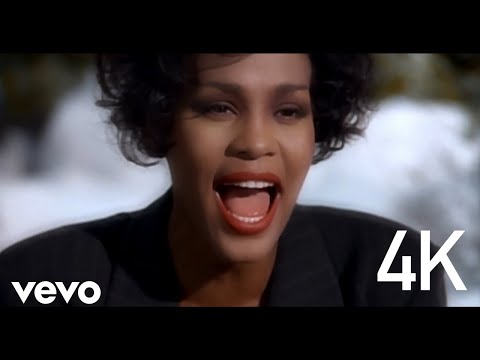
"I Want You" — Jody Watley's singular moment on the 1990s charts.
02 Song Meaning
"I Want You" — Desire as Statement, Not Plea
The Title's Directness
Three words, and the song's entire emotional argument is already made. "I want you" is perhaps the most unadorned declaration available to a love song, stripped of metaphor, rhetorical strategy, and qualification. Its power comes from the willingness to say the thing plainly rather than approaching it from an angle. In Jody Watley's hands, this directness was not a confession of vulnerability but something closer to an assertion of self-knowledge. The singer knows what she wants, and she is prepared to say so without drama.
This distinction between want-as-need and want-as-choice is central to the track's emotional character. Watley's vocal delivery throughout her career had always communicated a kind of composure, a sense of emotional intelligence that processed feeling without being destabilized by it. Applied to a lyric of desire, this composure shifted the register from romantic anguish toward something more confident: this is what I want, and I am telling you so.
Gender and Desire in Early 1990s R&B
The early 1990s were a productive moment for female R&B artists who were interested in expressing desire from a position of agency rather than longing. The genre had historically accommodated female voices across a spectrum, from the declarative confidence of soul's classic women to the more conventionally romantic positions of mainstream pop-R&B. Watley had always positioned herself at the more self-possessed end of that spectrum. Her image and her music communicated that she was pursuing her own vision rather than responding to what others expected.
A song titled "I Want You," delivered in the Watley manner, fit that positioning precisely. The desire expressed is the singer's own, stated in her own terms, without apology or hedging. For listeners who recognized and valued that stance, the track offered both entertainment and a kind of representation.
Style as Substance
Watley's career had always been notable for the degree to which visual and sonic style were inseparable from her artistic identity. Her videos, her fashion, and her music production formed a coherent whole, each element reinforcing the others. This integration was not incidental. It reflected an understanding that for artists working at the intersection of pop, R&B, and dance music, the total aesthetic package was the art. The sound of "I Want You" fit that package with the precision of something designed to do so, producing a record that was distinctly hers in the way that only the most self-determined artists achieve.
Why the Declaration Holds
Romantic desire is not a dated subject. The specific sonic textures of early 1990s R&B may mark the track as a product of its moment, but the emotional content is not period-bound in any meaningful sense. What the song communicates about wanting something with clarity and without apology remains as available to a listener now as it was when the record was made. That combination of period-specific sound and enduring emotional logic is what gives the best R&B recordings their longevity, and "I Want You" carries both in full measure.
→ More from the 1990s File
View all 1990s hits →



Keep digging