The 1990s File Feature
But It's Alright
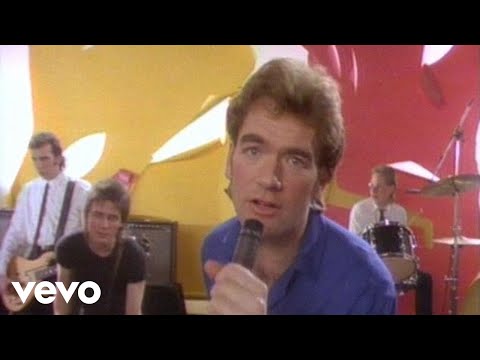
"But It's Alright" — Huey Lewis and The News's 1994 Soul Cover The summer and fall of 1994 represented a particular moment in Huey Lewis and The News's relat…
01 The Story
"But It's Alright" — Huey Lewis and The News's 1994 Soul Cover
The summer and fall of 1994 represented a particular moment in Huey Lewis and The News's relationship with their audience. The band had been one of the defining commercial acts of the 1980s, with a string of arena-filling, radio-dominating hits that had made them ubiquitous in the years between 1983 and 1987. By 1994, the musical world had reorganized around different priorities, and the band was navigating the question that every major act from the 1980s had to answer: what do you do when the decade that made you is over? Their answer, with "But It's Alright," was to go back to their roots.
Huey Lewis and The News's 80s Peak and After
The band's commercial highpoint had been extraordinary. Sports in 1983 had produced multiple hit singles and became one of the decade's best-selling albums. Fore! in 1986 had followed with similar commercial success. By the early 1990s, the band was recording less frequently and with lower commercial expectations, and their 1994 album Four Chords & Several Years Ago was a deliberate step backward, into the vintage soul and R&B that had always underpinned their sound. Four Chords was a covers album, a collection of the older recordings that had shaped the band's musical sensibility, and it was one of the most honest artistic statements they had ever made.
The Original and the Cover
J.J. Jackson's "But It's Alright" from 1966 was a northern soul and R&B classic, a driving, upbeat track with an energy that suited Huey Lewis's natural vocal style. The decision to record it in 1994 was partly nostalgic and partly pragmatic: the material allowed the band to demonstrate their soul credentials without the pressure of producing original hits, and it gave their core audience something familiar in a new context. Lewis's vocal performance on the track demonstrates his genuine affection for the soul tradition that had shaped his vocal style from the beginning of his career, and the band's arrangement captures the spirit of the original without simply copying it.
Twenty Weeks on the Hot 100
The song debuted on the Billboard Hot 100 on August 27, 1994, at position 91. It climbed over the following weeks, moving through the 80s and 70s before settling into a sustained mid-chart presence. The song peaked at number 54 on the week of October 15, 1994, spending 20 weeks on the Hot 100. Twenty weeks is an exceptional chart run for any record, and it indicates the kind of sustained radio support and audience engagement that usually only comes when a song has something genuine going for it. The adult contemporary format, which had always been receptive to Huey Lewis's sound, appears to have provided substantial support for the record.
The Adult Contemporary Comfort Zone
By 1994, the adult contemporary format had become the primary commercial home for artists of Huey Lewis's career stage and musical sensibility. The format's audience was loyal, consistent, and not primarily driven by the youth-market chasing that characterized the mainstream pop chart. A covers album designed to appeal to that audience's shared nostalgic touchpoints was a commercially intelligent approach, and the twenty-week chart run of "But It's Alright" validated it. The band's instinct that their audience would follow them into this territory was correct.
The Legacy of Honest Roots Work
Huey Lewis and The News have been performing consistently for decades, and Four Chords & Several Years Ago remains one of their most critically appreciated albums precisely because it was so clearly made for reasons other than chasing commercial trends. "But It's Alright" stands as the album's most successful single, a record that succeeded commercially by being genuinely itself rather than trying to sound like something it wasn't. That combination of artistic honesty and commercial success is not something the music industry produces often, and it deserves recognition when it appears.
Give this one a listen and hear what happens when a rock band goes home to soul music and finds it still waiting.
"But It's Alright" — Huey Lewis and The News's singular moment on the 1990s charts.
02 Song Meaning
Going Home to Soul: The Meaning of "But It's Alright"
Cover albums are always acts of declaration. By choosing to spend an entire album interpreting other people's songs, an artist is saying something specific about their own relationship to a tradition, about where their music comes from and what they value in it. Huey Lewis and The News's choice of J.J. Jackson's "But It's Alright" as the centerpiece of their 1994 covers project says something significant about the soul roots that had always been present beneath their more commercially polished 1980s surface.
The Original as a Statement About Origins
J.J. Jackson's 1966 original was a piece of driving, optimistic soul with a particularly buoyant energy that was immediately infectious. The lyric offered reassurance, that whatever has gone wrong will ultimately be fine. This message, delivered with sufficient rhythmic conviction, functions as an antidote to anxiety rather than as a solution to specific problems. Huey Lewis's attraction to this material in 1994 reflects a songwriter and performer who understood what he needed to offer his audience at that point in both their lives and his.
Reassurance as a Musical Function
The soul tradition has always included songs whose primary function is reassurance, that affirm the listener's ability to survive difficulty, that insist on the possibility of things being alright even when they currently are not. This function is distinct from either entertainment or artistic expression in the narrower senses: it is music as emotional support, as the auditory equivalent of a friend saying "you'll get through this." Songs that successfully deliver this kind of reassurance are among the most valuable in any tradition, and they tend to be songs that believe their own message rather than merely performing it.
Soul's Relationship to Hardship
The soul tradition that produced J.J. Jackson's original was built on a long history of music made in the face of difficulty. The genre's characteristic combination of physical exuberance and emotional depth reflects the experience of communities that had developed these musical forms as a way of surviving, celebrating, and processing experiences that required more than ordinary emotional resources. When Huey Lewis and The News covered this material in 1994, they were drawing on that tradition with the respect of musicians who had always understood where their musical education came from, and who wanted to honor those origins explicitly rather than simply incorporating them without acknowledgment.
The Band at a Crossroads
A covers album made in the mid-career of a commercially successful band has a particular emotional logic. The artist has achieved enough to look back without shame, and has been through enough to know what actually matters in music. The choice to return to foundational influences rather than chase current trends is a form of artistic courage: it prioritizes what you love and believe in over what the market currently rewards. The fact that the resulting record was both commercially successful and critically well-received suggests that this kind of honesty has its own commercial logic, that audiences respond to genuine feeling even when the form it takes is not the expected one.
The Alright-ness of Things
The central proposition of the lyric, that things will be alright despite present difficulties, is one of the most fundamental human reassurances. It is also one that is most powerful when it comes from someone who has survived sufficient difficulty to have earned the right to deliver it without condescension. Lewis's vocal performance carries this kind of earned assurance, not the breezy optimism of someone who has never been tested, but the quieter confidence of someone who has been through something and come out the other side still standing. That quality is what makes the song's reassurance land as something other than mere sentiment.
→ More from Huey Lewis & The News
View all Huey Lewis & The News hits →



→ More from the 1990s File
View all 1990s hits →




Keep digging