The 1990s File Feature
Baby Luv
"Baby Luv" — Groove Theory's 1996 R B Followup The summer of 1996 was a rich moment for R B. The genre was in the middle of one of its most commercially expa…
01 The Story
"Baby Luv" — Groove Theory's 1996 R&B Followup
The summer of 1996 was a rich moment for R&B. The genre was in the middle of one of its most commercially expansive periods, with neo-soul beginning to emerge alongside more polished mainstream productions, and with artists like Mary J. Blige, D'Angelo, and Erykah Badu expanding what the genre could hold thematically and sonically. Groove Theory was a New York duo who had established their commercial presence the previous year with a strong debut single, and "Baby Luv" was their attempt to build on that foundation.
Groove Theory's Formation and First Success
Groove Theory was the duo of Bryce Wilson and Amel Larrieux, and their 1995 debut single "Tell Me" had been a genuine R&B hit, showcasing Larrieux's extraordinary vocal instrument and the duo's production sensibility, which leaned toward the warmer and more organic end of mid-1990s R&B. Larrieux's voice was the group's primary commercial asset: a soprano of unusual purity and emotional range that could hold a note with complete conviction and navigate melodic lines with a technical precision that many of her contemporaries could not match. The commercial infrastructure built by "Tell Me" gave "Baby Luv" a receptive environment on R&B radio.
The Sound of "Baby Luv"
"Baby Luv" builds on the production approach of the debut while moving in a slightly different emotional direction. The arrangement is warm and deliberate, with a rhythm section that provides a solid foundation without overwhelming the vocal. The song's production reflects the mid-1990s R&B aesthetic at its most refined: synthesizers and drum programming working in service of vocal performance rather than competing with it, and an overall sonic palette that prioritizes intimacy and warmth over flash. Larrieux's voice does the heavy lifting throughout, which is exactly the right decision when that voice is available.
Eleven Weeks to Number 65
The song debuted on the Billboard Hot 100 on August 3, 1996, at position 70. It climbed gradually over the following weeks: to 67, then holding at 66 for three consecutive weeks, before reaching its peak of 65 on the week of September 7, 1996. Eleven weeks on the Hot 100, peaking at number 65 on September 7, 1996: a solid chart showing that reflects sustained R&B radio support over nearly three months. The slow, steady chart behavior suggests an audience building through word of mouth and repeated radio play rather than a concentrated promotional push.
Neo-Soul's Emergence
Groove Theory's sound in 1996 placed them in the vanguard of a movement that would come to be called neo-soul, though that term was not yet widely used. The organic warmth of their production approach, Larrieux's jazz-influenced vocal style, and their willingness to prioritize feeling over production spectacle all aligned with the values that neo-soul would articulate more explicitly in the late 1990s. They were part of a wave of artists who were recentering R&B around vocal performance and emotional authenticity rather than around the more production-intensive sounds that had dominated the early 1990s.
Amel Larrieux's Subsequent Path
Groove Theory produced one album, and Amel Larrieux subsequently pursued a solo career that found a dedicated audience among fans who valued sophisticated, jazz-adjacent R&B and who recognized the quality of her voice and her songwriting. "Baby Luv" represents the second commercial moment of a brief but genuinely notable career configuration, a duo that produced some of the most careful and emotionally precise R&B of their era. Larrieux's solo work confirmed that the talent on display in the Groove Theory recordings was substantial and would find expression in various forms beyond the commercial context in which it first appeared. The body of work she and Wilson produced together remains a compact but genuinely impressive document of what mid-1990s R&B could achieve when it prioritized vocal quality and emotional authenticity over pure commercial calculation.
Seek out that voice and give it the quiet room it always deserved.
"Baby Luv" — Groove Theory's singular moment on the 1990s charts.
02 Song Meaning
Warmth Without Complication: The Meaning of "Baby Luv"
There is a mode of R&B writing that prioritizes the direct expression of uncomplicated feeling, that does not chase emotional paradox or narrative complexity but instead finds depth through the precision and sincerity of its emotional delivery. Groove Theory's "Baby Luv" works in this mode, building its meaning primarily through Amel Larrieux's vocal performance of a lyric that says what it means without irony or qualification.
The Term of Endearment as Lyrical Foundation
Address terms in song, the various pet names and endearments that romantic partners use for each other, function as emotional shorthand: they signal intimacy, affection, and the specific register of the relationship being described. "Baby Luv" builds its lyrical framework around exactly this kind of intimate address, using the title phrase to establish the emotional coordinates of the song before the meaning of any specific lyric line arrives. The term itself carries the warmth of the song's entire emotional proposition, and the way Larrieux delivers it tells you everything about what kind of love is being described.
The Voice as the Primary Text
In songs where the vocal performance is the central artistic event, the lyrical content functions somewhat differently than in songs where the words carry the primary burden of meaning. On "Baby Luv," what Larrieux does with the melody and with the emotional shading of each phrase is more expressive than what the words themselves could communicate in print. Her voice adds dimensions of feeling that the lyric alone does not contain, which is one of the defining qualities of great R&B singing: the ability to exceed the written text through the act of delivering it.
Mid-1990s R&B and Its Values
The mid-1990s R&B landscape was navigating a tension between the more aggressive sounds that had entered the genre through hip-hop's influence and an older, more melodically focused tradition that valued vocal performance as the primary measure of quality. Groove Theory was positioned on the melodic, vocal-centered side of this tension, and their work appealed to listeners who felt that something important was being lost in the genre's harder-edged direction. Songs like "Baby Luv" offered an alternative that was not reactionary but genuinely forward-looking, drawing on older R&B traditions while applying them with a contemporary production sensibility.
Romantic Love in Its Simplest Form
Songs about straightforward romantic happiness, about being in love and wanting to express that simply and directly, are rarer in the pop catalog than songs about love's complications and heartbreaks. The complications are dramatically richer and commercially more reliable as song subjects. When a song manages to make uncomplicated love interesting, which requires genuine craft in both the writing and the performance, it provides something that the more dramatically inclined catalog cannot: the simple pleasure of love expressed without reservation or anxiety. That is what "Baby Luv" offers at its best.
The Legacy of a Brief Partnership
Groove Theory's output was limited by the brevity of their partnership, and "Baby Luv" stands as the second of two significant commercial markers from that period. The song's lasting value is as a demonstration of Amel Larrieux's gifts and as an example of mid-1990s R&B production at its most careful and most committed to the values the genre holds at its core. Songs that demonstrate vocal quality and production intelligence at the level this track does retain their power across the years that separate them from their commercial moment, which is the only longevity that matters for music made for the ear and heart.
→ More from Groove Theory
View all Groove Theory hits →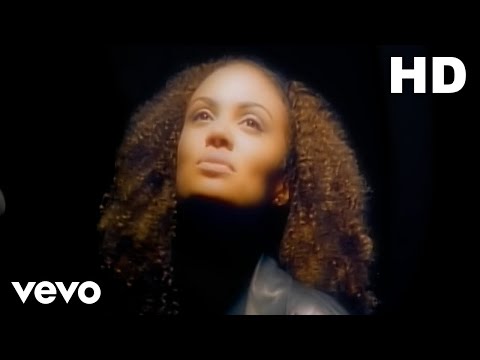

→ More from the 1990s File
View all 1990s hits →
Keep digging