The 1990s File Feature
I'll Take You There (From "Threesome")
I'll Take You There: General Public's Movie Soundtrack Revival Some songs are so deeply embedded in a nation's musical memory that any new artist covering th…
01 The Story
I'll Take You There: General Public's Movie Soundtrack Revival
Some songs are so deeply embedded in a nation's musical memory that any new artist covering them takes on real risk, inviting direct comparison to a beloved original that listeners already hold sacred. Movie soundtracks in the 1990s frequently became launching pads for cover versions of beloved older songs, giving new audiences a fresh entry point into classic material while giving the covering artist genuine chart exposure. That is precisely the story behind General Public's 1994 rendition of "I'll Take You There," recorded for the film Threesome and built on the foundation of the Staple Singers' beloved 1972 original.
A British Ska-Pop Band's American Soul Cover
The two-tone scene General Public emerged from had always drawn explicitly on Jamaican rhythms filtered through a distinctly British sensibility, giving the band unusual range when it came to reinterpreting music from entirely different traditions. General Public formed out of the ashes of The English Beat, one of the defining bands of Britain's late-1970s and early-1980s two-tone ska revival, carrying forward that genre's rhythmic sensibility into a new decade and a new lineup. By 1994, the band's approach to "I'll Take You There" reflected a genuine cross-genre and cross-cultural conversation, a British ska-pop act reinterpreting a landmark American soul recording for a new generation of moviegoers and radio listeners.
Honoring a Soul Landmark
Approaching a song this beloved required real care, and the band's evident respect for the original shows in every choice made throughout the recording. The original version by the Staple Singers, produced at Muscle Shoals and built on Mavis Staples's commanding lead vocal, remains one of soul and gospel music's most beloved and enduring recordings, its irresistible groove and joyful message having already become deeply embedded in American musical culture by the time General Public approached it. The band's cover leans into the song's inherent rhythmic joy while filtering it through their own ska-influenced pop-rock instrumentation, creating a version distinct enough to justify its existence while clearly honoring the original's essential spirit and structure.
A Long, Strong Chart Run
Billboard's numbers confirm the cover found substantial, sustained commercial success in its own right. "I'll Take You There" debuted on the Hot 100 on April 9, 1994 at number 80, and it climbed steadily and consistently, reaching a peak position of number 22 during its peak week of May 28, 1994. The single remained on the chart for a full 20 weeks, an impressively long run that confirmed the song's crossover appeal reached well beyond the film's own audience and into mainstream pop and alternative radio simultaneously.
A Soundtrack Hit With Real Staying Power
Unlike many soundtrack singles that fade quickly once their associated film leaves theaters, this cover demonstrated genuine independent staying power on the charts, a testament both to the enduring strength of the original composition and to General Public's genuinely thoughtful, well-executed reinterpretation of it for a 1990s audience unfamiliar with the source material. The band's willingness to honor a soul classic while making it distinctly their own paid real commercial dividends.
A Bridge Between Generations and Genres
For listeners encountering the song through General Public's version first, the record functions as an accessible gateway back toward the Staple Singers' original and the broader Muscle Shoals soul tradition it emerged from, a genuinely valuable cultural bridge built by a band working in an entirely different genre and coming from an entirely different country.
A Cover That Earned Its Place
Twenty weeks on the Hot 100 is not a number covers typically achieve without genuine listener enthusiasm behind them, and that sustained run confirms General Public found real, lasting affection for their version rather than mere curiosity from fans of the film.
Give it a spin and hear two very different musical traditions meeting in genuine harmony.
"I'll Take You There (From "Threesome")" — General Public's singular moment on the 1990s charts.
02 Song Meaning
The Meaning Behind "I'll Take You There"
Few promises in American popular song carry as much accumulated warmth and history as this one, a vow of guidance toward peace that has meant something slightly different to nearly every generation that has embraced it. "I'll Take You There" promises transportation, both literal and spiritual, to a place free from the everyday burdens of pain, worry, and struggle, a vision rooted deeply in gospel music's tradition of imagining liberation and rest as an actual destination rather than merely an abstract feeling.
A Gospel Vision of Liberation
Pop Staples and his family built their entire recording career around exactly this kind of hopeful, forward-looking spiritual message. The song's original context within the Staple Singers' catalog connects it directly to gospel music's long tradition of describing spiritual liberation in vivid, almost geographic terms, a promised place where suffering simply cannot follow. That gospel foundation gives even secular listeners access to something genuinely transcendent embedded within the song's structure, a promise of relief that transcends any single religious framework or tradition.
Collective Promise, Not Individual Escape
That single shift in perspective, from seeking relief alone to offering it outward toward someone else, changes the emotional character of the entire song. Crucially, the song frames its promise as something offered to another person rather than a private escape sought only for oneself, an act of generosity and leadership rather than pure self-interest or personal retreat. That communal framing, offering to guide someone else toward peace, reflects deep roots in both gospel tradition and the broader civil rights-era ethos of collective uplift that shaped so much soul music of the surrounding decades.
General Public's Cross-Genre Interpretation
General Public's ska-pop rendition maintains the song's essential promise while translating its rhythmic character into a different musical vocabulary entirely, proving the underlying message could travel successfully across genre lines without losing its core emotional and spiritual power. That successful translation speaks to just how universally the song's central promise of relief and belonging resonates, regardless of the specific musical dressing surrounding it.
A Message Renewed for a New Audience
By attaching the song to a 1990s film soundtrack, General Public introduced an entirely new generation to a message of collective relief and hope that had first reached audiences more than two decades earlier through the Staple Singers, proving the underlying sentiment had lost none of its power or relevance across that considerable span of time.
Why the Promise Still Resonates
Listeners across both eras responded to the song's genuine warmth and its promise of shared relief from life's burdens, a message that transcends any single moment or musical trend precisely because the underlying human need it addresses, for rest, for relief, for a place free of struggle, never really goes away no matter how the surrounding music changes.
→ More from General Public
View all General Public hits →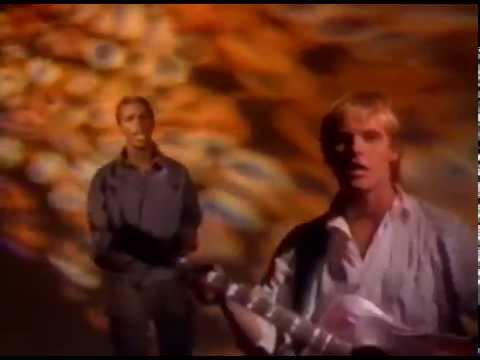

→ More from the 1990s File
View all 1990s hits →


Keep digging