The 1990s File Feature
All Night Long
All Night Long — Faith Evans Featuring Puff Daddy Faith Evans's "All Night Long" arrived in 1999 carrying a complicated emotional freight that distinguished …
01 The Story
All Night Long — Faith Evans Featuring Puff Daddy
Faith Evans's "All Night Long" arrived in 1999 carrying a complicated emotional freight that distinguished it from most R&B singles of its commercial moment. Released through Bad Boy Records and Arista as part of her album Keep the Faith, the song reunited Evans with Sean "Puff Daddy" Combs in a creative and commercial collaboration that was inseparable from the grief and complicated legacy that connected both of them to the Notorious B.I.G., whose murder in March 1997 had devastated the Bad Boy Records family and reshaped the trajectory of both artists' careers.
Keep the Faith was Evans's second studio album, released in 1998 and serving as her artistic response to the loss of Biggie, who had been her husband at the time of his death. The album was understood by the press and by much of the R&B audience as a grief record, a work shaped by the specific experience of losing a partner and a creative collaborator of extraordinary significance. The songs on the album navigated the aftermath of that loss from multiple angles, and "All Night Long" represented the more celebratory and sensual end of the album's emotional spectrum, a reminder that love in its fullest sense includes joy and desire alongside grief and loss.
The production of "All Night Long" reflected the sound that had made Bad Boy Records one of the dominant commercial forces in popular music during the mid-to-late 1990s. Puff Daddy's production approach, characterized by sample-based beats drawn from classic soul and funk, polished pop arrangements, and an emphasis on hooks over lyrical complexity, was at this point fully developed and commercially proven. The recording featured the kind of rhythmic sophistication and melodic richness that made Bad Boy's R&B productions stand apart from their competitors on radio playlists of the era.
Faith Evans's vocal performance on the track showcased the instrument that had made her one of the most respected voices in contemporary R&B since her debut in 1995. Evans had been one of the first artists signed to Bad Boy Records, and her relationship with the label, and with Puff Daddy as a creative director, predated her marriage to Biggie and continued through the tumultuous aftermath of his death. Her voice carried both technical excellence and an emotional authority earned through genuine life experience, and that combination gave even the more straightforwardly pleasurable material on Keep the Faith a quality of depth and earned feeling.
Puff Daddy's appearance on the track as a featured artist added a layer of meaning beyond the purely musical. By 1999, Daddy had himself been through an extraordinary period: the loss of Biggie, the commercial triumph of the tribute single and album, and his own ongoing legal difficulties had made him simultaneously one of the music industry's most powerful figures and one of its most embattled. His presence on an Evans single was therefore not merely a commercial pairing but a continuation of the creative and emotional partnership that had defined Bad Boy in both its peak commercial period and its period of grief.
The single performed solidly on the Billboard Hot R&B/Hip-Hop Songs chart, adding to Evans's track record as a reliable presence in the upper reaches of the R&B format. Radio programmers at urban adult contemporary and R&B stations responded enthusiastically to the track, recognizing in it the combination of superior vocal performance, polished production, and emotional authenticity that made Evans's singles consistently competitive for playlist positions. The song's nighttime, relationship-celebration premise made it useful across a variety of programming contexts and time slots.
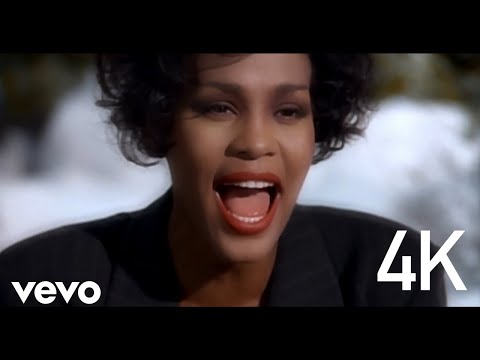
The music video for "All Night Long" received rotation on BET, which was the primary video outlet for R&B and hip-hop content in 1999, and on MTV's R&B programming blocks. Video rotation remained a crucial promotional tool in the late 1990s, before the fragmentation of music video distribution that streaming would eventually cause. The visual treatment of the song reinforced its sensual, celebratory tone while maintaining the elegant presentation standards that Bad Boy had established as part of its visual brand identity.
Keep the Faith as an album had arrived at a moment when the R&B landscape was in genuine flux. The mid-1990s dominance of Bad Boy and Death Row Records had been disrupted by the deaths of Biggie and Tupac Shakur, and the genre was searching for new narratives and new commercial models. Evans's continued output under these circumstances, and her decision to make Keep the Faith a fully realized artistic statement rather than a commercial calculation, was recognized by critics and fans as an act of genuine creative courage. "All Night Long" stood within that context as evidence that Evans's artistic range extended beyond the devastation that had become her public identity in the period following Biggie's death.
The late 1990s Bad Boy sound that "All Night Long" exemplified has been subject to considerable critical reassessment in the decades since its commercial peak. What was often dismissed at the time as glossy commercialism has been reconsidered as sophisticated pop production built on deep knowledge of soul and funk history. Evans's vocal contributions to that body of work, including "All Night Long," have been consistently cited in those reassessments as among the most artistically substantial elements of the Bad Boy catalog.
02 Song Meaning
What "All Night Long" Means in the Context of Faith and Survival
"All Night Long" occupies a specific and meaningful position within Keep the Faith's emotional architecture. In an album defined largely by grief and the process of surviving an unimaginable loss, the song stands as an assertion that desire and joy are not betrayals of grief but parts of the full human experience that grief cannot and should not extinguish. The song's celebratory sensuality is an act of affirmation, a refusal to allow loss to define the entire emotional register of a life or an artistic statement.
Faith Evans had built her artistic identity on her ability to bring emotional truth to whatever material she performed, and "All Night Long" demanded a particular kind of truth: the honest acknowledgment that pleasure and connection remain valuable even in the aftermath of devastation. The song does not ignore the weight of what surrounds it in the album's context. It simply insists that weight does not cancel out the legitimacy of warmth, of celebration, of the physical and emotional pleasure of being with someone who matters to you through the night.
Puff Daddy's presence on the track carries its own symbolic resonance within the Keep the Faith context. He was both a creative collaborator and someone who had shared the grief that the album processed. His appearance on a song of celebration rather than mourning suggested a shared willingness, between Evans and Combs, to honor the fullness of life and love rather than reducing the Bad Boy creative family to its grief. That choice, to celebrate rather than only mourn, was a significant artistic and emotional decision.
The night as a temporal setting in R&B has a long and rich tradition, functioning as the time when social constraints relax, when intimacy is most possible, when the pressures of public identity give way to the more genuine privacies of personal life. "All Night Long" draws on that tradition while grounding it in the specific circumstances of artists who had spent several years in the most public possible experience of loss. The night in this song is not merely a metaphor for freedom but a literal claim that the darkness of grief need not consume every hour, that there remain moments, stretching across the full length of a night, in which life reasserts itself joyfully.
In Faith Evans's broader catalog, "All Night Long" represents her capacity for emotional range that critics sometimes overlooked in favor of her grief-saturated material. Her voice on this track communicates the particular lightness of someone who has survived difficulty and arrived, at least momentarily, at a place of genuine warmth and connection. That quality, of hard-won joy rather than naive pleasure, is what distinguishes her performance from more straightforwardly celebratory R&B of the same period and what gives the song its enduring resonance in her discography.
→ More from the 1990s File
View all 1990s hits →



Keep digging