The 1990s File Feature
Fa All Y'all
Fa All Y'all by Da Brat Picture the autumn of 1994: hip-hop is roaring out of the South and the West with a swagger that radio had never quite heard before, …
01 The Story
"Fa All Y'all" by Da Brat
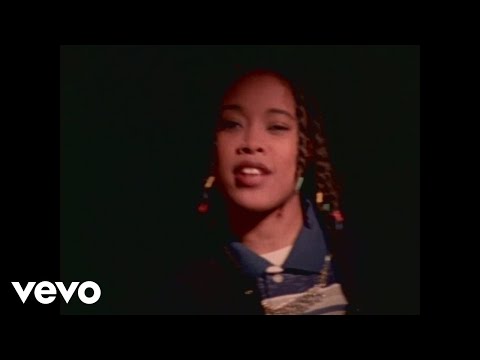
Picture the autumn of 1994: hip-hop is roaring out of the South and the West with a swagger that radio had never quite heard before, and into that din walks a young woman from Chicago with a baseball cap pulled low, braids down her back, and a flow that could keep pace with any man in the room. That woman was Da Brat, and by the time "Fa All Y'all" landed she was already proving something a lot of gatekeepers doubted was possible.
A Chicago Kid With Something to Prove
Shawntae Harris had been discovered after winning a rap contest tied to Kris Kross, and she landed in the orbit of Jermaine Dupri's So So Def label at a moment when the imprint was becoming a hit factory. Her 1994 debut album Funkdafied arrived with enormous expectations and somehow exceeded them. The title track had already become a sensation, and Da Brat became the first solo female rapper to have an album certified platinum, a milestone that reframed what the industry thought a woman with a microphone could sell. "Fa All Y'all" was the follow-up, the song meant to keep the momentum burning into the winter.
The Sound of So So Def
If you drop the needle on "Fa All Y'all," you hear the laid-back, funk-soaked production that defined So So Def's golden run, with Jermaine Dupri shaping the groove around Da Brat's relaxed, conversational delivery. The track does not strain for attention. It rides a warm, bouncing pocket and lets her personality do the work, trading the aggression of much early-90s rap for a kind of effortless cool. Her voice sits low and easy in the mix, and she raps like she has nothing to prove because, by then, the sales charts had already proven it for her.
A Steady Climb Up the Hot 100
The single made its Billboard Hot 100 debut on October 15, 1994, entering at number 79, and it did not rush. Week after week it inched upward, climbing into the 60s, then the 40s, until it reached its high point. "Fa All Y'all" peaked at number 37 on December 10, 1994, and it proved durable, hanging on the chart for a full 18 weeks. That kind of staying power said something: this was not a flash hit but a record that audiences kept returning to as the year turned.
A New Template for Female Rappers
It is worth pausing on what Da Brat represented at that moment. The mid-1990s were a fiercely competitive time for hip-hop, and the lane for women in the genre was narrow and heavily policed by expectation. She did not arrive as a singer who dabbled in rap or as an act softened for crossover radio. She came as a pure lyricist who could trade bars with anyone, and the commercial validation that followed sent a message that rippled across the industry. Labels took note that a woman built around skill and charisma rather than gimmick could move serious units. That shift in perception helped open doors for the wave of female rappers who would dominate the back half of the decade, and songs like this one were part of the proof that the audience was there and hungry.
Building a Legacy
In the long arc of Da Brat's career, this single is a chapter that confirmed she was no novelty. She would go on to a lengthy run as a recording artist and later as a television and radio personality, but the foundation was laid in this stretch of 1994 and 1995, when a young rapper from the South Side made platinum history. The song carries the easy confidence of an artist who had already broken a barrier and was simply enjoying the view from the other side. Years later, when fans look back at the So So Def golden age, this track sits comfortably among the recordings that defined the label's sound and her place in it. It is a reminder that her breakthrough was no accident, that the personality and the skill were locked in from the start.
Press play and let that warm So So Def groove roll, and you will hear a moment when a Chicago kid rewrote the rules of who gets to sell millions.
"Fa All Y'all" — Da Brat's singular moment on the 1990s charts.
02 Song Meaning
The Meaning of "Fa All Y'all" by Da Brat
At its core, "Fa All Y'all" is a victory lap dressed up as a party record. It is the sound of an artist who has arrived, addressing the crowd, the doubters, and the loyal listeners all at once. The title itself is a dedication, a shout-out aimed outward at everyone tuned in, and the whole track carries that generous, inclusive energy.
Confidence Without Apology
The dominant theme is self-assurance. Da Brat raps with the unbothered cool of someone who has nothing left to prove, and that posture is the message. In a genre and an era where female rappers were often pushed to either hypersexualize their image or out-tough their male peers, she carved a third path built on plain skill and relaxed swagger. Her confidence reads as a quiet rebuke to anyone who underestimated her, and it never tips into desperation.
A Dedication to the Listener
The phrase that gives the song its name turns it into a kind of thank-you note. The lyrics function as an address to her audience, the people who bought Funkdafied and made her a star. That relationship between artist and crowd sits at the emotional center of the record. It celebrates community and loyalty rather than isolation, which is part of why it landed so warmly.
The Cultural Moment
By late 1994, hip-hop was no longer a niche; it was the dominant sound of young America, and the South was beginning its long takeover of the mainstream. "Fa All Y'all" sits at that hinge point. It represents a Southern-flavored, melodic strain of rap that prioritized groove and personality over hard menace, helping to broaden what the genre could sound like on pop radio.
Swagger as Self-Definition
There is a deeper layer to the song's confidence worth drawing out. For a young woman entering one of the most male-dominated corners of popular music, projecting unbothered cool was not just a stylistic choice but a form of self-definition. Every relaxed line, every easy boast, staked a claim to belong in the conversation on equal footing. The song does not ask permission and it does not explain itself. That posture carried meaning far beyond the lyrics, telling listeners that a woman could occupy the center of a hip-hop record without apology or compromise. The message lived as much in the attitude as in any single phrase, and that attitude is part of why the record still feels current.
Why It Endured
The song resonated because it felt good and made no demands on the listener. It invited everyone into the celebration rather than gatekeeping. Decades later it remains a snapshot of a barrier-breaking artist at ease in her success, and that ease is exactly what keeps it sounding fresh. Listeners return to it not for a complicated message but for the simple pleasure of hearing an artist who knows exactly who she is and is glad to share that feeling with everyone tuned in.
→ More from Da Brat
View all Da Brat hits →


→ More from the 1990s File
View all 1990s hits →
Keep digging