The 1980s File Feature
(Oh) Pretty Woman
(Oh) Pretty Woman by Van Halen Rewind to the dawn of 1982, when rock radio crackled with the swagger of guitar gods and Van Halen stood at the very front of …
01 The Story
"(Oh) Pretty Woman" by Van Halen
Rewind to the dawn of 1982, when rock radio crackled with the swagger of guitar gods and Van Halen stood at the very front of that charge. Fresh off a string of riotous, party-fueled albums, the band took a beloved classic and tore it apart with their own brand of high-octane bravado. The Pasadena four-piece, led by Eddie Van Halen's pyrotechnic guitar and David Lee Roth's outsized showmanship, turned a vintage standard into a slab of pure 1980s rock theater.
A Band Riding High
By 1982, Van Halen were one of the most exciting live acts in the world, their reputation built on virtuosic playing and a relentless sense of fun. "(Oh) Pretty Woman" was a cover of the Roy Orbison classic, reimagined for their album Diver Down. The choice to record a remake was characteristic of the band's appetite for reinvention, taking familiar material and stamping it with their unmistakable energy. The original's gentle longing gave way to muscular guitars and Roth's playful howl.
A Reckless, Joyful Reinvention
The Van Halen version trades Orbison's smooth romance for raw electricity. Eddie Van Halen's guitar work transforms the song, layering it with the kind of flashy, inventive playing that made him a legend. Roth's vocal performance is all charisma and grin, treating the lyric as an excuse for showmanship. The arrangement is brash and tight, a reminder of why the band's covers often hit as hard as their originals. It is rock and roll as spectacle.
A Solid Climb on the Hot 100
The single performed strongly for the band. "(Oh) Pretty Woman" debuted at number 84 on the Billboard Hot 100 on February 6, 1982, then climbed steadily through the late winter: to 74, then 62, then 54, then 41. It reached its peak of number 12 on April 17, 1982, one of the band's higher chart placements to that point. The song enjoyed a healthy run as well, spending sixteen weeks on the Hot 100. It helped push the parent album to commercial success and gave the band one of its more visible mainstream moments to that point. The choice to cover such a recognizable standard proved shrewd, offering radio a familiar melody wrapped in the band's distinctive firepower.
The Art of the Van Halen Cover
Reinterpreting other artists' songs became something of a signature for the band during this period, and this single is among the most successful examples. Eddie Van Halen treated familiar material as raw clay, reshaping it with his inventive, lightning-fingered approach to the guitar. Rather than reverently preserve the original, the band rebuilt it in their own image, all swagger and sonic muscle. The strategy showcased their instrumental gifts while giving audiences an instantly recognizable entry point. It was a clever way to demonstrate virtuosity, taking a song everyone already knew and proving they could make it entirely their own.
A Memorable Entry in the Catalog
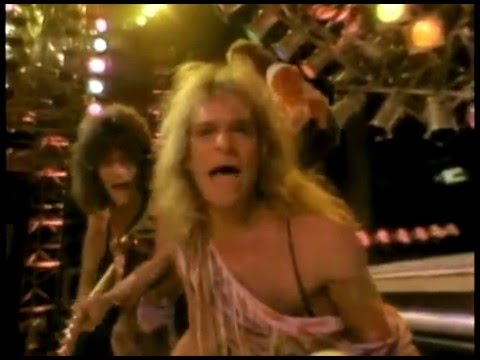
The cover, along with its eye-catching and controversial music video, became a notable moment in Van Halen's rise toward their mid-decade peak. The accompanying video drew attention for its provocative imagery and was an early example of the band's flair for visual spectacle. With roughly seven million YouTube views, the track remains a fun, energetic snapshot of the band in their first golden era. It set the stage for the megastardom soon to come, when the band would conquer the charts on an even grander scale later in the decade. Looking back, the single reads as a confident waypoint on the road to that success, a band testing the breadth of its appeal while never losing the reckless joy that made it famous.
Crank it up and grin along. Few bands ever made rock feel this much like a party.
"(Oh) Pretty Woman" — Van Halen's singular moment on the 1980s charts.
02 Song Meaning
The Meaning Behind "(Oh) Pretty Woman"
At heart, this remains the story Roy Orbison told decades earlier: a man captivated by a beautiful woman passing by, working up the nerve to approach her. Van Halen kept the lyric's simple romantic premise but recast its mood entirely, swapping yearning vulnerability for brash, grinning confidence.
Desire and the Chase
The core theme is infatuation at first sight, the electric jolt of spotting someone irresistible. The narrator watches, hopes, and ultimately wins her attention. In Van Halen's hands the longing feels less anxious and more like a celebration, a man certain of his own charm rather than trembling with doubt.
Bravado Over Vulnerability
The reinterpretation tells you everything about the band's sensibility. Where the original ached, the cover struts, turning romantic pursuit into a victory lap. The lyric stays the same, but the attitude flips, reflecting a band that approached everything with swagger and showmanship. The meaning shifts in the delivery more than the words.
The Spirit of an Era
The cover embodies the hedonistic, larger-than-life energy of early-1980s rock. It captures a culture of excess and confidence, where bigger and louder was always better. The song fit perfectly into a moment when rock stars were expected to project invincible cool, and Van Halen delivered exactly that.
Why It Resonates
The track works because it marries a timeless romantic theme to irresistible energy. The universal thrill of attraction never fades, and Van Halen's joyous reinvention gave it a fresh charge for a new generation. Listeners return for the fun as much as the feeling, a reminder that sometimes a great song just needs a great party to live inside.
A New Frame for an Old Story
What makes the cover fascinating is how the same words can carry such different weight depending on who sings them. The original was a study in tender hope, while this version is a celebration of confidence, and that transformation reveals the power of interpretation in popular music. The lyric became a vehicle for the band's personality rather than a fixed text, proving that a song's meaning lives as much in its performance as in its writing. For Van Halen, the story of glimpsing a beautiful stranger was less about yearning and more about the sheer exuberance of the chase, a perfect match for their larger-than-life sensibility. It is the same tale told by a completely different storyteller. That contrast is precisely what keeps the cover interesting decades on, inviting listeners to hear how mood and attitude can transform a familiar lyric into something entirely new. The romance survives intact, but the spirit driving it could hardly be more different. In that sense the meaning of the Van Halen version lives in the gap between the two recordings, in everything the band chose to add and everything it cheerfully threw away. The song becomes a lesson in how attitude can be its own form of authorship.
→ More from Van Halen
View all Van Halen hits →


→ More from the 1980s File
View all 1980s hits →

Keep digging