The 1980s File Feature
Dancing In The Street
Dancing in the Street by Van Halen Imagine a Los Angeles club in the early 1980s, the air thick with hairspray and amplifier hum, a band on the cusp of arena…
01 The Story
"Dancing in the Street" by Van Halen
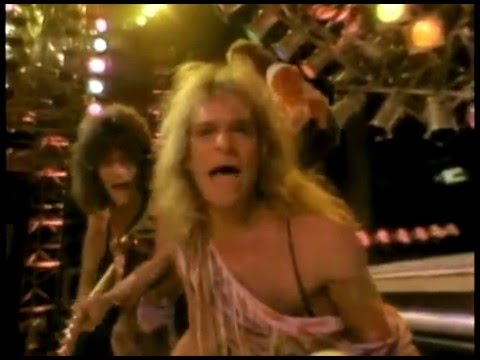
Imagine a Los Angeles club in the early 1980s, the air thick with hairspray and amplifier hum, a band on the cusp of arena-rock immortality treating a Motown classic like a piece of raw material to be blown wide open. That is the energy of this cover, a Pasadena quartet grabbing one of the most beloved soul anthems ever written and dragging it, gleefully, into the world of guitar pyrotechnics and party-hard swagger.
A Band Mid-Ascent
In 1982 Van Halen were a few years past their explosive debut and not yet at the world-conquering peak that 1984 would deliver. The classic lineup, with David Lee Roth's circus-barker charisma out front and Eddie Van Halen rewriting the rulebook on electric guitar, was sharpening the formula that would soon make them the biggest hard rock act in America. Their version of "Dancing in the Street" appeared on the 1982 album "Diver Down," a record famously stacked with cover versions. Roth had pushed the band toward familiar songs as a path to radio, and this Motown staple was a natural target for the treatment.
Reinventing a Motown Monument
The original, a 1964 smash for Martha and the Vandellas, was pure joyous invitation, a record that practically pulled people out of their houses. Van Halen kept the irresistible hook but rebuilt everything around it. The track opens with a burst of synthesizer before Eddie Van Halen's guitar takes over, a sign of the keyboard textures the band was beginning to embrace. Roth turns the vocal into a wink and a holler, and the rhythm section gives the groove a harder, heavier bottom. It is reverent and irreverent at once, a love letter delivered at maximum volume.
A Respectable Run on the Hot 100
The single did solid business without becoming a blockbuster. It debuted at number 74 on the Billboard Hot 100 on May 22, 1982, and climbed steadily through the late spring. It reached its peak of number 38 during the week of July 3, 1982, and spent 11 weeks on the chart overall. That mid-chart placement was typical for the band's singles before the 1984 era rewrote their commercial ceiling. On rock radio and MTV, though, the song carried far more weight than the number suggests, keeping Van Halen visible in a crowded summer.
A Bridge to Bigger Things
Within the band's story, this cover sits at a fascinating hinge point. The synthesizer flourish foreshadowed the keyboard-driven direction that would soon produce some of their most famous hits, even as the guitar fireworks kept them firmly in hard rock territory. "Diver Down" itself reached the top five on the album chart, proving the cover-heavy gamble paid off. The track remains a fan favorite and a reminder of how fearlessly the classic lineup could reshape any song into their own raucous image.
The Cover-Song Strategy
It is worth pausing on the broader story of how this track came to exist. The classic Van Halen lineup was, by 1982, a band balancing the competing instincts of its two biggest personalities. David Lee Roth saw covers as a reliable route to radio play and lighthearted showmanship, while Eddie Van Halen increasingly wanted to push the band's original songwriting into new sonic territory. "Diver Down" leaned heavily on the cover approach, with several reinterpretations of older songs alongside the band's own material. The tension between those two visions would eventually shape the band's history, but in the moment it produced records like this one, where a familiar standard becomes a vehicle for both Roth's swagger and Eddie's restless invention. The synthesizer that opens the track is a small but telling hint of where the guitarist's curiosity was heading.
Worth a Spin Today
Cue it up and you get the best of both worlds: a bulletproof Motown melody and Van Halen at their most gloriously over the top. It is a party in a four-minute package, the sound of a great band having a blast at the height of their powers. Press play and clear some floor space.
"Dancing in the Street" — Van Halen's singular moment on the 1980s charts.
02 Song Meaning
The Meaning Behind "Dancing in the Street"
At its heart this is a song about communal joy, an open invitation to drop everything and celebrate together in the open air. Van Halen did not write the lyric, but their version sharpens its core message: when the music starts, distinctions fall away and the only thing that matters is the shared pulse of a crowd in motion. The meaning is simple, generous, and surprisingly durable.
An Invitation to Everyone
The lyric calls out cities and neighborhoods across the country, summoning people of every kind to come outside and join the celebration. That roll call of place names is the soul of the song, a way of saying this party belongs to everybody, everywhere. Van Halen's rowdy delivery amplifies the inclusiveness rather than diluting it, turning the invitation into a full-volume command.
The Street as Stage
Setting the dancing in the street, rather than a club or a ballroom, frames public space itself as the venue for collective freedom. There is something quietly radical in the image of ordinary people claiming the pavement for joy. The original carried that meaning in a particular cultural moment, and the cover preserves the open-air democracy at its center, the sense that the celebration cannot be contained indoors.
Pure Release, No Strings
Unlike many hits built on heartbreak or longing, this song offers uncomplicated release, the simple thrill of movement and music with no agenda beyond the moment. Van Halen leaned into exactly that, stripping any solemnity and playing it as a wide grin. The message is that fun, on its own terms, is reason enough to gather. In their hands the song becomes a celebration of celebration itself.
Why It Translated
The song survived its journey from Motown to hard rock because its central idea, the urge to dance away your troubles, is universal enough to fit any genre. A great hook about joy belongs to everyone who hears it, and Van Halen claimed it as naturally as the original artists had. The transformation proved how much room the song's meaning leaves for reinterpretation.
Joy as a Form of Unity
By gathering people of every background into a single dancing crowd, the song quietly insists that shared celebration can dissolve the divisions between strangers. The original carried that idea with real social weight in its time, and even a rowdy rock cover preserves the underlying generosity of the message. When everyone is moving to the same beat, the differences that separate people on an ordinary day briefly stop mattering. That vision of togetherness through music gives the song a warmth beneath its party energy, a sense that the dance floor is a place where everyone is welcome and no one is left standing on the sidelines.
A Timeless Call to the Floor
Decades on, the message still works the instant the groove kicks in. The invitation to step outside and dance is as appealing now as it ever was, a reminder that some of the best songs ask nothing more of you than to move. That generosity is why the song keeps drawing new crowds, in whatever style they happen to prefer, year after year.
→ More from Van Halen
View all Van Halen hits →



→ More from the 1980s File
View all 1980s hits →

Keep digging