The 1980s File Feature
She's Fly
New Jack Swing's Rising Tide: Tony Terry and "She's Fly" on the 1987-88 Hot 100 Tony Terry emerged as a solo recording artist at precisely the moment when ne…
01 The Story
New Jack Swing's Rising Tide: Tony Terry and "She's Fly" on the 1987-88 Hot 100
Tony Terry emerged as a solo recording artist at precisely the moment when new jack swing was beginning to reshape the sound of Black American popular music. "She's Fly" debuted on the Billboard Hot 100 on November 28, 1987, entered at number 92, and spent nine weeks climbing toward a peak of number 80, which it reached on January 9, 1988. That chart run, modest in absolute terms, was enough to establish Terry as a presence in the R&B market and to position him for the more commercially successful recordings that would follow in subsequent years.
Terry had grown up in Washington, D.C., and his musical formation combined church singing with the secular R&B and soul music that defined Black American popular culture in the late 1970s and early 1980s. He possessed a tenor voice of considerable range and suppleness, capable of the melismatic flourishes that soul and gospel singing demanded while also suited to the rhythmically precise demands of the emerging new jack swing style. The new jack sound, still in its earliest commercial phase when "She's Fly" was recorded, combined the synthesized production techniques of contemporary R&B with hip-hop's rhythmic sensibility, creating a genre that felt simultaneously new and rooted in the traditions that had preceded it.
The production of "She's Fly" reflected the transitional moment in which it was created. The arrangement incorporated drum machines and synthesizers alongside more traditional R&B elements, placing the record firmly in the contemporary mode of 1987-88 Black pop production without fully committing to the harder-edged approach that would define the new jack swing sound in its mature phase, most associated with producers like Teddy Riley and Jimmy Jam and Terry Lewis. Terry's label, Epic Records, was investing in a number of R&B acts in this period, and the production of "She's Fly" represented a calculated attempt to position him within the mainstream of contemporary Black music while preserving the vocal quality that distinguished him from artists whose appeal was primarily sonic rather thaThe song's content was characteristic of a specific mode of 1980s R&B: the appreciative romantic song, in which the narrator catalogs the qualities of the person he admires in terms that are complimentary rather than pressuring, playful rather than possessive. The title's use of "fly," a term of approval with roots in African American vernacular that had been moving into broader popular usage through hip-hop culture, situated the record precisely within the cultural moment of its production. It signaled to Black audiences that Terry was fluent in the current language of the community while also being accessible to pop radio listeners for whom the term carried the pleasant novelty of borrowed slang.f borrowed slang.
The nine-week chart run demonstrated that "She's Fly" had real staying power for a record that never cracked the top 75 of the Hot 100. The song performed considerably better on the R&B chart, where its nine weeks of presence reflected the stronger connection it made with the core audience for Black pop music. This pattern, strong R&B performance accompanied by more limited but genuine pop crossover, was typical of mid-level R&B acts in this period, and it defined the commercial territory that Terry would occupy through the first phase of his recording career.
The broader context of late 1987 and early 1988 was one of considerable ferment in the R&B marketplace. Michael Jackson's Bad album, released in August 1987, was generating an extraordinary string of number-one singles and setting commercial benchmarks that defined the era. Whitney Houston was at the height of her commercial dominance. New artists including Bobby Brown, whose solo career was about to accelerate dramatically with the 1988 album Don't Be Cruel, were positioning themselves to benefit from the new jack swing wave that was about to transform the genre's sound.
Terry's subsequent recordings would generate greater commercial success: "With You," released in 1990, reached number 11 on the Hot 100 and became his signature achievement on the pop chart. But "She's Fly" deserves recognition as the record that first brought his voice to national attention and demonstrated that he had the ability to make music that connected with audiences across the radio formats that determined commercial success in the late 1980s.
02 Song Meaning
The Art of the Compliment: Reading the Meaning of "She's Fly"
In the lexicon of African American vernacular English, "fly" carried considerable thematic freight by the late 1980s. Originally used to describe a person of exceptional style, attractiveness, and self-possession, the term had been circulating in Black communities for decades before hip-hop culture amplified it and spread it into broader popular awareness. When Tony Terry used it as the title and central descriptor of his 1987 debut single, he was positioning the song within a specific cultural tradition of admiration that was both romantic and fundamentally aesthetic: the person being praised is admired not merely for how they look but for how they carry themselves, the whole quality of their presentation to the world.
The song's thematic content operates as an extended appreciation, a catalog of admirable qualities organized around the central judgment that the subject of the narrator's attention is, simply and completely, fly. This is a different emotional gesture from the romantic songs that foreground desire, longing, or pain. "She's Fly" is primarily appreciative rather than yearning; the narrator's feeling is one of delighted recognition rather than frustrated desire. He sees someone exceptional and wants to name what he sees accurately and fully. The song performs the act of genuine attention.
This orientation gives the recording a lightness and an energy that distinguish it from the more earnest romantic ballads that were also part of the late 1980s R&B landscape. There is joy in the performance, the specific joy of someone who has identified something wonderful and wants to share that identification with an audience. Terry's vocal approach supports this reading: his delivery is energetic and forward-leaning, more celebratory than plaintive, more outward-facing than interior. He is sharing good news rather than processing private emotion.
The cultural context matters for understanding the full meaning of the song's vocabulary. In the emerging new jack swing aesthetic of the late 1980s, coolness and style were serious values, not superficial ones. The ability to be genuinely fly, to present oneself to the world with unstudied grace and authentic self-expression, was understood as a form of achievement. When Terry describes the subject of his song as fly, he is paying her the highest compliment available within that value system. He is saying that she has mastered the art of being herself in a way that commands admiration.
The song also participates in a tradition of R&B compositions that treat women as subjects worthy of elaborate celebration rather than objects of desire to be pursued or possessed. This orientation was particularly notable in the gospel-influenced soul tradition from which Terry emerged, where the impulse to praise was cultivated as a spiritual practice before it was applied to secular subjects. When appreciation takes the place of possession as the dominant emotional mode, the resulting song has a quality of generosity that more predatory romantic narratives lack.
For listeners in 1987 and 1988, "She's Fly" offered a straightforward and enjoyable proposition: here is a song about someone wonderful, delivered by a voice of genuine quality, in a production that reflected the musical moment with energy and skill. The meaning is not cryptic or multilayered; it is direct and warm, which is its own kind of value in a tradition that has always prized the ability to say something real without unnecessary complication.
→ More from Tony Terry
View all Tony Terry hits →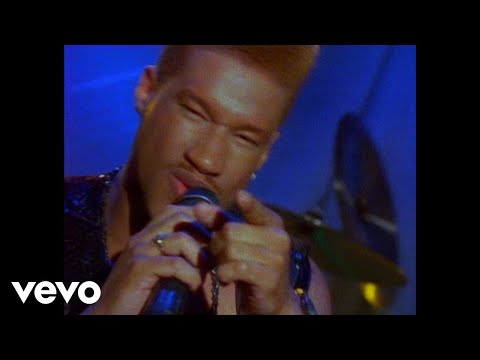

→ More from the 1980s File
View all 1980s hits →
Keep digging