The 1980s File Feature
Angel In Blue
"Angel In Blue" — The J. Geils Band At the Top of Their Commercial Peak The summer of 1982 belongs to The J. Geils Band in a way that few summers belong to a…
01 The Story
"Angel In Blue" — The J. Geils Band
At the Top of Their Commercial Peak
The summer of 1982 belongs to The J. Geils Band in a way that few summers belong to any single act. Their album Freeze-Frame had arrived in late 1981 and proceeded to spend several weeks at number one on the Billboard 200, generating two major chart singles and making the Boston-bred blues-rock group into something they had never quite managed in their previous decade of recording: genuine mainstream pop stars. "Angel In Blue" was the album's third single, arriving into a summer when the band was everywhere and the radio was fully on their side.
The J. Geils Band had been a working live act of considerable power since the early 1970s, building a reputation on energetic performances that combined blues, R&B, and rock with a showmanship that made them legendary on the concert circuit long before radio success arrived. Lead vocalist Peter Wolf, with his rapid-fire delivery and physical stage presence, was one of the most compelling frontmen of his generation. Keyboard player Seth Justman was the primary creative force behind the recordings, and their partnership had produced a string of well-regarded but commercially modest albums through the 1970s.
The Freeze-Frame Sessions and the New Sound
The album that contained "Angel In Blue" represented a deliberate shift in the band's sonic approach. The production moved toward a cleaner, more synthesizer-influenced sound that reflected the early 1980s radio landscape without abandoning the band's fundamental energy. The result was a collection of tracks that found larger audiences than the band's previous work had reached while still carrying enough of their essential character to satisfy long-term fans.
Seth Justman's production on "Angel In Blue" placed the track in the romantic power-pop territory that the album had already mapped successfully with "Centerfold" and "Freeze-Frame." The song has a melodic directness and a hookiness that prioritizes radio impact, with Wolf's vocal delivery as energetic as ever but channeled into a format that complemented rather than challenged the production's commercial aims.
The Chart Run in Context
The single entered the Billboard Hot 100 on May 22, 1982, debuting at position 87. It climbed through June and into early July, rising from 70 to 52 to 48 to 44 before continuing its upward movement. It peaked at number 40 during the week of July 3, 1982, spending eleven weeks on the chart. That performance was respectable but modest compared to the album's first two singles, reflecting the reality that radio attention and listener goodwill had been most concentrated on the earlier releases from the same project.
The chart trajectory also reflected a common dynamic with album-campaign singles: the first and second singles from a successful album typically outperform the third, regardless of the quality of the material, because the audience's initial enthusiasm for the album has been partially satisfied. "Angel In Blue" was a strong track released into a slightly more competitive environment than its predecessors had faced.
Peter Wolf and the Band's Complicated Legacy
The period surrounding Freeze-Frame would prove to be both the commercial apex and the beginning of the end for the classic lineup of The J. Geils Band. Peter Wolf departed the group in 1983, citing creative and personal differences, ending the partnership that had defined the band's sound and stage presence for more than a decade. The remaining members continued briefly without him, but the combination that had produced Freeze-Frame was finished.
That context gives the recordings from this period a slightly elegiac quality in retrospect. The songs from Freeze-Frame, including "Angel In Blue," capture a group at its commercial peak, succeeding at a scale it had never previously achieved, even as internal pressures were building that would soon pull it apart.
Blues-Rock Roots and Pop Ambitions
The J. Geils Band's history is a study in the tension between artistic authenticity and commercial ambition that defined many rock acts of their generation. They were genuinely rooted in blues and R&B in a way that gave their recordings substance even when the commercial packaging was at its most glossy. "Angel In Blue" benefits from that depth: beneath the polished production is a band that knows how to play, and that knowledge gives the track a solidity that purely manufactured pop products of the same era tend to lack.
Turn it up and hear a band still in command of a sound that had taken them more than a decade to fully realize.
"Angel In Blue" — The J. Geils Band's singular moment on the 1980s charts.
02 Song Meaning
"Angel In Blue" — Idealization, Longing, and the Shape of Desire
The Figure in the Song
Songs built around a figure glimpsed rather than known, around someone observed from a distance whose full reality the narrator can only guess at, belong to a long tradition in popular music. "Angel In Blue" works in that tradition. The title itself positions its subject at a particular kind of remove: an angel is not a person you simply know; an angel is a presence you respond to with awe, with something approaching reverence, from a position of distance. The color qualifier, blue, adds both sensory specificity and emotional resonance to that image.
The song's emotional logic is that of idealization: the figure it describes has been elevated above ordinary personhood into something that the narrator approaches with a quality of yearning that is partly romantic and partly something less easy to name. This is standard territory for pop romanticism, but Peter Wolf's delivery gives it an urgency that prevents it from feeling generic.
Early 1980s Pop and the Language of Romance
The early 1980s were a period when mainstream rock and pop were finding new ways to address romantic themes. The postpunk critique of sentiment had not entirely penetrated the mainstream, and MTV's visual emphasis was creating new possibilities for presenting romantic imagery. Songs that built vivid, imagistic portraits of desired figures were well-positioned for the new visual media landscape as well as for radio, because they gave visual artists something to work with in music videos.
The J. Geils Band's "Centerfold," the album's blockbuster first single, had already demonstrated their ability to construct a precise and memorable image of a desired figure, and "Angel In Blue" worked in a related vein. Both songs were about the gap between how someone is imagined and how they actually exist in the world, a gap that is itself a productive source of romantic energy.
The Blues Tradition and Romantic Idealization
The band's blues roots are relevant to understanding how the song functions emotionally. Blues music has always been deeply engaged with desire and loss, with the particular ache of wanting something that is just out of reach, and "Angel In Blue" carries that inheritance even in its polished early 1980s production context. Wolf's vocal style, which draws from the R&B and blues tradition even when the musical setting is pop-oriented, gives the romantic content a rawness that prevents it from being merely decorative.
The angelic imagery in the title works in interesting ways against that blues context. Blues desire is typically earthy, physical, and direct; angels are not. The collision between those registers, between the earthiness of the blues tradition and the ethereal quality of the angelic image, creates a productive tension in the song that makes it more interesting than a simpler, more unified approach might have produced.
The Song Within the Album's Emotional Arc
Placed within the Freeze-Frame album, "Angel In Blue" contributes to a thematic pattern around desire, pursuit, and the complications of romantic obsession that runs through several of the album's tracks. The band was clearly working with a set of preoccupations about how men look at women, about the relationship between image and reality in romantic projection, and about the particular intensity of attraction that can feel consuming.
Those themes are handled with varying degrees of self-awareness across the album, and "Angel In Blue" sits at the more straightforwardly romantic end of the spectrum. The narrator wants, the object of want remains at a distance, and the song sits in that condition rather than resolving it. That unresolved quality is true to the experience it describes and gives the track its emotional honesty.
"Angel In Blue" — The J. Geils Band's singular moment on the 1980s charts.
→ More from The J. Geils Band
View all The J. Geils Band hits →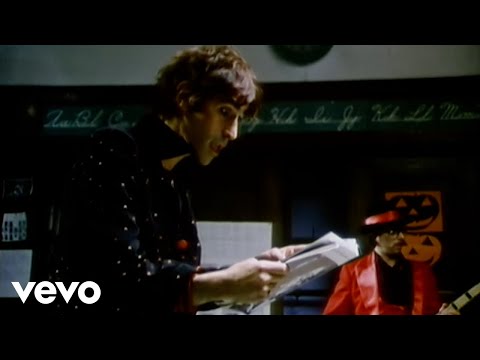


→ More from the 1980s File
View all 1980s hits →


Keep digging