The 1980s File Feature
Stand Or Fall
Stand Or Fall — The Fixx Makes Their American Chart Debut in the 1980s The autumn of 1982 was an extraordinary season for British music making its way across…
01 The Story
"Stand Or Fall" — The Fixx Makes Their American Chart Debut in the 1980s
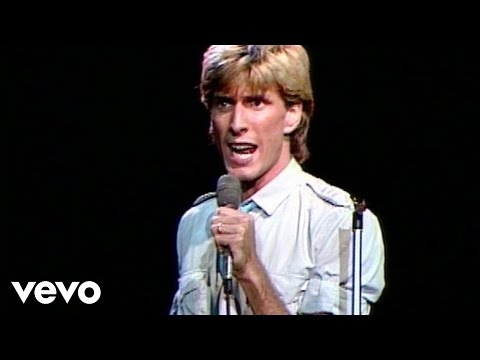
The autumn of 1982 was an extraordinary season for British music making its way across the Atlantic. New wave had been crossing over for several years by that point, but the process was accelerating, driven partly by MTV's voracious appetite for visually sophisticated British acts and partly by a genuine appetite in the American mainstream for the cooler, more angular sounds that were coming out of the UK. Into this moment stepped The Fixx, a London-based band whose combination of dense, intelligent arrangements and a sound built around synthesizers, guitars, and Cy Curnin's uncommonly precise voice, had already made them significant figures in the British post-punk scene. "Stand Or Fall" was their first significant American chart moment, and it arrived when the conditions for this kind of crossing could not have been more favorable.
Who The Fixx Were in 1982
The Fixx had formed in London in the early 1980s, drawing on the post-punk and new wave movements that were reshaping British popular music after the punk explosion. Their sound was distinguished by Rupert Greenall's synthesizer work and by a rhythmic sophistication that owed something to both the funk influences permeating post-punk and the more stripped-down approach of the new wave mainstream. Cy Curnin's voice was an unusual instrument for the format: precise, slightly formal in its delivery, carrying an English quality that was distinct from both the emotive excess of arena rock and the deliberately flat affect of some post-punk singing. The combination produced a sound that was intelligent without being cold, sophisticated without being inaccessible.
The Sound of the Record
On "Stand Or Fall," the band deployed these elements with the confidence of musicians who had spent enough time working at their craft to know what they were doing. The synthesizer arrangements create an atmosphere of controlled tension, the rhythm section provides a foundation that is propulsive without being frenetic, and the guitar work adds texture rather than dominating the mix. The whole thing sits in a particular space that new wave at its best occupied: energetic enough to hold radio attention, complex enough to reward closer listening.
Eight Weeks and a Peak at Number 76
"Stand Or Fall" debuted on the Billboard Hot 100 on October 30, 1982, entering at number 84. The single moved steadily if slowly through the chart's lower reaches in the weeks that followed: from 84 to 82, then 80, before reaching its peak position of number 76 on November 20, 1982. After holding briefly, the song began to drop, eventually spending eight weeks on the chart before departing. A peak of 76 was a genuine American chart entry for a band on its first significant domestic crossover attempt, and it established a commercial beachhead that subsequent records would build upon.
What MTV Made Possible
It is difficult to discuss The Fixx's American chart presence in 1982 without acknowledging the role that MTV played in creating the conditions for this kind of British crossover. The network had launched the previous year and was transforming the way American audiences discovered new music, particularly British new wave acts who invested significantly in visual presentation. The Fixx's aesthetic sensibility, which extended to their visual identity and performance approach, was well-suited to a format that rewarded exactly this kind of considered, consistent presentation. MTV gave them visibility that radio alone might have taken considerably longer to build.
The Foundation of a Durable Career
The Fixx went on to score more significantly with "One Thing Leads to Another" in 1983, which reached number 4 on the Hot 100 and established them as genuine American stars. But "Stand Or Fall" was where the American chapter of their story began, the first evidence that there was an audience here for what they were doing. Looking back at it now, the record represents the beginning of a creative period that would produce some of the most intelligent and durable music to emerge from the new wave era.
If you want to hear the moment before the breakthrough, this is where to find it. Press play.
"Stand Or Fall" — The Fixx's singular moment on the 1980s charts.
02 Song Meaning
The Meaning Behind "Stand Or Fall" by The Fixx
The post-punk era in British music was one of the most politically and socially conscious in popular music history, producing bands that treated the lyric as a vehicle for commentary rather than simply as the verbal component of a commercial product. The Fixx belonged to this tradition: their lyrics engaged with questions about commitment, integrity, social pressure, and the choices that define character in ways that distinguished them from acts content to work exclusively in the territory of romance and style. "Stand Or Fall" is among their most direct statements of this orientation.
The Binary of the Title
The opposition embedded in the title, stand or fall, is one of the oldest rhetorical structures in the language of commitment and loyalty. It proposes that certain moments require a definitive choice, that neutrality is not available, that sitting out the decision is itself a kind of decision with its own consequences. This framing gives the song its moral dimension: the narrator is not simply describing a situation but making an argument about the necessity of taking a position. That argument resonated in the early 1980s, a period of significant political polarization in both Britain and America.
Political Resonance in the New Wave Era
In Britain in 1982, the Falklands War had recently been fought, unemployment was at historically high levels, and the Thatcher government's policies were generating fierce opposition alongside enthusiastic support. The broader Western context included the nuclear anxiety of the early Reagan years and the Cold War's continuing pressure on political and social life. In this environment, a song that invoked the language of standing up or falling down carried political as well as personal implications, even if the band's lyrics never specified a particular cause or position. The ambiguity was itself a kind of sophistication.
New Wave's Capacity for Social Commentary
One of the most productive tensions in new wave music was between the genre's surface sophistication, its elegant production values and its measured aesthetic, and the often urgent content that surface contained. The Fixx were particularly effective at this combination: their records sounded controlled and polished while their lyrics pressed on questions about pressure, conformity, and the demands that social life makes on individuals who might prefer more straightforward paths through the world. "Stand Or Fall" is an effective example of this tension working at its best.
The Universal Appeal of Commitment as Theme
Beyond its specific historical moment, "Stand Or Fall" addresses something permanent in human social experience: the situations that require us to declare ourselves, to stop hedging or equivocating and take a position that can be seen and judged. For young listeners in 1982, many of them navigating exactly these kinds of decisions in their personal and social lives, the song's directness on this subject would have felt immediately relevant. For listeners now, the emotional and moral core of the argument remains intact.
Why the Song Still Has Something to Say
"Stand Or Fall" holds up not simply as a well-produced artifact of its moment but as a genuine argument about character and commitment that has not been rendered obsolete by the passage of time. The situations that require people to stand or fall have not disappeared; they have simply taken new forms. The Fixx made a record that addressed those situations with enough seriousness to outlast their immediate context, and that is ultimately the measure of consequential songwriting.
→ More from The Fixx
View all The Fixx hits →



→ More from the 1980s File
View all 1980s hits →


Keep digging