The 1980s File Feature
The Legend Of Wooley Swamp
"The Legend Of Wooley Swamp" — The Charlie Daniels Band's 1980 Southern Gothic Yarn Southern Gothic on the Hot 100 The summer and autumn of 1980 were good mo…
01 The Story
"The Legend Of Wooley Swamp" — The Charlie Daniels Band's 1980 Southern Gothic Yarn
Southern Gothic on the Hot 100
The summer and autumn of 1980 were good months for the Charlie Daniels Band on the American charts. Fresh off the massive commercial success of "The Devil Went Down to Georgia" in 1979, a song that had not only topped the country chart but crossed over to the pop mainstream and taken home a Grammy Award, the band was operating from a position of unprecedented national visibility. The challenge of following one of the most beloved country-rock crossover records in history was considerable, and the band's response was characteristically ambitious: rather than attempt a direct imitation of the fiddle-contest formula, they went deeper into Southern folklore and produced something darker, stranger, and more genuinely unsettling.
"The Legend Of Wooley Swamp" was drawn from the Full Moon album, released on Epic Records in 1980. The song extended the storytelling tradition that had made "The Devil Went Down to Georgia" so memorable, but where that earlier song had been essentially playful, a contest narrative with a triumphant protagonist, "Wooley Swamp" was grimmer in both its content and its atmosphere. It was a ghost story, a tale of greed, violence, and supernatural retribution set in the deep swamplands of the American South.
The Storytelling Craft
Charlie Daniels had by 1980 established himself as one of the most capable narrative songwriters in American country and rock. His ear for regional detail, his ability to generate atmosphere through specific imagery, and his skill at building tension within a relatively compact song structure were all on display in "The Legend Of Wooley Swamp." The song constructed its world through the kind of vivid, place-specific detail that is the hallmark of the best American regional storytelling: the quality of light in a Southern swamp, the particular menace of water that conceals what moves below its surface, the isolation of communities where old scores are settled outside any formal legal framework.
The narrative followed a trio of thieves who rob and murder an old hermit, only to discover that the swamp itself, and the spirit of its victim, extracts its own form of justice. This was folk horror rooted in the tradition of Southern Gothic literature, filtered through the idiom of country rock and performed with the theatrical conviction that characterized the Charlie Daniels Band's live performances and studio work alike.
The Chart Run
"The Legend Of Wooley Swamp" entered the Billboard Hot 100 on August 16, 1980, debuting at position 84. It climbed steadily through August and September, moving through the sixties and fifties as radio play accumulated. The single reached its peak position of number 31 on October 18, 1980, after fourteen weeks on the chart in total. That top-thirty-five pop showing was a genuine achievement for a track that was substantially longer than the typical radio single and that dealt in supernatural horror rather than the romantic or celebratory themes that dominated mainstream pop.
On the country chart, where the Charlie Daniels Band's core audience lived, the song performed strongly and became a significant addition to their commercial profile in the format. The crossover to the pop Hot 100 was an extension of the audience bridge that "The Devil Went Down to Georgia" had built in the preceding year.
The Band Behind the Legend
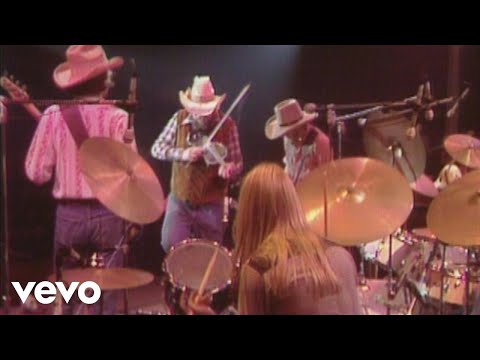
The Charlie Daniels Band was a musical ensemble of genuine caliber, and the performance of "The Legend Of Wooley Swamp" reflected the kind of tight, experienced ensemble playing that years of touring and recording together had produced. The track featured the mix of fiddle, guitar, bass, drums, and keyboards that gave the band its characteristic Southern rock sound, a sound that was rooted in country but had absorbed enough rock energy to function on mainstream radio without sounding compromised in either direction.
Daniels himself was both the band's primary creative identity and its most technically accomplished instrumentalist, with fiddle playing that could generate genuine excitement in a way that few other performers in any genre could match. The storytelling on "Wooley Swamp" relied on that same performative energy to sell the supernatural content; a less committed performance might have allowed the ghost story elements to tip into camp, but Daniels' conviction kept the atmospheric tension credible.
Southern Gothic as American Tradition
The Southern Gothic literary and artistic tradition from which "The Legend Of Wooley Swamp" drew its atmosphere had deep roots in American culture. From the fiction of Flannery O'Connor and William Faulkner to the blues songs of the Mississippi Delta, the American South had produced a rich body of art that engaged with violence, supernatural justice, and the specific psychological landscape of a region shaped by extreme heat, poverty, racial history, and the kind of isolation that breeds both folklore and genuine menace.
The Charlie Daniels Band's contribution to this tradition was to make it available to a mainstream country-pop audience that might not have encountered the literary or musical antecedents. By framing the Gothic content within the accessible vehicle of a story-song delivered with the band's characteristic energy and production polish, they created a record that was simultaneously rooted in regional tradition and commercially viable on a national scale. Press play and let the swamp close in around you.
"The Legend Of Wooley Swamp" — The Charlie Daniels Band's singular moment on the 1980s charts.
02 Song Meaning
"The Legend Of Wooley Swamp" — Greed, Retribution, and the Southern Supernatural
Folk Horror and Moral Architecture
At its structural core, "The Legend Of Wooley Swamp" is a morality tale in the oldest sense: people do something wrong, and the world corrects itself by punishing them. The particular mechanism of that punishment, the swamp itself as an agent of supernatural retribution, places the song within a tradition of folk horror that understands the natural world as morally responsive to human behavior. The land itself has opinions, and when those opinions are violated, consequences follow.
This moral architecture is one of the song's most interesting features. The formal apparatus of justice, courts and laws and institutional authority, is entirely absent from the narrative. The reckoning that comes for the thieves and killers of the song does not arrive through any human system; it arrives through the landscape itself, which is both more immediate and more final than any courtroom could manage. This is the logic of folk justice, older than any formal legal system and operating on different terms entirely.
The Swamp as Moral Landscape
Swampland holds a particular position in American cultural imagination, especially in the Southern Gothic tradition. It is a space outside normal social geography, governed by different rules, where the usual structures of community life do not apply. The swamp's literal qualities, its obscured visibility, its capacity to swallow and conceal, its teeming and largely invisible life below the surface, make it a natural vehicle for the kinds of stories that deal with hidden things, concealed crimes, and justice that operates outside public view.
Charlie Daniels understood this symbolic geography intuitively, and "Wooley Swamp" uses it with considerable skill. The setting is not merely decorative; the swamp is an active participant in the narrative, the agent through which moral order is restored. This gives the landscape a kind of personality and purpose that elevates the song from simple ghost story to something with genuine mythological resonance.
Greed as the Primary Sin
The crime at the heart of "The Legend Of Wooley Swamp" is greed, specifically the greed of those who see an isolated old man and decide his rumored hidden wealth is worth taking by violent means. The targeting of a vulnerable person for economic gain is framed as the kind of sin that demands extraordinary retribution. The supernatural punishment is proportional to the nature of the crime: those who were willing to cross the ultimate line for money find themselves claimed permanently by the environment that they violated.
This moral calculus connects the song to a long tradition of American folk tales in which greed is punished with particular severity. From stories of buried gold that drives its seekers mad to tales of con men who meet ends more colorful than any their victims suffered, American folk culture has consistently understood avarice as the sin most likely to produce spectacular consequences. Daniels tapped into this deep reservoir of moral folklore and channeled it through the idiom of Southern rock.
The Story-Song Tradition
The story-song form has been central to American country music from its earliest commercial recordings. Songs that tell complete narrative arcs, with characters, situations, complications, and resolutions, gave country music much of its emotional depth and its connection to older folk and ballad traditions. The Charlie Daniels Band was among the most accomplished practitioners of this form in the late seventies and early eighties, and "The Legend Of Wooley Swamp" represents the form at a high point of execution.
The song works as both narrative and performance, with Daniels' vocal delivery creating the atmosphere of a tale told by firelight, where the listener is positioned as audience to something both entertaining and genuinely unsettling. This performative quality, the sense of a gifted storyteller in command of the room, was something the Charlie Daniels Band understood at the level of instinct.
Why Gothic Resonates
Southern Gothic as a mode has proven remarkably durable in American culture precisely because it engages with aspects of American history and psychology that more comfortable narratives tend to avoid. The violence that underlies so much of Southern history, the capacity of landscape to encode and preserve memory, the persistence of forces that formal civilization would prefer to pretend have been contained, all of these concerns find a home in the Gothic tradition.
"The Legend Of Wooley Swamp" delivered these themes in an accessible popular form, making them available to an audience far larger than the readership of Southern Gothic fiction. That accessibility does not dilute the underlying content; it simply extends its reach, which is its own kind of contribution to the tradition.
→ More from The Charlie Daniels Band
View all The Charlie Daniels Band hits →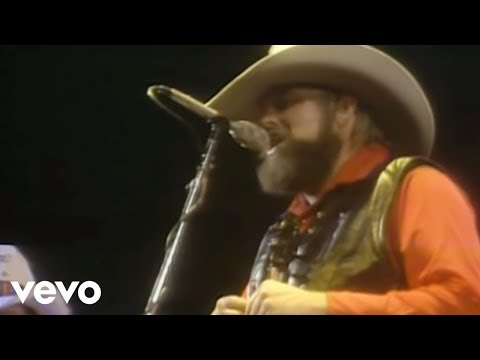


→ More from the 1980s File
View all 1980s hits →


Keep digging