The 1980s File Feature
The Beach Boys Medley
"The Beach Boys Medley" — A Summer Institution Returns to the Charts Nostalgia Hits the Hot 100 The summer of 1981 had an unusual relationship with its own r…
01 The Story
"The Beach Boys Medley" — A Summer Institution Returns to the Charts
Nostalgia Hits the Hot 100
The summer of 1981 had an unusual relationship with its own recent past. Barely two decades had passed since the early 1960s birthed the surfing craze, the California sound, and the whole myth of endless summer that the Beach Boys had so perfectly soundtracked. Yet those years already felt like a golden age, especially against the backdrop of an America navigating the early Reagan years, economic uncertainty, and a cultural mood that was simultaneously anxious and hungry for reassurance. Into that mood came a package that offered something simple: the greatest hits of the Beach Boys, compressed into a single medley designed to make you feel the sun on your face regardless of what the calendar said.
"The Beach Boys Medley" was constructed as a commercial product acknowledging the band's place in American music history, threading together some of their most celebrated recordings from the early and mid-1960s into a continuous piece that radio programmers could deploy as a ready-made nostalgia trip. The strategy worked with remarkable efficiency on the Billboard Hot 100, where the medley debuted on July 25, 1981, at position 76 and proceeded to climb steadily through the summer months and into the fall.
The Architecture of a Medley Hit
Medley singles have a specific place in pop chart history. They tend to appear at moments when a catalog is being reassembled for a new audience, or when an artist's legacy has solidified to the point where the highlights reel can itself become a marketable commodity. The Beach Boys were a textbook case for this approach in 1981: their original run of hits from 1962 through the late 1960s was well established in the cultural memory, they had continued recording and touring without achieving the same level of commercial dominance, and a generation of listeners who had discovered them in their original moment was now old enough to buy records in volume driven by pure nostalgia.
The medley format allowed radio programmers to access the emotional content of multiple beloved songs within a single airplay slot, which was a compelling offer at a moment when format radio was increasingly efficient about its real estate. A station that played "The Beach Boys Medley" could satisfy the nostalgic demand for multiple songs simultaneously, which was genuinely useful programming. That utility helped explain the single's sustained chart presence through the summer and into the fall of 1981.
The Chart Run
The numbers tell a story of patient momentum. Entering the Hot 100 at number 76 on July 25, 1981, the medley gained ground with notable consistency: 62 on August 1, 45 on August 8, 37 on August 15, 30 on August 22. The trajectory continued as summer gave way to fall. The single reached its peak of number 12 on October 3, 1981, a strong chart position that placed it comfortably in the upper tier of that autumn's pop landscape. The total run of 18 weeks on the chart marked one of the more durable single releases of that year, demonstrating that nostalgic appeal, when it connects with the right cultural moment, can sustain chart life over an unusually long arc.
A peak of 12 on the Hot 100 was no small achievement in the fall of 1981, when the chart was competing with major new releases across rock, pop, and the emerging sounds of early MTV-era music. The fact that a medley of recordings from nearly two decades earlier could crack the top fifteen speaks to the genuine power of the Beach Boys' catalog and to the particular appetite for comfort and familiar pleasures that characterized the cultural mood of that period.
The Beach Boys at This Stage of Their Career
By 1981, the Beach Boys had passed through multiple phases of their career. The early hit-making machine of the first half of the 1960s had given way to Brian Wilson's increasingly ambitious studio experiments, culminating in the legendary sessions for what became Pet Sounds and the incomplete Smile. The commercial difficulties of the late 1960s and the band's subsequent years of touring-heavy operation had created a situation where the live act remained enormously popular even as new recordings struggled to match the commercial impact of the original run.
Their status as an American institution was firmly established by the early 1980s, with Fourth of July concerts and stadium performances drawing enormous crowds who came to hear the early hits performed live. The medley single tapped into exactly that institutional status, effectively giving radio listeners a version of the live experience that audiences were paying to see on tour. The connection between the medley's chart success and the band's continued touring presence was not coincidental: each reinforced the other, with radio plays reminding audiences why the concert tickets were worth buying.
Legacy and the Persistence of California Sound
The success of "The Beach Boys Medley" in 1981 was one data point in a much longer story about how the California sound of the early 1960s established itself as a permanent feature of American musical identity. Generations of artists have drawn on those vocal harmonies, those sun-soaked production values, and those specific emotional registers of freedom and longing. The medley's 18-week chart run confirmed that the raw material it was drawing on had not depleted over nearly two decades of cultural circulation.
Put on the medley now and feel exactly what those summer radio listeners felt in 1981: the particular pleasure of music that has earned its place in the memory by being genuinely great at doing what it set out to do. The Beach Boys figured out a sound that worked, and the evidence is that it kept working, right through the summer and fall of 1981 and well beyond.
"The Beach Boys Medley" — The Beach Boys' singular moment on the 1980s charts.
02 Song Meaning
The Themes and Legacy of "The Beach Boys Medley"
Nostalgia as an Active Cultural Force
There is a difference between nostalgia as passive sentiment and nostalgia as an active cultural project, and "The Beach Boys Medley" belongs firmly in the second category. By 1981, the California sound of the early 1960s had accumulated two decades of associations: summer vacations, teenage freedom, the mythological California that had become more idea than place. The medley was not simply a trip down memory lane; it was an assertion that these songs continued to carry emotional meaning for an audience whose relationship with them had deepened and changed over time.
The genius of the Beach Boys' original catalog lay in its identification of specific emotional states that turned out to be universally resonant despite their apparently regional character. Songs about California beaches were purchased and loved by people in Ohio, in Minnesota, in places where the Pacific Ocean was a remote abstraction. The emotion they were selling was not really about geography; it was about youth, possibility, and the feeling that summer is infinite when you are inside it. That emotional content does not expire.
The Mythology of the California Sound
The Beach Boys built a mythology around a very specific version of California life, one centered on surfing, cars, and romantic possibility, that was already somewhat stylized in the early 1960s when they were producing their greatest commercial work. By 1981, that mythology had passed through the filter of time into something that functioned almost as folk memory: not a literal description of anyone's actual experience but a shared emotional reference point that a broad American audience recognized and responded to.
The medley format served this mythological function particularly well because it moved through multiple songs without pausing long enough for any individual track to be fully digested. The listener was given a series of emotional touchpoints rather than a sustained engagement with any one of them, which created a cumulative feeling of richness and abundance. You got the sum of the catalog's emotional promise in a single piece, which was in some ways more potent than any individual track could be.
What the 1981 Audience Was Seeking
The cultural context of 1981 is important for understanding why a medley of nearly twenty-year-old recordings could reach number 12 on the Hot 100. The early Reagan years were a time of significant cultural conservatism, a conscious turn toward the values and aesthetics of an idealized American past. The Beach Boys fit that cultural moment with almost uncomfortable precision: they represented an America that was confident, sun-drenched, and uncomplicated, qualities that had enormous appeal at a moment when the present felt complicated.
The 1981 audience was not simply nostalgic for a past they had personally experienced; many of the young record buyers of that year had been children when the original recordings came out. They were nostalgic for a cultural version of the past they had absorbed through older siblings, parents, and the pervasive presence of these songs on oldies radio. That secondary nostalgia, longing for a time you did not actually live through but feel you know, is a distinct emotional phenomenon and one that the medley addressed effectively.
Legacy Within the Beach Boys Story
The medley's chart success in 1981 was a chapter in the much longer story of how the Beach Boys have maintained cultural relevance across six decades of American pop music. Their catalog has been revisited, reassessed, and reissued multiple times, with critics and historians periodically rediscovering the depth and ambition of recordings like Pet Sounds that were initially undervalued commercially. The early hits that the medley drew on have proven more durable than almost anyone could have predicted in 1965, and their continued vitality in 1981 was an early indicator of that durability.
The 18-week chart run of "The Beach Boys Medley" demonstrated that catalog music could compete with new releases on the contemporary chart, a lesson that the music industry has continued to relearn in various forms ever since. The songs included in the medley have gone on to accumulate streaming numbers and continued cultural circulation that make the original chart positions look modest by comparison. The California sound the Beach Boys invented has proven to be among the most generative and durable in the history of American popular music.
→ More from The Beach Boys
View all The Beach Boys hits →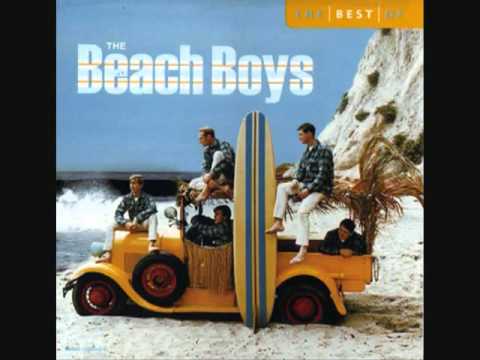


→ More from the 1980s File
View all 1980s hits →
Keep digging