The 1980s File Feature
Still Cruisin'
Still Cruisin': The Beach Boys, Lethal Weapon 2, and a Late Commercial Comeback By 1989, The Beach Boys occupied an unusual position in American popular cult…
01 The Story
Still Cruisin': The Beach Boys, Lethal Weapon 2, and a Late Commercial Comeback
By 1989, The Beach Boys occupied an unusual position in American popular culture. They were simultaneously one of the most iconic acts in the history of rock and roll and a group whose original creative force had largely dissipated across more than two decades of lineup changes, internal conflicts, and stylistic drift. The death of Dennis Wilson by drowning in 1983 had removed one of the group's most creatively restless members, and the ongoing complications surrounding Brian Wilson's mental health and intermittent participation had made the band's artistic trajectory unpredictable. What remained was a formidable commercial brand with extraordinary catalog recognition and a continuing ability to sell concert tickets to audiences nostalgic for the California dream their early records had articulated so vividly.
The opportunity to contribute to the soundtrack of Lethal Weapon 2, the sequel to the enormously successful 1987 action film, came at a moment when The Beach Boys were looking for ways to maintain their commercial presence in a popular music landscape that had moved well beyond the idioms they had pioneered. The original Lethal Weapon had been a major blockbuster, and its sequel was among the most anticipated films of 1989. Soundtrack placement in a film of that commercial magnitude offered exposure to audiences who might not be following the band's recording output but who retained affection for the group's established identity.
"Still Cruisin'" was specifically written for the film and recorded for the accompanying soundtrack album. The song was composed by Terry Melcher, who had a long history with the Beach Boys and with California pop more broadly; he had produced The Byrds' early recordings and had worked in various capacities with Brian Wilson over the years. The recording featured the surviving core of the Beach Boys with Mike Love prominent in the vocal mix, as had been the case throughout most of the group's 1980s work. The production style reflected the contemporary pop production values of the late 1980s rather than the band's classic California sound.
The single entered the Billboard Hot 100 on August 26, 1989, debuting at number ninety-three. Reflecting the limited scope of its commercial ambition as a soundtrack tie-in, it peaked at that same position in its first week and spent only three weeks on the chart before slipping off. This modest performance reflected the particular economics of soundtrack placement: the song gained exposure through association with the film rather than through traditional radio promotion, and its chart presence was correspondingly brief. The Beach Boys' ability to place a single on the Hot 100 at all in 1989, more than twenty-five years after "Surfin' Safari" had inaugurated their chart career, was itself a testament to the group's enduring cultural visibility.
The film Lethal Weapon 2 was released in July 1989 and became one of the highest-grossing films of the year, which gave "Still Cruisin'" significant exposure through the film's promotional campaign and its theatrical run. The combination of the movie's beach-and-action aesthetic with the Beach Boys' California branding created a natural commercial alignment, even if the song itself was not among the more memorable products of the group's career. The soundtrack album did reasonably well commercially in the context of the film's success.
The year 1989 was one of particular complexity for the group's internal dynamics. Brian Wilson had re-engaged with The Beach Boys commercially but remained a peripheral figure in their day-to-day operations, and the disputes between Mike Love and other former members over songwriting credits and the group's musical direction continued to simmer. Mike Love's preference for a more straightforwardly commercial and nostalgic direction had largely won out over the more experimental impulses that had characterized the group at their creative peak in the mid-1960s, and "Still Cruisin'" was a product of that commercial orientation.
The Still Cruisin' album, released to coincide with the single and the film, assembled several recent recordings alongside the soundtrack contributions. It was not a critical success but sold respectably, sustained primarily by the band's enormous recognition factor and the promotional halo from the film. Reviews noted the gap between the commercial professionalism of the performances and the creative ambition of the group's classic recordings, a comparison that had become an unavoidable feature of nearly all Beach Boys coverage by the late 1980s.
In retrospect, "Still Cruisin'" represents a particular moment in the career of an act navigating the complex territory between legacy management and genuine creative contribution. The song's title was itself a kind of statement: an acknowledgment that the group was still in motion, still engaged with the popular music marketplace, even as the terms of that engagement had shifted considerably from the era of "Good Vibrations" and "Pet Sounds." The Beach Boys would continue recording and touring into the following decades, their catalog ensuring their cultural relevance long after their chart presence had become intermittent.
02 Song Meaning
The Meaning Behind Still Cruisin': Motion, Persistence, and the Legacy of California Pop
"Still Cruisin'," recorded by The Beach Boys in 1989 for the Lethal Weapon 2 soundtrack, operates within the tradition of California car-and-coastal imagery that the group had been mining since their earliest recordings in 1961 and 1962. The song's central metaphor of cruising, of moving through a landscape without a fixed destination, had been a recurring motif in the Beach Boys' catalog from their very beginnings, connecting them to a specific California youth culture that was already becoming mythologized by the time their first records appeared.
The act of "cruising" in the California tradition carried specific cultural associations: freedom from domestic constraint, access to the open road, the pleasure of motion for its own sake, and the social rituals of automotive display and courtship that characterized Southern California's car culture in the postwar decades. The Beach Boys had converted these specific regional practices into something that resonated nationally and internationally, because the California they described was always as much an imaginative space as a geographical one, a projection of desire for freedom and sunshine that transcended the specifics of any particular boulevard or beach.
By 1989, the cultural moment that had produced the Beach Boys' original success was decades in the past. The "still" in the song's title acknowledged that gap directly: the group was asserting not that they were exactly as they had been but that they persisted, that the motion continued even after the specific circumstances that had originally propelled it had changed. This was an argument not for nostalgia but for continuity, for a version of identity that could survive the passage of time and the accumulation of experience.
The song's placement within an action film franchise reinforced this theme of persistence and motion in a different register. Lethal Weapon 2 was itself a sequel, a continuation of a story that audiences had already invested in, and the Beach Boys were similarly a continuing story rather than a new one. The alignment between the film's commercial identity and the band's own branding was not accidental: both were trading on established recognition while attempting to demonstrate continued vitality and relevance to contemporary audiences.
There is also a dimension of self-awareness in the song's premise that deserves acknowledgment. A group that had spent nearly three decades at or near the center of American popular culture, and had survived the losses, conflicts, and commercial shifts that had ended many of their contemporaries' careers, had earned the right to describe themselves as "still cruisin'" with a certain genuine authority. The persistence implied by the title was not merely promotional language; it reflected a real fact about the group's extraordinary longevity.
The California mythology that The Beach Boys had helped create was by 1989 a well-established element of American popular culture, reproduced in films, television programs, and popular music by artists who had grown up with the original recordings as foundational texts. The Beach Boys occupied an unusual position within that mythology as both its creators and its inheritors, artists who were now operating within a cultural framework that their own earlier work had helped to construct. "Still Cruisin'" engaged with that position directly, situating itself within the continuing tradition of California imagery while acknowledging the temporal distance between the original creation and the present moment.
The song's unpretentious directness was itself meaningful in context. By the late 1980s, many veteran acts were attempting elaborate artistic reinventions that did not always succeed; The Beach Boys' willingness to deliver a straightforward entertainment tied to a summer blockbuster was a different kind of statement, one about the value of reliable pleasure and the legitimacy of commercial entertainment as an end in itself.
→ More from The Beach Boys
View all The Beach Boys hits →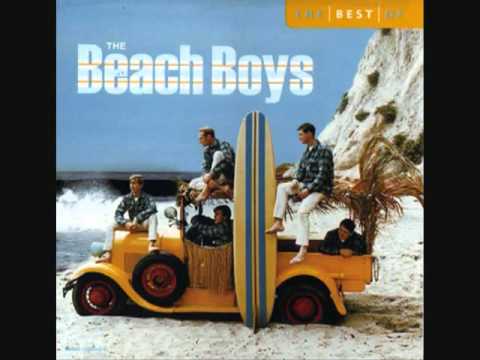


→ More from the 1980s File
View all 1980s hits →

Keep digging