The 1980s File Feature
Spring Love (Come Back To Me)
Spring Love (Come Back To Me) — Stevie B (1988) "Spring Love (Come Back To Me)" stands as one of the defining tracks of the Miami freestyle era, a genre that…
01 The Story
Spring Love (Come Back To Me) — Stevie B (1988)
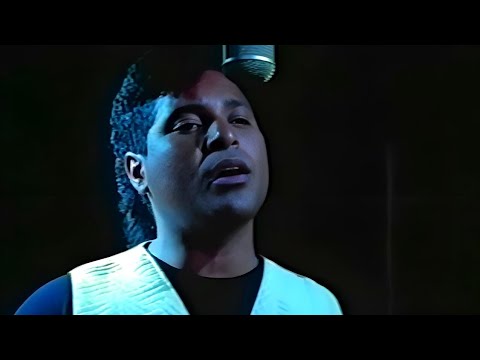
"Spring Love (Come Back To Me)" stands as one of the defining tracks of the Miami freestyle era, a genre that burned brightly through the mid-to-late 1980s and left a durable mark on American dance music despite rarely receiving the critical attention it deserved. Released in 1988 on LMR Records, the song became a signature moment for Steven Bernard Hill, the Florida-born artist who recorded under the name Stevie B, and it helped cement his position as one of freestyle's most commercially successful practitioners.
Miami freestyle was a regional genre with distinctive sonic characteristics: synthesizer-heavy production, prominent drum machines, a tempo calibrated for club dancing but not so fast as to exclude slower, more emotional material, and vocals that leaned toward melodrama in the best sense, treating romantic longing and heartbreak with operatic seriousness. The genre had roots in the Latin freestyle movement centered in New York and Miami but developed its own regional accent that owed something to the electronic funk and electro traditions of the early 1980s. By 1988, freestyle had established a loyal audience that crossed racial and ethnic lines, particularly in the Latino communities of South Florida and the northeast United States.
Stevie B was well suited to the genre's emotional requirements. His voice carried a quality of earnest vulnerability that fit freestyle's preoccupation with romantic longing, and his willingness to commit fully to the melodramatic premise of a song without ironic distance made him an effective interpreter of the genre's conventions. "Spring Love" exemplified these qualities. The song describes the desire for a former lover to return, framed through seasonal imagery that gives the emotional plea a sense of cyclical inevitability. The production surrounds this sentiment with synthesizer textures and drum machine patterns that were entirely characteristic of the genre's late-period peak.
The commercial performance of "Spring Love" demonstrated that freestyle could penetrate the mainstream despite being largely ignored by rock-oriented radio. The song reached the Billboard Hot 100 and performed particularly well on dance and club charts, where the genre had built its audience through club play and regional radio. LMR Records, a Florida-based independent label, had developed real expertise in working the channels that mattered for freestyle's commercial ecosystem: club DJs, Latin radio stations, and regional markets where the genre had its densest following.
Stevie B would achieve his greatest chart success shortly after "Spring Love" with the 1990 ballad "Because I Love You (The Postman Song)," which reached number one on the Billboard Hot 100, a rare achievement for any freestyle artist. That song's success was partly built on the audience that "Spring Love" and other earlier recordings had developed. The trajectory illustrated a pattern common in the freestyle world, where artists who mastered the genre's emotional vocabulary could occasionally translate that mastery into mainstream crossover success when the material aligned with broader pop tastes.
The late 1980s context matters for understanding what "Spring Love" meant culturally. Dance music was in a complex moment: house music had emerged from Chicago and was beginning its long journey toward mainstream acceptance; hip-hop was in the middle of its golden age; and the synthesizer-based pop that had dominated the early part of the decade was being challenged by both of those movements. Freestyle existed in its own lane, largely outside the critical conversation but deeply embedded in the communities that loved it. Songs like "Spring Love" functioned as genuine emotional touchstones for listeners who found the genre's combination of danceability and romantic sincerity more satisfying than either the increasingly stripped-down aesthetic of house or the bravado of emerging hip-hop.
Radio play for freestyle tracks in this period was heavily concentrated in specific markets, and New York and South Florida drove much of the genre's commercial performance. In those markets, "Spring Love" received the kind of saturation airplay that built the sustained name recognition Stevie B needed to remain commercially viable through the early 1990s. The song's club life also extended its commercial impact well beyond its initial chart run, with DJs keeping it in rotation as a reliable crowd-pleaser in venues that catered to freestyle's core audience.
Looking back, "Spring Love (Come Back To Me)" represents the freestyle genre at a moment of genuine creative and commercial confidence. The genre was producing polished, emotionally sophisticated work that deserved more critical engagement than it typically received from mainstream music journalism, which tended to concentrate its attention on rock, hip-hop, and the mainstream pop that crossed over into those audiences. Stevie B and his contemporaries were making music that mattered deeply to its listeners, and "Spring Love" is a clear example of that achievement.
02 Song Meaning
What "Spring Love (Come Back To Me)" Means: Seasonal Longing and Genre Sincerity
"Spring Love (Come Back To Me)" is built around one of popular music's oldest conceits: the use of seasonal change as a metaphor for emotional states. Spring, with its associations of renewal, warmth, and new beginnings, becomes in Stevie B's hands not a symbol of hope fulfilled but of hope yearned for. The song's speaker has not yet experienced the renewal the season promises; they are waiting for a lost love to return, hoping that the change in weather will bring with it a change in the relationship's fortunes. The gap between spring's conventional promise and the speaker's actual emotional situation gives the song its tension.
This kind of romantic longing was the central emotional territory of Miami freestyle, and "Spring Love" demonstrates why the genre's best work continues to resonate with listeners who encountered it decades ago. Freestyle's emotional register was unapologetically sincere in an era when musical irony was increasingly fashionable. The genre did not wink at its own sentimentality or frame romantic pain as something to be transcended through cool detachment. It committed fully to the melodramatic premise, treating the desire for a former lover's return as a genuine emergency rather than a minor embarrassment to be managed with dignity.
Stevie B's vocal approach on "Spring Love" is essential to the song's meaning. His delivery does not perform vulnerability as a stylistic choice; it presents vulnerability as the natural response to a specific emotional situation, which is a subtle but important distinction. Listeners responded to the sense that the feeling behind the words was real, or real enough to be convincing, and that sincerity operated as the song's primary emotional technology. No amount of production sophistication could have achieved the same effect without a vocal performance that sounded genuinely invested in the material.
The production context reinforces the song's emotional argument. The synthesizer-based arrangement and drum machine patterns that characterize Miami freestyle are not simply period markers; they create a specific kind of emotional space that balances between the intimate and the anthemic. The music is big enough to fill a dance floor but not so overwhelming that the vocal gets lost. This balance is crucial to the song's meaning: it needs to be heard as a personal statement even as it functions as collective dance music. The production achieves this balance by keeping the arrangement clean and giving the vocal room to breathe even at its most emotionally heightened moments.
The "come back to me" structure of the song's appeal places the speaker in a position of acknowledged vulnerability. There is no pride management in the lyric's core request; the speaker is not pretending that the loss is acceptable or that a reunion would be anything other than exactly what they want. This directness was characteristic of freestyle as a genre and partly explains why it built such a loyal audience in the communities where it thrived. The music spoke to people who found the more guarded emotional postures of mainstream pop less satisfying than freestyle's willingness to simply say what the speaker felt.
The song's place in Stevie B's catalog adds another dimension to its meaning. "Spring Love" came before his biggest commercial success and can be heard as a formative statement of his artistic identity. The emotional concerns it expresses, longing, loss, the hope for reconciliation, are consistent across his best-known work. His audience recognized a coherent sensibility in his recordings that gave individual songs additional resonance as part of a larger body of work. "Spring Love" is not simply a single but an early articulation of the themes that would define his career.
For listeners who grew up with Miami freestyle, songs like "Spring Love (Come Back To Me)" carry a specific nostalgic weight that transcends their original emotional content. They are connected to particular moments in listeners' own lives, to specific places and relationships and feelings that the music helped them process or express. This is the deepest form of meaning a popular song can achieve: not just the meaning encoded in its lyrics and music but the meaning layered onto it by the lived experiences of the people who loved it. LMR Records' independent platform and Stevie B's regional radio saturation ensured those lived experiences were shared by hundreds of thousands of listeners across the dance-oriented markets of the United States.
→ More from Stevie B
View all Stevie B hits →



→ More from the 1980s File
View all 1980s hits →

Keep digging