The 1980s File Feature
Talking Back To The Night
Talking Back to the Night: Steve Winwood's Introspective Title Track and Its Extended Life "Talking Back to the Night" is the title track of Steve Winwood's …
01 The Story
Talking Back to the Night: Steve Winwood's Introspective Title Track and Its Extended Life
"Talking Back to the Night" is the title track of Steve Winwood's fourth solo studio album, released on Island Records in 1982. The album marked a continuation of the artistic direction Winwood had established with Arc of a Diver in 1981, the record that had announced his commercial rebirth as a solo artist after years away from the spotlight following the dissolution of Traffic. Where Arc of a Diver had relied entirely on Winwood performing and producing every part himself, Talking Back to the Night followed a similar model while refining the synthesizer-and-groove aesthetic that had made the earlier album so commercially successful.
The album was produced by Steve Winwood himself, working at his home studio in the English countryside in the manner he had adopted for Arc of a Diver. This method of self-contained creation, in which a single artist performs all the vocal and instrumental parts, was unusual for major-label rock releases of the period but suited Winwood's perfectionist temperament and his extraordinary multi-instrumental abilities, which encompassed keyboards, guitar, bass, and drums at a professional level. The resulting sound was dense but controlled, built on synthesizer textures and programmed rhythms that placed the recordings firmly in the early 1980s sonic landscape while retaining the melodic sophistication that had characterized Winwood's best work with Traffic and Blind Faith.
The title track itself is a reflective, nocturnal piece in which the sonic atmosphere and the emotional register are closely aligned. Winwood's voice, one of the most distinctive in British rock, a slightly aged but still potent instrument capable of conveying both warmth and vulnerability, carries the melody with the authority of a singer who has complete command of his material. The production surrounding that voice is layered but never cluttered, with synthesizer pads providing harmonic context and a rhythmic foundation that draws on both the rock and R&B traditions Winwood had navigated throughout his career.
Talking Back to the Night as an album performed respectably on both sides of the Atlantic, reaching the upper reaches of the album charts in the United Kingdom and establishing a presence on the American album chart as well. Island Records, founded by Chris Blackwell and by 1982 one of the most artistically prestigious independent labels in the world, gave the album appropriate promotional support, though it was clear that the album was operating in a slightly more modest commercial register than Arc of a Diver, which had generated the crossover hit "While You See a Chance."
The title track received renewed attention when it was reissued as a single in 1988, a period when Winwood's commercial profile had risen dramatically following the enormous success of his 1986 album Back in the High Life and its singles, including "Higher Love," which won Winwood the Grammy Award for Record of the Year for 1986. The reissue capitalized on the appetite among his newly expanded audience for more of his catalog, and the song found radio play and chart presence in a context very different from its original release six years earlier.
By 1988, Steve Winwood was one of the most commercially successful artists in the world, and the revisitation of earlier material in light of that success was a natural commercial strategy for Island and for Winwood's management. The title track of Talking Back to the Night benefited from this recontextualization, gaining listeners who had come to Winwood through his mid-1980s albums and who were willing to explore his earlier solo work in search of comparable pleasures.
The song's place in Winwood's catalog is that of a transitional piece, connecting the self-made aesthetic of Arc of a Diver to the more polished, more broadly commercial sound he would achieve in the middle of the decade. It demonstrates the consistency of his artistic values across a period of significant commercial change, and it rewards listeners who are willing to approach it on its own quiet terms rather than measuring it against the more explosive successes that surrounded it on either side of its release.
02 Song Meaning
The Meaning of "Talking Back to the Night": Defiance, Introspection, and Winwood's Nocturnal Voice
"Talking Back to the Night" as a title and as a recording encapsulates a particular emotional posture that runs throughout Steve Winwood's best solo work: the posture of a thoughtful person examining their interior life in a moment of quiet and using that examination to assert their own agency against the pressures and uncertainties that the surrounding world imposes. To talk back to the night is to refuse passivity, to maintain a dialogue with darkness rather than being consumed by it, to find in the act of articulation itself a form of resistance and continuity.
The song's nocturnal imagery connects to a long tradition in popular music in which night serves as the appropriate setting for introspection, for honesty about emotional complexity, and for the kind of private reckoning that daylight and its social obligations do not permit. Winwood's use of this setting is neither gothic nor melodramatic; he approaches the night as a thoughtful adult rather than a romantic sufferer, and the emotional register of the piece is contemplative rather than anguished. This quality of mature introspection distinguishes it from the more intense, youthful emotional expressions that characterized much of the rock that surrounded it on the radio in the early 1980s.
Within the context of Winwood's career, the title track carries the meaning of a man who has survived considerable professional and personal difficulty and emerged with his artistic identity intact. Winwood had been one of the most celebrated musicians in British rock through the late 1960s and early 1970s, and the years of relative public silence that followed Traffic's dissolution had raised legitimate questions about whether he could sustain a solo career at the level his early work had promised. Arc of a Diver and its follow-up answered those questions decisively, and "Talking Back to the Night" is in part a reflection on that process of renewal, on the experience of having faced uncertainty and found a way through it.
The production aesthetic of the recording, with its layered synthesizers and precise rhythmic programming, also carries meaning as a statement about how Winwood understood his relationship to contemporary music in 1982. He was not attempting to recreate the organic rock sounds of Traffic or the psychedelic textures of his earlier work but was engaging seriously with the new sonic vocabulary of the synthesizer era, bringing to that vocabulary the melodic intelligence and emotional depth that had distinguished his earlier work. This willingness to meet the present moment on its own sonic terms while maintaining artistic integrity is itself a form of talking back to the night, of refusing to be defined or limited by a fixed notion of what one's art should sound like.
The song's reissue in 1988 gave it a second life that added another layer of meaning: it became a document of artistic continuity, evidence that what Winwood had been doing in the early years of his solo career was consistent with and connected to the enormous commercial success he achieved in the middle of the decade. For listeners encountering it through the lens of his later fame, the title track of Talking Back to the Night read as an early chapter in a sustained story of artistic self-determination, of a musician who made his own terms and lived by them across several decades of changing commercial circumstances.
→ More from Steve Winwood
View all Steve Winwood hits →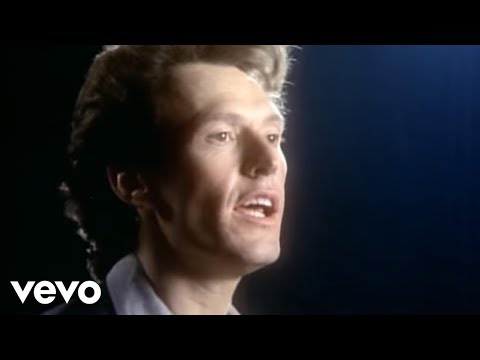




→ More from the 1980s File
View all 1980s hits →



Keep digging