The 1980s File Feature
Let Me Be Your Angel
"Let Me Be Your Angel" by Stacy Lattisaw A Teenage Voice That Stopped Radio in Its Tracks The summer of 1980 was alive with new sounds and new faces, but few…
01 The Story
"Let Me Be Your Angel" by Stacy Lattisaw
A Teenage Voice That Stopped Radio in Its Tracks
The summer of 1980 was alive with new sounds and new faces, but few entrances were as arresting as that of Stacy Lattisaw. She was thirteen years old when she signed with Cotillion Records, a subsidiary of Atlantic, and by the time her debut album reached the public, it was immediately clear that the music industry had encountered something exceptional. Washington, D.C., had produced many distinguished voices in the R&B tradition, but Lattisaw was something specific: a teenager with vocal maturity that belonged to a far older performer, combined with a girlish warmth that gave her records an accessibility that pure technical ability alone could never generate.
Young and in Love, her debut album, was produced with care for the space her voice occupied, and "Let Me Be Your Angel" was the single that introduced her to national audiences. The song was warm and melodically generous, the kind of R&B track that radio programmers of the era recognized immediately as something their listeners would want to hear again. The production positioned Lattisaw's voice at the center of a smooth, mid-tempo arrangement that gave her room to demonstrate both the power and the tenderness she could deploy with apparent ease.
The Song's Construction and Appeal
"Let Me Be Your Angel" operated within the tradition of romantic R&B that had been commercially dominant throughout the 1970s, but it carried enough freshness to avoid feeling like a retread. Part of that freshness came simply from the singer's age: the lyrical persona of someone offering devotion and protection carried an entirely different emotional weight when delivered by a thirteen-year-old than it would have from an adult performer. The song asked to be taken seriously and the voice behind it made that request difficult to refuse.
The track was co-written by Naomi Garrett and given a production treatment that suited the period without being excessively slavish to current trends. The arrangement included the lush string accents and rhythm patterns characteristic of late-1970s and early-1980s soul production, providing a warm sonic bed that supported rather than competed with the vocal. The result was a record that sounded polished and professional at a moment when professional polish was what radio required.
A Chart Run That Reflected Real Momentum
The commercial performance of "Let Me Be Your Angel" was substantial for a debut single, particularly one by an artist who was still in middle school. The single debuted on the Billboard Hot 100 on August 9, 1980 at position 87, then climbed steadily through the summer and into the fall, reflecting consistent radio support and genuine consumer response. The ascent was patient but uninterrupted, with the single moving methodically upward week by week.
The single reached its peak of number 21 on November 22, 1980, having logged 24 weeks on the Hot 100 in total. Twenty-four weeks is a genuinely remarkable run by any measure, reflecting the kind of sustained radio and consumer support that labels can hope for but rarely reliably achieve. For a debut release from a thirteen-year-old artist, the longevity of the chart run was particularly striking, demonstrating that the audience was not simply curious about a novelty but genuinely attached to the music itself.
Lattisaw's Place in Early-1980s R&B
The early 1980s R&B landscape was shaped by the continuing dominance of established artists while simultaneously being penetrated by new voices who would define the decade. Lattisaw arrived at a transitional moment, after the full bloom of the disco era and before the harder production aesthetics of mid-1980s urban radio had fully taken hold. Her sound occupied a sweet spot between those two eras, accessible to listeners who had loved the lush soul of the 1970s while containing enough contemporary freshness to connect with younger audiences discovering the genre for the first time.
Cotillion and Atlantic supported the launch with real promotional investment, recognizing that they had signed someone genuinely special. The chart performance of "Let Me Be Your Angel" justified that investment and set up the career arc that would follow, as Lattisaw built on this foundation through the early and mid-1980s with additional charting singles and albums that cemented her position in the R&B world.
The Lasting First Impression
First impressions in the music industry matter enormously, and "Let Me Be Your Angel" was about as strong a debut statement as anyone could have asked for. The song announced a genuine talent, someone whose voice had the range to go wherever she chose to take it in the years that followed. That sense of latent possibility is audible in the recording, even now, decades on from the summer it climbed the charts. Press play and you will hear exactly what it sounded like when a thirteen-year-old from Washington, D.C. announced herself to the world.
"Let Me Be Your Angel" — Stacy Lattisaw's singular moment on the 1980s charts.
02 Song Meaning
The Meaning Behind "Let Me Be Your Angel" by Stacy Lattisaw
Devotion From an Unexpected Voice
The offer embedded in the title, to be someone's angel, carries a weight that shifts depending on who is making it. In the tradition of R&B love songs, the angel figure represents devoted, protective love, the kind that elevates and shelters rather than merely companioning. When delivered by a thirteen-year-old performer, the sentiment takes on a quality of innocence that adult voices simply cannot replicate. Stacy Lattisaw's version of this emotional offer was untouched by the complications that adult romantic experience introduces, which gave the song a purity of feeling that connected with listeners across age groups.
The song works as a declaration of complete emotional availability. The narrator positions herself as willing and capable of providing whatever the object of affection needs, framing love as a form of devoted service rather than a negotiation between equals. In 1980, this framing was conventional for the R&B ballad format, but Lattisaw's delivery gave it a sincerity that transcended convention.
Youth as a Musical Quality
Youth in popular music is often treated as a marketing quality rather than an artistic one, something that audiences respond to because of its novelty rather than its genuine contribution to the emotional content of a recording. Lattisaw complicated that assumption from her first release. The youth in her voice was not mere novelty; it was a genuine emotional quality that made the themes of the song land differently than they would have otherwise.
The vulnerability of a young person expressing deep devotion carries a particular kind of authenticity. Adults can perform innocence; they cannot actually inhabit it. Lattisaw inhabited it naturally, which gave "Let Me Be Your Angel" an emotional texture that seasoned producers recognized as commercially valuable and that listeners experienced as simply and genuinely moving.
R&B's Tradition of Romantic Idealism
The song situates itself within a long tradition of R&B romantic idealism, a mode of emotional expression that treated love as something worth aspiring to in its highest and most generous forms. This tradition traced its lineage through the soul music of the 1960s and the smooth R&B of the 1970s, and it found in "Let Me Be Your Angel" a fresh expression. The lyrical landscape is one of selfless devotion, of love understood as a gift given freely rather than a transaction entered into strategically.
For audiences in 1980, this was familiar and welcome territory. The late 1970s had brought experimental and often darker themes into popular music, and there was genuine appetite for the warmth and emotional straightforwardness that a song like this provided. Lattisaw's voice carried that warmth effortlessly, and the production wrapped it in a sonic environment that amplified the feeling without complicating it.
A Foundation for a Larger Story
As the opening statement of Stacy Lattisaw's recording career, "Let Me Be Your Angel" established the emotional register that would define her work across the following years. The combination of technical vocal excellence and genuine emotional warmth was rare at any age; in a thirteen-year-old, it was extraordinary. The song's commercial success with 24 weeks on the Hot 100 and a peak of number 21 validated that audiences heard what was genuinely there, not merely responding to novelty but connecting with an emotional offering that the recording communicated with unusual clarity. That clarity was the song's ultimate meaning: a young voice saying something true, and being heard.
→ More from Stacy Lattisaw
View all Stacy Lattisaw hits →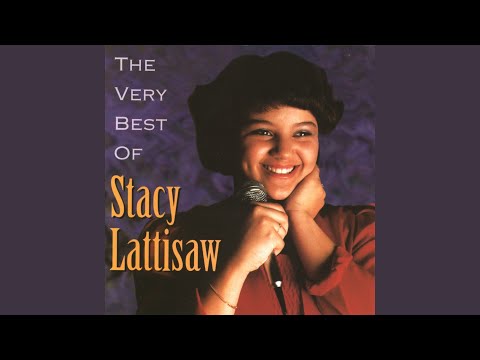

→ More from the 1980s File
View all 1980s hits →

Keep digging