The 1980s File Feature
Two Sides Of Love
Sammy Hagar's "Two Sides Of Love": Hard Rock's Commercial Moment Before Van Halen In the summer of 1984, Sammy Hagar was at a crossroads that he could not ye…
01 The Story
Sammy Hagar's "Two Sides Of Love": Hard Rock's Commercial Moment Before Van Halen
In the summer of 1984, Sammy Hagar was at a crossroads that he could not yet see clearly from the inside. "Two Sides Of Love," the lead single from his album VOA, debuted on the Billboard Hot 100 on July 14, 1984, and climbed steadily to a peak position of number 38 during the chart week of August 18, spending twelve weeks on the survey. The performance was a solid commercial showing for an artist whose solo career had produced consistent hard rock radio success without quite breaking through to the highest levels of the mainstream pop chart. Within months of the single's release, Hagar would be recruited to replace David Lee Roth as lead vocalist of Van Halen, one of the most consequential personnel changes in rock history, and his solo career would be fundamentally restructured by that event.
But in the summer of 1984, "Two Sides Of Love" existed as a testament to what Hagar had built independently. The Monterey, California native had been a significant figure in hard rock since the mid-1970s, first as a member of Montrose, the San Francisco-area group that had helped establish the template for the arena rock sound that would dominate American radio through the late 1970s and early 1980s. His solo career had launched in 1976 and had generated a series of albums on Capitol Records that established him as a reliable hard rock presence with genuine melodic instincts and vocal capabilities that distinguished him from the more purely aggressive end of the genre.
VOA was recorded for Geffen Records, where Hagar had moved after his Capitol period. The album reflected the commercial hard rock aesthetic that had been refined through the early 1980s by acts like Def Leppard, Journey, and Foreigner: melodically accessible songs built on guitar riffs, supported by polished studio production, and designed for maximum impact on both album-oriented rock radio and, where possible, the broader Hot 100 format. Hagar had always been more melodically inclined than many of his hard rock contemporaries, and this quality served him well in an era that was rewarding the combination of rock energy and pop accessibility.
The production of VOA was handled by Ted Templeman, who had an extraordinary track record in hard rock production, most notably as the producer of Van Halen's first several albums. Templeman's involvement brought production expertise and industry credibility to the project, and the resulting album had a polished, well-constructed sound that gave "Two Sides Of Love" its commercial sheen. The guitar work was prominent without overwhelming the melodic qualities that made the track radio-viable, and the rhythm section provided the propulsive drive that hard rock audiences expected.
The chart context of the summer of 1984 placed "Two Sides Of Love" in competition with an extraordinarily diverse range of pop material. Prince's "When Doves Cry," Tina Turner's "What's Love Got to Do with It," Cyndi Lauper's "Time After Time," and Van Halen's own "Jump," which had been at number one earlier in the year, were among the dominant forces shaping that summer's commercial landscape. That Hagar managed a sustained twelve-week run and a top-forty peak in this environment reflected both the song's genuine commercial appeal and the strength of his established fan base in the album-oriented rock radio format, which provided a reliable platform for acts with his audience profile.
The irony of Hagar charting with "Two Sides Of Love" in the summer of 1984 while Van Halen, produced by the same Ted Templeman, was simultaneously one of the defining commercial entities of the moment, was not lost on observers who later reconstructed the chronology. Roth's tenure with Van Halen was already under severe strain, and the recruitment of Hagar was being discussed at a level that had not yet reached public knowledge. Within the year, Hagar would be announced as the new Van Halen vocalist, and the two entities would merge in one of rock's most discussed and debated lineup changes.
Hagar's solo catalog, including VOA, has been somewhat overshadowed in retrospective assessments by the Van Halen chapters of his career. But the body of work he built between his Montrose years and his Van Halen recruitment demonstrated consistent commercial and artistic achievement that deserved recognition on its own terms. "Two Sides Of Love" represented that work at its most commercially focused and effective, a track that delivered exactly what its commercial context required while showcasing the vocal and melodic strengths that would make Hagar a functional and commercially successful presence in Van Halen for over a decade.
The single's chart performance was eventually surpassed by his Van Halen output, but "Two Sides Of Love" remained a marker of where Hagar stood at the moment of maximum development of his independent artistic identity. It was, in retrospect, both a culmination and a farewell, the final clear expression of Sammy Hagar as a solo commercial force before the larger story of his career took over.
02 Song Meaning
The Meaning of "Two Sides Of Love" by Sammy Hagar
"Two Sides Of Love" engaged with a thematic territory that hard rock had not always been willing to occupy: the acknowledgment that romantic love was genuinely complex and could contain contradictory qualities simultaneously. The title announced the song's structural premise. Love was not simply one thing. It had different faces, different moods, different demands, and the song proposed to address that multiplicity rather than reducing it to a single dominant emotional register.
Hard rock as a commercial genre had developed strong conventions around the treatment of romantic and sexual themes. The dominant mode was assertive, sometimes aggressive, and generally inclined toward the presentation of desire as uncomplicated. Sammy Hagar had worked within those conventions throughout his solo career, but he had also shown a consistent interest in the melodic and emotional dimensions of pop craft that gave his best recordings more range than the straight hard rock template required. "Two Sides Of Love" was an expression of that interest, a song that used rock instrumentation and production to explore a more nuanced romantic territory than the genre's conventions typically encouraged.
The two sides the song described could be understood in multiple ways: the tender and the passionate, the vulnerable and the strong, the private and the public, the lasting and the immediate. This interpretive flexibility was a strength of the song's construction, allowing listeners to map the binary onto their own experience of romantic feeling without requiring agreement on what the two sides specifically were. The structural premise was clear enough to be graspable, but flexible enough to accommodate varied personal application.
The 1984 commercial context gave the song's thematic territory additional resonance. Hard rock was simultaneously at its commercial peak and under pressure from new musical directions, including the synth-pop and electronic dance music that were competing for radio time and chart positions. Acts that could combine rock instrumentation with pop melodic sensibility were finding the widest audiences, and "Two Sides Of Love" represented Hagar's most commercially focused expression of that combination. The song's treatment of romantic complexity served both artistic and commercial purposes: it was genuine thematic content and also a melodically accessible vehicle for the kind of emotional range that pop radio rewarded.
Hagar's vocal performance on the track was characteristically committed. He had always been a vocalist who communicated conviction in the material he was singing, and "Two Sides Of Love" gave him content that rewarded that conviction. The acknowledgment of love's contradictions was not delivered as philosophical musing but as lived experience, the kind of thing someone says who has actually encountered both sides and knows they are both real and both important.
In the arc of Hagar's career, the song stood as perhaps the clearest expression of what distinguished him from many of his hard rock contemporaries: a genuine investment in the full emotional range of romantic experience rather than a preference for its most aggressive or simplest aspects. The fact that this investment reached a top-forty position on the Hot 100 confirmed that the audience for emotionally inclusive hard rock was real and substantial, a fact that his subsequent work with Van Halen would demonstrate at an even larger commercial scale.
→ More from Sammy Hagar
View all Sammy Hagar hits →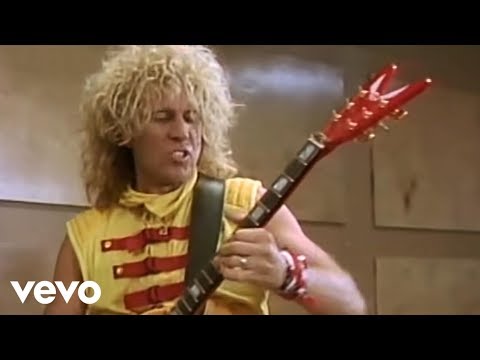




→ More from the 1980s File
View all 1980s hits →



Keep digging