The 1980s File Feature
I Don't Need You
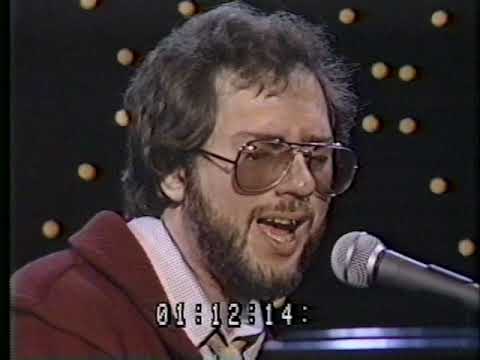
The Story Behind I Don't Need You by Rupert Holmes The Man Behind the Piña Colada Phenomenon Rupert Holmes entered 1981 riding one of the most improbable suc…
01 The Story
The Story Behind "I Don't Need You" by Rupert Holmes
The Man Behind the Piña Colada Phenomenon
Rupert Holmes entered 1981 riding one of the most improbable success stories of the era. His 1979 novelty-turned-classic Escape (The Piña Colada Song) had become an unlikely number one smash, a witty, story-driven single that showcased his gift for narrative songwriting unlike almost anyone else on pop radio at the time. Holmes was not a typical pop star; he was a classically trained composer, arranger, and eventually a Tony Award-winning playwright, someone who approached songwriting with a novelist's attention to character and plot twist. "I Don't Need You" arrived as he worked to prove that his earlier success was not a one-time fluke, and it became one of his most successful follow-up efforts.
A Different Kind of Love Song
Where much of Holmes's earlier fame rested on clever narrative twists, "I Don't Need You" took a more direct emotional approach, built around a lyric that says one thing on the surface while clearly meaning something entirely different underneath. Holmes, who wrote and produced much of his own material, brought his theatrical instincts to the arrangement, layering warm, soft-rock instrumentation, gentle keyboards, understated guitar, tasteful strings, around a vocal performance that carries real vulnerability beneath its seemingly casual delivery. It fit comfortably within the smooth, adult contemporary sound that dominated early-1980s pop radio.
A Strong Showing at the Top of the Decade
The song debuted on the Billboard chart on April 4, 1981, entering at number 84. It climbed over the following weeks, moving to 74, then 66, then 58, before reaching its peak position of number 56 on May 2, 1981. In total, the single spent 7 weeks on the chart, a solid run that helped extend Holmes's commercial viability into a new decade after his breakout success at the tail end of the 1970s. For an artist whose biggest hit had been such a singular, almost novelty phenomenon, sustaining chart presence with a more conventional love song was itself a meaningful accomplishment.
The Craft of a Songwriter's Songwriter
What distinguishes Holmes's work, and this song in particular, is the level of compositional sophistication beneath its accessible surface. His background writing for theater and arranging orchestral music shows through in the song's structure, the way melodic ideas develop and resolve with a precision that pop radio rarely demanded from its hitmakers. Even working within the soft-rock conventions of the era, Holmes's ear for harmony and his attention to lyrical detail set the track apart from more formulaic adult contemporary fare, revealing an artist who treated even his more commercial material with real compositional care.
Life After the Piña Colada Song
Holmes faced the classic challenge of any artist attached to a single massive novelty hit: proving there was substance beyond the gimmick. "I Don't Need You" helped make that case, demonstrating his range as both a vocalist and a songwriter capable of handling straightforward romantic material with as much skill as clever narrative songs. That versatility would eventually carry him beyond music entirely into a celebrated career in theater, most notably as the writer of the Tony Award-winning musical The Mystery of Edwin Drood, but songs like this one reveal the storytelling instincts that always underpinned his work, even in more conventional pop form.
Its Place in Rupert Holmes's Legacy
Today, "I Don't Need You" remains a favorite among fans who appreciate Holmes's work beyond his signature hit, evidence of a songwriter with genuine range and craft. It captures a moment when Holmes was proving, single by single, that his talent extended well past one clever, catchy novelty song. Give it a listen and you can hear the same narrative instincts that made him a hitmaker, applied here to something quieter and more emotionally direct.
"I Don't Need You" — Rupert Holmes's singular moment on the 1980s charts.
02 Song Meaning
What "I Don't Need You" by Rupert Holmes Is Really About
Saying the Opposite of What You Mean
The central irony of "I Don't Need You" lies right in its title: a declaration of independence that, through tone and context, reveals itself to be exactly the opposite. The narrator insists he can carry on without this person, listing all the ways he has convinced himself he is fine, while the underlying emotional current of the song makes clear just how much he actually longs for them. That gap between stated confidence and genuine vulnerability is the emotional engine driving the entire song, a familiar human contradiction rendered with real sensitivity.
Pride as a Protective Shield
The lyric captures something deeply relatable about how people cope with heartbreak or separation, reaching for pride and self-sufficiency as a defense mechanism even when those feelings are only partially true. Holmes writes this posture with real empathy rather than judgment, understanding that insisting you do not need someone is often simply a way of surviving the ache of missing them. That psychological nuance, treating denial not as dishonesty but as a coping strategy, gives the song more emotional depth than a typical breakup anthem.
A Storyteller's Instinct for Subtext
Given Holmes's background as a narrative songwriter and eventual playwright, it is no surprise that this song relies so heavily on subtext, on the difference between what a character says and what a character means. That theatrical sensibility, letting the audience read between the lines rather than stating emotions bluntly, distinguishes the song from more straightforward soft-rock ballads of the era. It rewards close listening, revealing itself gradually rather than announcing its full emotional meaning in the opening lines.
Adult Contemporary's Emotional Sophistication
The early 1980s adult contemporary landscape increasingly favored songs that treated romantic complexity with nuance rather than simple declarations of love or heartbreak. Holmes's song fits comfortably into that trend, offering listeners a more sophisticated emotional experience than the genre sometimes receives credit for. It spoke to an audience of adult listeners navigating real relationships, people familiar with the specific, complicated feeling of pretending to be over someone while quietly still hoping they will come back.
Why It Resonated with Listeners
Part of what made the song connect was its honesty about a very common form of self-deception. Listeners recognized themselves in the narrator's forced confidence, having likely told themselves similar things during their own periods of heartbreak or uncertainty. That recognition, the shock of hearing your own private rationalizations reflected back at you in a pop song, is a powerful driver of emotional connection, and it helps explain why the song found a receptive audience even without matching the commercial scale of Holmes's biggest hit.
A Quiet Study in Emotional Contradiction
In the end, "I Don't Need You" endures as a thoughtful meditation on the gap between what we say to protect ourselves and what we actually feel underneath. Its lasting appeal comes from that honesty, rendered with the storytelling craft that defined Holmes's entire career.
→ More from Rupert Holmes
View all Rupert Holmes hits →

→ More from the 1980s File
View all 1980s hits →



Keep digging