The 1980s File Feature
Walk This Way
Walk This Way — Run-D.M.C. and Aerosmith Rewrite the 1980s There are moments in pop music history when a single record does not just succeed commercially but…
01 The Story
"Walk This Way" — Run-D.M.C. and Aerosmith Rewrite the 1980s
There are moments in pop music history when a single record does not just succeed commercially but fundamentally alters the landscape. The summer of 1986 produced one of those moments: Run-D.M.C.'s recording of "Walk This Way" with Aerosmith's Steven Tyler and Joe Perry broke down walls between two musics that most of the industry had assumed would stay separate, and in doing so it changed what was possible for both hip-hop and rock. It was a piece of genuine cultural alchemy, and the charts confirmed it: the single reached number 4 on the Billboard Hot 100, the highest position any hip-hop act had achieved on the pop chart to that point.
Two Acts at Very Different Points in Their Stories
The history behind the collaboration makes the record all the more remarkable. Aerosmith in 1986 were a band widely considered to be in terminal commercial decline. Drug problems, lineup tensions, and a string of disappointing records had left them at what seemed like the end of their commercial viability. Run-D.M.C., on the other hand, were at the peak of their powers, the most commercially successful and critically respected hip-hop act in the world, a group that had taken the genre from its New York neighborhood origins into arenas and record stores across America. The pairing of a fallen rock titan with the ascendant kings of hip-hop was itself a story, and the music it produced was compelling enough to make the story feel inevitable rather than calculated.
How Rick Rubin Made It Happen
The key creative figure in the collaboration was producer Rick Rubin, who had co-founded Def Jam Recordings and who understood both the hip-hop and rock worlds with unusual depth. Rubin recognized that the original Aerosmith recording of "Walk This Way," from the 1975 album Toys in the Attic, was already structured around a riff and rhythm that had more in common with the hip-hop sample aesthetic than most rock of its era. His genius was in hearing what was already in the original and building a framework that allowed Run-D.M.C. and Aerosmith to inhabit the same piece of music not simply as collaborators but as equals with equal creative authority over the result.
Sixteen Weeks and a Peak at Number 4
"Walk This Way" debuted on the Billboard Hot 100 on July 26, 1986, entering at number 73 and beginning one of the more dramatic upward trajectories of the summer. From 73, it moved to 55, 43, 30, 20, climbing week by week as radio and MTV played it constantly. The single reached its peak of number 4 on September 27, 1986, and spent a remarkable sixteen weeks on the chart in total. That duration reflects a record that had found genuinely broad audience support across multiple demographic categories simultaneously, not just hip-hop fans and not just rock fans but both at once.
The Record That Opened Rock Radio to Hip-Hop
One of the most significant commercial effects of "Walk This Way"'s success was its demonstration that hip-hop records could get played on rock radio. This sounds like a modest technical point, but it was transformative in practice: it opened up an enormous new audience for the genre and signaled to the music industry that the walls between formats were more permeable than anyone had assumed. Hip-hop's subsequent commercial trajectory, its colonization of the mainstream in the late 1980s and 1990s, owes something measurable to what this record made legible to radio programmers.
A Legacy Beyond the Chart Numbers
The 168,000 YouTube views on this recording do not begin to capture the cultural weight it carries. "Walk This Way" is one of the handful of records you can point to when explaining why American popular music looks the way it does today. It demonstrated that the genre walls that the industry had built and maintained were commercial constructions rather than artistic necessities, and that the music that came from breaking them down could be more powerful than anything that stayed on the established side of the divide.
If you have never heard it from beginning to end with full attention, that is the only correction this situation requires. Press play.
"Walk This Way" — Run-D.M.C.'s singular moment on the 1980s charts.
02 Song Meaning
The Meaning Behind "Walk This Way" by Run-D.M.C.
The original "Walk This Way" by Aerosmith was, at its core, a song about youthful sexual initiation told through a series of boisterous, gleefully inappropriate images, delivered by Steven Tyler with the kind of reckless energy that rock and roll had been harnessing since its origins. The Run-D.M.C. version did not change the lyrical content significantly; what it changed was everything else: the cultural context, the sonic framework, the audience, and the meaning that surrounded the record when it was released into the world. Understanding what the 1986 version means requires understanding what it represents beyond the words it contains.
The Signifying Power of the Cover
When Run-D.M.C. chose to record "Walk This Way," they were performing what scholars of African American culture call signifying: engaging with an existing text in a way that transforms its meaning while ostensibly reproducing it. The act of hip-hop artists claiming a white rock song as their own, stripping it down, rebuilding it in their own sonic image, and then inviting the original artists to participate on hip-hop's terms rather than rock's terms, was itself a statement about cultural ownership and creative authority. The message was not contained in the lyrics; it was in the structure of the enterprise itself.
Crossing the Color Line in American Music
American popular music has been organized around racial categories for most of its commercial history, with formats like "pop," "rock," and "R&B" functioning in practice as demographic segregation tools as much as genuine aesthetic categories. The collaboration between Run-D.M.C. and Aerosmith challenged this segregation directly, not through argument but through example. Two groups of artists who operated in worlds that the music industry's infrastructure had deliberately kept separate simply decided to make music together, and the result was commercially irresistible in ways that made the segregation look not just arbitrary but actively counterproductive.
The Rock Riff as Common Ground
One of the reasons the collaboration worked so well sonically is that the original Aerosmith riff that drives "Walk This Way" functions similarly to the sample-based loops that hip-hop production had been building from the beginning. The guitar riff is repetitive, rhythmically propulsive, and structured in a way that naturally accommodates vocal performance over it. Rick Rubin and Run-D.M.C. heard something in that riff that Aerosmith's rock audience had always heard, but they heard it through ears trained on hip-hop's rhythmic logic, and the translation they produced illuminated the original from an angle that revealed new things about it.
Identity and Performance
The music video, which received enormous MTV airplay and was as important as the record itself in establishing the collaboration's cultural footprint, dramatized the crossing of musical borders visually. The image of Run-D.M.C. and Aerosmith sharing a studio, literally breaking through a wall in one of the video's iconic moments, was a performance of cultural meaning that matched the sonic content of the record itself. The visual language completed the musical argument: the walls between these worlds were structures that could be dismantled, and the music on the other side of that dismantling was better for the crossing.
The Message That Traveled Furthest
Beyond its specific content, the most consequential meaning that "Walk This Way" carried was about possibility. It demonstrated that the categories the music industry used to organize and market sound were not natural facts but commercial conventions, subject to revision whenever artists and audiences decided to revise them. That demonstration has had reverberations throughout the decades that followed, in every collaboration that crossed genre lines and in every listener who heard the record and found themselves thinking differently about what music could be.
→ More from Run-D.M.C.
View all Run-D.M.C. hits →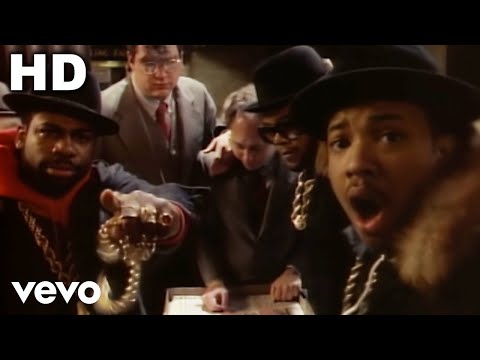


→ More from the 1980s File
View all 1980s hits →


Keep digging