The 1980s File Feature
How Long
"How Long" — Rod Stewart's 1982 Crossroads Moment The Complicated Business of Rod Stewart in 1982 By the spring of 1982, Rod Stewart's career had become a fa…
01 The Story
"How Long" — Rod Stewart's 1982 Crossroads Moment
The Complicated Business of Rod Stewart in 1982
By the spring of 1982, Rod Stewart's career had become a fascinating puzzle. The former Faces member and rough-hewn rock and roller had transformed himself through the late 1970s into a pop superstar of the first order, complete with spandex trousers, elaborately coiffed hair, and a string of enormously successful albums. Tonight's the Night, Do Ya Think I'm Sexy?, Maggie May — the hits kept accumulating. But 1982 found him in a transitional moment, navigating the shift from the disco-inflected sound of the late 1970s toward whatever the new decade demanded. "How Long" was a product of that navigation, a track from his Tonight I'm Yours album period that found Stewart working in a more restrained register than some of his biggest commercial moments.
Stewart had been recording for Warner Bros. Records since the mid-1970s, and by 1982 his relationship with the label was well into its established phase. The infrastructure around him was professional and experienced, capable of placing his records on radio stations and in front of audiences that would have been unimaginable to the young Scots-born singer who had come up through the British blues revival of the 1960s. That infrastructure, and the commercial expectations it carried, shaped every recording decision he made during this period.
Sound and Approach
The production on How Long reflects the sonic conventions of early-1980s rock pop: the drums are large and prominent in the mix, the guitars are clean and arranged to support rather than to challenge, and Stewart's voice sits forward in a way that emphasizes his raspy, lived-in quality. That voice remained one of the most recognizable in rock music, simultaneously rough and melodic, capable of conveying both bravado and vulnerability within a single phrase. Stewart's vocal character had developed through years of heavy touring and recording, acquiring a texture that no amount of studio processing could manufacture.
The song itself operates within the classic framework of rock and roll romantic uncertainty: a relationship under stress, questions about loyalty and duration, the emotional stakes of love that might or might not survive its own pressures. Stewart had returned to this territory many times in his catalog, and by 1982 he knew how to inhabit it with the ease of long familiarity.
A Nine-Week Chart Run
On the commercial side, How Long delivered a solid if not spectacular performance. Entering the Billboard Hot 100 on April 24, 1982, at position 84, the track moved upward through the spring as radio support built. It reached the 60s in early May, continued climbing, and peaked at number 49 on May 22, 1982, completing a nine-week chart run. A top-50 placement for Rod Stewart in this period was a reasonable performance given the competitive landscape, though it sat below the chart peaks of his most successful earlier work.
The spring of 1982 was a crowded pop moment. The new wave was at high tide, synth-pop was establishing itself as a dominant commercial force, and rock radio was beginning the playlist conservatism that would characterize album-oriented rock formats for years to come. How Long found its audience within that landscape, appealing to the listeners who remained loyal to Stewart's style of melodic rock throughout these transitions.
Stewart's Longevity as Context
Any single Rod Stewart record from 1982 needs to be understood within the context of one of pop music's more remarkable long-form careers. Stewart's ability to adapt and survive across shifting musical climates, from British R&B to acoustic folk-rock to arena rock to disco-influenced pop and eventually to the Great American Songbook, is genuinely exceptional. Most artists who achieve the commercial heights he reached in the mid-to-late 1970s experience a decisive commercial decline in the decade that follows. Stewart's commercial presence, while uneven, remained genuinely substantial through the 1980s and beyond.
A Middle Chapter in an Extraordinary Story
In the full narrative of Rod Stewart's discography, How Long represents a transitional chapter, competent and commercially viable, without being the kind of signature moment that defines a career. Those defining moments were distributed across both earlier and later periods. But middle chapters matter, and this one demonstrates the craftsman at work: a seasoned professional making a record that did its job, reached its audience, and allowed the story to continue toward whatever came next.
Cue up How Long for a snapshot of early-1980s rock pop at its most proficient, delivered by one of the genre's most durable voices.
"How Long" — Rod Stewart's singular moment on the 1980s charts.
02 Song Meaning
The Meaning of "How Long" — Doubt, Commitment, and the Durability of Love
The Central Question
The title frames the song's emotional territory with precision. "How long" is the question that relationships ask of themselves: how long can this last, how long before the pressure becomes too great, how long before whatever we have becomes something we cannot sustain. Rod Stewart understood this emotional register well, having built a significant portion of his catalog around the complexities of romantic partnership. The song inhabits the difficult middle ground of a relationship that is neither ending nor fully secure, where uncertainty itself becomes the dominant experience.
Masculine Vulnerability in Early-1980s Rock
Rock music in the early 1980s was navigating a complicated relationship with male emotional expression. The macho posturing of classic rock existed alongside a growing willingness, particularly in the new wave and power-pop traditions, to treat romantic vulnerability as legitimate subject matter for male performers. Stewart had always occupied an interesting position in that landscape: his rough vocal texture and rock context provided cover for lyrics that were often surprisingly open about emotional need. His persona made vulnerability feel rugged, which allowed it to reach audiences that might have rejected the same sentiment from a softer performer.
The Sound of the Era
The production of How Long captures early-1980s rock pop at a specific moment in its evolution. The sound is bigger and more processed than the 1970s rock that preceded it, with drums that fill the stereo field and guitars that provide texture rather than lead the arrangement. This production aesthetic, which became ubiquitous across commercial rock radio during the decade, reflected the influence of new recording technologies and a changing relationship between rock music and the mainstream pop audience. Stewart's records from this period document that transition from the inside.
Why Romantic Uncertainty Endures as a Theme
Songs about the uncertain middle of a relationship, rather than its beginning or end, occupy a particular emotional space that listeners often find more resonant than either romantic euphoria or heartbreak. The uncertainty is familiar territory: most people who have been in long-term relationships know the experience of wondering, quietly, whether the commitment will hold. Art that addresses that experience honestly tends to find a loyal audience, because it acknowledges something real that more conventionally triumphant or tragic narratives do not capture. How Long locates itself in that honest middle space.
Stewart's Emotional Range
Across a career spanning multiple decades and dozens of albums, Rod Stewart demonstrated that his most interesting work emerged when he engaged with emotional complexity rather than simplified it. How Long represents a moment in that larger career arc when the emotional nuance was present, when the song was asking genuine questions rather than providing easy answers. That willingness to sit with ambiguity separates the more enduring recordings in his catalog from the productions that were built primarily for commercial impact. The song's modest chart placing in 1982 does not diminish the quality of its emotional inquiry.
→ More from Rod Stewart
View all Rod Stewart hits →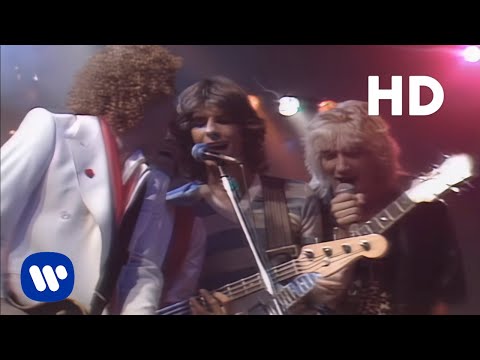



→ More from the 1980s File
View all 1980s hits →
Keep digging