The 1980s File Feature
Pledge Pin
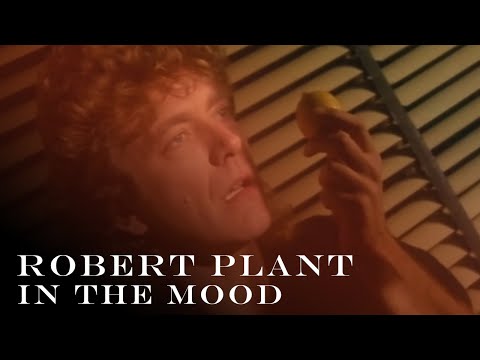
Pledge Pin: Robert Plant Steps Out From Led Zeppelin's Shadow When Led Zeppelin dissolved following the death of drummer John Bonham in September 1980, Rober…
01 The Story
Pledge Pin: Robert Plant Steps Out From Led Zeppelin's Shadow
When Led Zeppelin dissolved following the death of drummer John Bonham in September 1980, Robert Plant faced a creative and personal reckoning that no amount of prior success could entirely prepare him for. He had been one of the most recognizable voices in rock music for more than a decade, the frontman of a band that had redefined what rock could be in terms of scope, intensity, and commercial dominance. Going forward as a solo artist meant both the freedom to pursue his own directions and the weight of comparison to something that loomed extraordinarily large in the popular imagination.
Plant chose to move carefully and with genuine artistic intention. His debut solo album, Pictures at Eleven, released on Swan Song Records in June 1982, was a deliberate statement of independence from the Zeppelin legacy. He recruited musicians who were not associated with the band's history, including guitarist Robbie Blunt and keyboardist Jezz Woodroffe, and worked with producer Benji Lefebvre to create a sound that acknowledged the contemporary moment rather than attempting to replicate past glories. The album was a credible artistic achievement and a commercial success, reaching number 5 on the UK Albums Chart and performing respectably in the United"Pledge Pin" appeared on Pictures at Eleven and was released as a single in late 1982. It entered the Billboard Hot 100 on November 13, 1982, debuting at number 89. The single climbed through the following weeks, reaching its peak of number 74 on November 27 before holding that position for a second week and then beginning to fade. The five-week chart run demonstrated that Plant had genuine pop radio viability as a solo performer, not simply a curiosity factor generated by his Zeppelin association.elin association.
The significance of this chart performance must be understood against the backdrop of 1982's music landscape. New Wave and synth-pop were dominating radio and reshaping what mainstream rock sounded like, with British acts like Duran Duran, Culture Club, and Human League fundamentally altering the sonic landscape. For a former hard rock vocalist associated with a decade-old sound, breaking through in this environment required genuine adaptation. Plant's willingness to work with contemporary production techniques and to allow keyboards and synthesizers to share sonic space with guitars was a meaningful artistic concession that paid commercial dividends.
The recording of "Pledge Pin" reflected the album's overall production philosophy. Robbie Blunt's guitar work was present but not dominant in the way Zeppelin-era Jimmy Page riffs had been; instead, the arrangement gave space to atmosphere and texture in ways that were more aligned with early 1980s rock production norms. Plant's voice, still one of the most distinctive instruments in popular music, was deployed differently than it had been in Zeppelin, with less emphasis on the high-range screaming that had been central to that band's impact and more focus on the mid-range expressiveness and melodic control that would characterize his solo career.
For audiences and critics in 1982, "Pledge Pin" was evidence that Plant's transition to solo work was genuine rather than a stopgap measure while he waited for some Zeppelin reunion to materialize. The song stood on its own merits as a piece of contemporary rock songwriting, not requiring the listener to contextualize it against the Zeppelin catalog to appreciate it. This was precisely what Plant needed to demonstrate, and the chart performance suggested he had succeeded.
The timing of Pictures at Eleven and its singles is also worth noting in terms of Plant's broader trajectory. The album appeared two years after Zeppelin's dissolution, long enough for the immediate shock of the band's end to have settled but not so long that Plant's solo debut felt like an afterthought. The timing was commercially intelligent, and the album's reception opened the door for what would become a prolific and genuinely adventurous solo career that continued to evolve through subsequent decades, with Plant consistently refusing to be imprisoned by the expectations his past had created.
The Hot 100 entry for "Pledge Pin" at number 74 may seem modest compared to Zeppelin's commercial heights, but solo debut singles rarely matched the commercial power of an established band. The more meaningful fact was that Plant had demonstrated he could generate genuine radio interest on his own terms, with new material and a new creative identity, and that demonstration was the foundation on which everything that followed was built.
02 Song Meaning
The Meaning Behind "Pledge Pin" by Robert Plant
"Pledge Pin" arrives at a moment in Robert Plant's life and career when questions of loyalty, commitment, and identity were not abstract philosophical concerns but immediate personal realities. The dissolution of Led Zeppelin after John Bonham's death in 1980 had left Plant without the creative partnership that had defined his professional existence for more than a decade. The formation of a solo career required him to make new pledges, to new collaborators and to a new version of himself as an artist. That biographical context gives the song's title a resonance that extends beyond whatever specific narrative the lyrics construct.
A pledge pin is a literal object: the pin worn by fraternity or sorority pledges in American collegiate culture to signify their probationary membership in an organization, their commitment to a group that has not yet fully admitted them. The symbol carries connotations of aspiration and vulnerability, of someone who has declared their intention but has not yet completed the process of belonging. Plant's use of this image, as a British musician drawing on an essentially American cultural symbol, suggests an outsider's perspective on the rituals of belonging and the sometimes fraught negotiations between individual identity and group membership.
In the context of 1982 and Plant's position as a newly independent artist, the pledge pin metaphor reads as a meditation on commitment and its costs. To wear a pledge pin is to be seen as belonging to something without yet being fully accepted, to be in a liminal state between outsider and member. Plant, stepping out from under the extraordinarily powerful identity of Led Zeppelin, was in precisely such a state: known as one thing, aspiring to be recognized as something else, waiting to see whether the new organization, the solo career, the new musical identity, would accept him fully.
The song also connects to Plant's longstanding interest in mythology and symbolism. Throughout his career, both in Zeppelin and afterward, he demonstrated a preference for images that carried multiple layers of meaning, for references that operated simultaneously on literal and symbolic levels. The pledge pin is a relatively mundane American object, but Plant transforms it into something more resonant by placing it in a musical context that invited listeners to consider what it meant to pledge oneself, to make commitments and bear their visible signs.
There is also something specifically 1982 about the song's sensibility. The early 1980s were a period when questions of authenticity and identity in rock music were particularly charged. Punk had challenged the authenticity of arena rock; new wave was challenging the authenticity of both punk and the rock mainstream; and artists like Plant who had been rock royalty in the 1970s were navigating a landscape that had developed significant skepticism about the kind of grandeur associated with bands like Led Zeppelin. Making a record that felt current and genuine required a kind of self-reinvention that was itself a form of pledging.
Musically, "Pledge Pin" embodies its thematic content through its production choices. The song sounds like a recording by someone who is trying something new while still carrying the weight of considerable history, the contemporary textures sitting alongside Plant's unmistakable voice in a way that acknowledges both continuity and change. This sonic duality mirrors the situation of the pledge: committed to a new direction but still visibly the product of a significant past.
For listeners in 1982, the song's meaning was more immediate than retrospective analysis suggests. It was simply the first evidence from a beloved performer that he had survived his band's collapse and emerged with something worth saying in a new context. That survival and renewal was itself the primary message, and audiences responded to it with the warm reception that sent the single into the Hot 100 and established Plant's solo credibility.
→ More from Robert Plant
View all Robert Plant hits →



→ More from the 1980s File
View all 1980s hits →


Keep digging