The 1980s File Feature
A Lucky Guy
A Lucky Guy — Rickie Lee Jones on the 1980s Hot 100 The autumn of 1981 was an interesting moment to be Rickie Lee Jones. Her 1979 debut had arrived with the …
01 The Story
"A Lucky Guy" — Rickie Lee Jones on the 1980s Hot 100
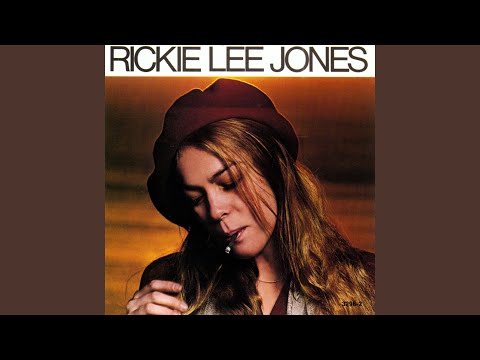
The autumn of 1981 was an interesting moment to be Rickie Lee Jones. Her 1979 debut had arrived with the kind of critical enthusiasm that makes careers: reviewers competed to describe the originality of her voice and vision, a beatnik-tinged, jazz-inflected, utterly personal approach to pop songwriting that sounded like nothing else in the charts. That debut had produced a genuine hit in "Chuck E.'s in Love" and won her a Grammy for Best New Artist, giving her a commercial foundation and a critical reputation simultaneously. The follow-up, Pirates, had been received with equal enthusiasm by critics but had been more resistant to the kind of mass-market embrace that pop radio delivers. "A Lucky Guy," from her third album Girl at Her Volcano, arrived in this context, a moment when Jones was finding her way through the complicated terrain between artistic identity and commercial accessibility.
An Artist Committed to Her Own Vision
Rickie Lee Jones occupied an unusual position in early-eighties pop. She had the critical apparatus fully behind her, but her music demanded a kind of listening attention that was not always compatible with the formatted radio of the era. Her influences were wide and personal: the jazz vocal tradition, Tin Pan Alley songwriting, New Orleans rhythm and blues, and the Los Angeles countercultural scene that had produced her. These were not commercial categories in 1981; they were artistic commitments that produced music of real character at the cost of easy mainstream digestibility.
The Sound of "A Lucky Guy"
The track belongs to the more directly accessible end of Jones's catalog, with a production sensibility that leans toward the warm, intimate sound she brought to her debut rather than the more exploratory textures of Pirates. Her voice, one of the more unusual instruments in popular music, capable of moving between clarity and a kind of weathered intimacy within a single phrase, is the dominant feature of the arrangement. The song has the quality of something overheard rather than performed, a private feeling made public without quite becoming a broadcast.
Seven Weeks and a Peak at Number 64
"A Lucky Guy" debuted on the Billboard Hot 100 on October 3, 1981, entering at number 84 and climbing week by week: from 84 to 74, to 71, before reaching its peak position of number 64 on October 24, 1981, where it held for a second week before beginning to slide. The single spent seven weeks on the chart in total, a respectable showing for an artist who had never been primarily a singles-format performer. A mid-chart position was, for Jones, a meaningful commercial moment rather than a disappointment: it indicated that her artistic vision could find a pop radio audience even without being engineered specifically for that format.
What the Early Eighties Radio Landscape Required
Radio in the fall of 1981 was navigating a transitional period: new wave and post-punk aesthetics were crossing over from college radio, synth-driven pop was beginning its commercial rise, and the soft-rock formats that had dominated the late 1970s were maintaining significant audiences even as their critical stock declined. Rickie Lee Jones occupied a niche that did not map cleanly onto any of these categories, which was both her artistic distinction and her commercial challenge. The chart performance of "A Lucky Guy" suggests that her audience was real and paying attention, even if it was smaller than the format would have produced for a more conventionally positioned artist.
The Longer Legacy of a Distinctive Career
Rickie Lee Jones has continued to record and perform with the creative independence that characterized her from the beginning, and her catalog has accumulated a weight and a following that belongs to a genuinely singular vision. "A Lucky Guy" stands in that catalog as a moment of relative commercial accessibility, one of the records that brought her work to the widest audience her particular sound was going to reach in the early 1980s. The 173,000 YouTube views reflect an audience that has sought out the full depth of her work and found value in this modest but genuine pop moment.
For anyone who has not spent time inside Rickie Lee Jones's world, this is an accessible entry point. Put it on.
"A Lucky Guy" — Rickie Lee Jones's singular moment on the 1980s charts.
02 Song Meaning
The Meaning Behind "A Lucky Guy" by Rickie Lee Jones
Rickie Lee Jones writes from the inside of experience rather than from a safe observational distance, which is part of what gives her best work its particular emotional texture. "A Lucky Guy" participates in this approach, constructing its emotional argument from the specific textures of a relationship observed with the kind of attention that can tip, in the right light, between tenderness and heartache. Jones is a chronicler of feeling in its most particular forms, and this record is no exception.
The Lucky Guy as Emotional Subject
The song's title positions the emotional content around an observation: someone is lucky, or lucky in a specific way, and the narrator is the one doing the observing. This framing introduces a perspective that is simultaneously warm and slightly removed, close enough to see clearly and far enough to assess what it sees. The "lucky guy" is not simply celebrated; the luck is examined, its nature and its quality considered from the particular angle available to the narrator. This kind of emotionally inflected observation is a Rickie Lee Jones specialty.
Nostalgia and the Jazz Vocal Tradition
Jones's approach to pop songwriting draws heavily on the jazz vocal tradition, in which the singer's relationship to the lyric is more interpretive than declarative, where meaning is made as much through timing and texture as through the explicit content of the words. This tradition gives even simple emotional material a kind of resonance that more straightforward pop delivery cannot always achieve. When Jones sings about a lucky guy, she is not simply reporting a fact; she is inhabiting a set of feelings about luck, about proximity, about the complicated affection that can coexist with a kind of wistful distance.
Love as Observation and Recognition
The best love songs are not always about love at the height of its drama; some of the most affecting address the quality of attention that love produces, the way it makes you notice things about another person that you would otherwise pass over. "A Lucky Guy" operates in this mode: the narrator's feeling for the subject is expressed less through direct declaration than through the specificity of what she sees and recognizes in him. This observational mode is both more intimate and more vulnerable than straightforward declaration, because it reveals more about the narrator's inner world than about the subject.
The Emotional Register of Early-Eighties Pop
In 1981, the dominant emotional register of pop was moving toward the big gesture: the arena-filling ballad, the synth-driven emotional crescendo, the production that announced its feelings at full volume. Jones worked at the opposite end of that spectrum, in the intimate and the understated, and her audience valued her precisely for that difference. "A Lucky Guy" is a small song in the best sense: it does not try to fill a room with its feeling but rather offers something closer to a whispered confidence. That scale, honestly executed, is its own form of ambition.
A Song About What It Feels Like to See Clearly
What "A Lucky Guy" ultimately celebrates is the capacity for genuine perception: to see another person clearly enough to recognize their luck, their particular quality, their place in the world. Jones brings to this theme the same attentiveness that runs through her entire catalog, a willingness to look at things closely and report what is actually there rather than what sentiment would prefer to find. That attentiveness is the real subject of the song, and it is what makes it worth listening to outside the immediate context of its creation.
→ More from Rickie Lee Jones
View all Rickie Lee Jones hits →
→ More from the 1980s File
View all 1980s hits →


Keep digging