The 1980s File Feature
Don't Mean Nothing
Don't Mean Nothing: Richard Marx and the Debut That Indicted Hollywood When Richard Marx released "Don't Mean Nothing" in the summer of 1987, it represented …
01 The Story
Don't Mean Nothing: Richard Marx and the Debut That Indicted Hollywood
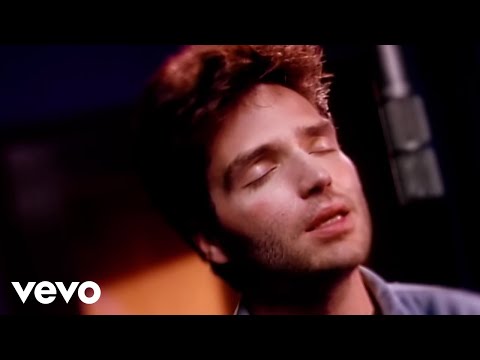
When Richard Marx released "Don't Mean Nothing" in the summer of 1987, it represented an unusual commercial proposition: a debut single by an unknown artist that used the entertainment industry itself as its primary lyrical target. The song reached number 3 on the Billboard Hot 100, spending twenty-one weeks on the chart and establishing Marx as one of the more significant new voices in adult contemporary rock at the close of the decade. Its success was built on a combination of a driving, arena-rock production style, a genuinely compelling melodic hook, and lyrics that tapped into a cynicism about the music business that resonated even with listeners who had no direct experience of it.
Marx was born in Chicago in 1963, the son of Dick Marx, a jingle writer and musician who had worked with luminaries including Nat King Cole. This early exposure to professional musicianship gave Marx a practical understanding of the music industry before he was a teenager, and his subsequent move to Los Angeles to pursue a career as a songwriter and performer was informed by a realistic rather than naive view of how the business operated. He worked as a background vocalist for Lionel Richie, appeared on several Richie recordings, and spent years writing songs and pursuing a solo deal before Capitol Records signed him in 1987.
"Don't Mean Nothing" was co-written by Marx and Bruce Gaitsch, his frequent early collaborator, and drew directly on Marx's experience of navigating the music industry's promises and evasions during his years of trying to establish himself. The song's subject is the particular cruelty of an industry in which everyone is supportive in the abstract — full of expressions of interest, promises of support, declarations that you are exactly what they are looking for — right up until the moment they decide you are not. The verbal commitments that mean everything to the person who receives them mean, the song argues, literally nothing to the people who make them.
The production of the debut album, also titled Richard Marx, was handled by Marx himself along with David Cole, and the approach was to create a sound rooted in the classic rock tradition — guitars, powerful drums, melodic choruses — while updating it with the production values of late-1980s mainstream rock. "Don't Mean Nothing" exemplified this approach: the guitar work is muscular without being heavy metal, the chorus is enormous without being bombastic, and Marx's vocal , a genuinely strong, wide-ranging instrument , delivers the lyrical content with a convincing combination of conviction and controlled anger.
Capitol Records' bet on Marx proved prescient. Beyond "Don't Mean Nothing," the debut album produced three additional Top 40 hits, and Marx went on to become one of the more reliable commercial performers of the late 1980s and early 1990s. His subsequent singles included "Hold On to the Nights" and "Right Here Waiting," the latter of which reached number one in 1989 and became one of the defining power ballads of the era. Capitol Records' marketing positioned him as both a rock act and an adult contemporary performer, a flexibility that allowed him to reach multiple radio formats simultaneously.
The theme of industry disillusionment in "Don't Mean Nothing" connected the song to a small but significant tradition of popular music that turns the spotlight on the machinery of its own production. The Eagles' "Hotel California," Billy Joel's "Piano Man," and various others had engaged with the entertainment industry as subject matter, but they tended to deal in broader cultural critique. Marx's song was more specifically functional , it named the exact mechanism of false promise that he had personally experienced and offered it as a warning to anyone who might be similarly credulous about what producers, managers, and label executives say when they want something from you.
That specificity was part of what gave "Don't Mean Nothing" its commercial legs. Listeners who had never stepped inside a record label's offices recognized the dynamic it described from their own experience of professional disappointment , the gap between what people say they will do and what they actually do. The song's universal subtext beneath its specific industry setting made it relatable to a far broader audience than its nominal subject would suggest.
Marx has remained active as a songwriter and recording artist into the twenty-first century, continuing to write for other artists while occasionally releasing his own material. His catalog of songs written for other performers is substantial and commercially significant, including Grammy-winning work. But "Don't Mean Nothing" remains the record that introduced him to the American public , a debut that announced not just a voice but a point of view, and that made clear from the first notes that its author had no illusions about the world he had chosen to work in.
02 Song Meaning
The Language of False Promise: What "Don't Mean Nothing" Says
"Don't Mean Nothing" is a song about the specific violence of broken professional promises — the way that words spoken with apparent sincerity in the context of a transaction, once the transaction falls through, are revealed as having carried no weight at all. This is Richard Marx's debut statement as a recording artist, and it begins with a remarkable choice: to indict the very industry that is releasing his record, to bite the hand that is in the process of feeding him, and to frame that act of critique as a form of hard-won wisdom rather than bitterness.
The song's central observation — that the verbal commitments of entertainment industry professionals are structurally meaningless, understood by all experienced parties to carry no actual obligation — is delivered not as news but as a lesson the narrator has already learned at considerable cost. The emotional register is not naivete betrayed but experience confirmed. The narrator has been through enough iterations of the same pattern to recognize it clearly, and the song is addressed to someone who has not yet had that recognition — someone who still believes that "we love what you do" and "we'll be in touch" constitute genuine commitments rather than social lubricant.
This framing carries an interesting ethical complexity. The song is not simply about disillusionment but about the systemic nature of a particular form of dishonesty , one that is so pervasive within its context that it functions less like lying and more like a social convention that everyone understands except the newcomers who have not yet been initiated into its grammar. The people making the promises are not necessarily malicious; they are operating within a system in which those promises carry a known and accepted meaning (which is to say, very little). The cruelty is systemic rather than individual.
Marx's use of rock instrumentation to deliver this critique is itself meaningful. The song's driving guitars and powerful drums place the narrator in the tradition of rock and roll's historically adversarial relationship with industry machinery , the tradition of artists who understood themselves as in tension with the commercial structures that both enabled and constrained them. By choosing to launch his career in this musical register, Marx was positioning himself as someone who had already absorbed the lesson that the machinery of promotion and commercial success was a thing to be used with clear eyes rather than trusted with one's emotional well-being.
The title phrase , "don't mean nothing" , is a grammatical double negative that, in standard English usage, would mean "means something." In vernacular usage, of course, it means precisely the opposite: means nothing at all. This grammatical ambiguity is not accidental but reflects something true about the verbal environment the song describes, in which words systematically mean something other than what they appear to say. The language of the music industry is, the song suggests, a kind of code in which "we love it" means "we're not interested," and "we'll call you" means "don't hold your breath."
The song's commercial success , number 3 on the Hot 100 in its debut week, twenty-one weeks on the chart , created an interesting irony: a song about the unreliability of industry promises succeeded because the industry got behind it. Capitol Records promoted "Don't Mean Nothing" effectively, and radio programmers responded to its polished production and strong melodic hook. The machinery that the song critiques was also the machinery that delivered it to its audience, which is the kind of structural paradox that the entertainment industry generates constantly and that artists who remain within it must simply accommodate.
In retrospect, "Don't Mean Nothing" reads as a remarkably self-aware debut , a first public statement that demonstrated not only musical competence but genuine clarity about the environment in which that competence would be deployed. Richard Marx entered his commercial career without illusions, and the song that announced him was designed to ensure that his audience wouldn't have any either. It is a strange form of generosity: sharing the lesson of disillusionment before the romance of the industry has even had time to take hold.
→ More from Richard Marx
View all Richard Marx hits →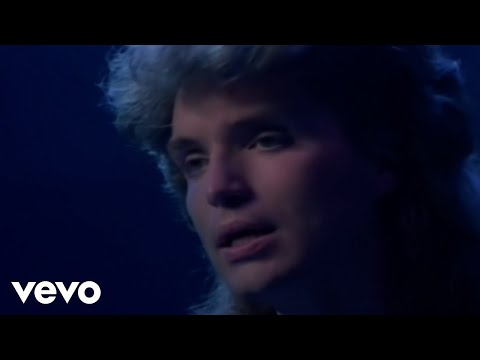



→ More from the 1980s File
View all 1980s hits →
Keep digging