The 1980s File Feature
Cry Just A Little
Cry Just A Little — Paul Davis and the Soft Rock of 1980 Paul Davis: A Quiet Talent From Mississippi Paul Davis was not the kind of artist who attracted outs…
01 The Story
Cry Just A Little — Paul Davis and the Soft Rock of 1980
Paul Davis: A Quiet Talent From Mississippi
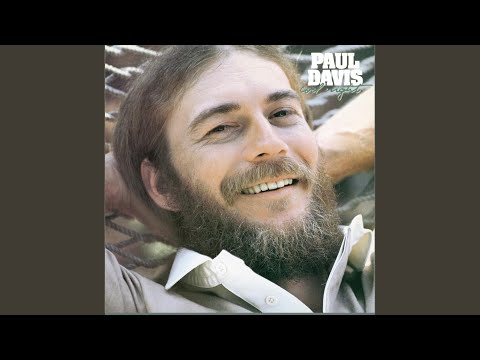
Paul Davis was not the kind of artist who attracted outsized media attention, but his recordings demonstrated a consistent quality and a specific melodic gift that his audience recognized and appreciated. The Mississippi-born singer-songwriter had been building a career throughout the 1970s with a gentle, melodically direct style that sat at the intersection of country-influenced soft rock and adult contemporary pop. His 1978 hit I Go Crazy had demonstrated his ability to reach a substantial mainstream audience with material that was unhurried, warm, and emotionally honest. By 1980, Davis was continuing in this direction, producing records that served his specific audience's taste without chasing the harder edges of the rock mainstream.
The Sound of Cry Just A Little
Cry Just A Little had the characteristic Paul Davis combination: a melody that was immediately accessible without being simplistic, a lyrical approach that was emotionally direct without being sentimental in a pejorative sense, and a production quality that placed his voice in a warm, supportive sonic environment without overwhelming it with unnecessary ornamentation. The production choices reflected the adult contemporary aesthetic of the early 1980s: clean, radio-friendly, with enough musical sophistication to reward repeated listening without alienating casual listeners who were encountering the record for the first time. The result was a record that did what good adult contemporary music was supposed to do: provide emotional satisfaction without demanding anything of the listener beyond openness to the experience.
A Brief Chart Appearance in Summer 1980
Cry Just A Little debuted on the Billboard Hot 100 on July 19, 1980, entering at position 81. The chart run was modest, the single spending four weeks on the Hot 100 and peaking at number 78 during the week of August 2, 1980. The early 1980s pop landscape was in significant transition, with the new wave and post-punk sounds beginning to claim radio space from the soft rock and adult contemporary material that had dominated the late 1970s. In this shifting environment, Davis's particular style was finding a somewhat narrower commercial space than it had occupied in the late 1970s, though his core audience remained loyal.
Adult Contemporary in the Transitional Early 1980s
The summer of 1980 was a moment when the American pop music landscape was being reorganized by competing forces. New wave and its associated sounds were generating critical enthusiasm and some commercial traction; country-crossover music was expanding its reach; and the adult contemporary format was defending its commercial territory against encroachment from multiple directions. Paul Davis's gentle, melodically oriented style fit the adult contemporary template with considerable precision, and the format's radio stations continued to support his material even as more energetic sounds competed for attention. Cry Just A Little was a product of this specific commercial environment, designed for and received by an audience that valued its particular emotional and sonic qualities.
Consistency as a Career Value
Paul Davis's career demonstrated a specific kind of artistic virtue that does not always receive the recognition it deserves: the virtue of consistency. Not every artist needs to be a groundbreaker or a genre-definer; some artists provide genuine value by doing one thing well and continuing to do it for an audience that depends on them to do it. Davis was that kind of artist, and Cry Just A Little represented him at his reliable best: a warm, well-made record that offered genuine emotional satisfaction to listeners who knew what they were looking for and found it here. Give it a listen with that understanding, and let it deliver exactly what it promises.
Davis and the Songwriter-Performer Tradition
Paul Davis operated in the tradition of the songwriter-performer, a figure whose commercial identity was built around the ability to write material suited to their own voice and musical sensibility and to deliver that material with the sincerity that only the creator of a song can fully bring. This tradition, central to the singer-songwriter movement of the 1970s, produced recordings that had a quality of personal investment absent from recordings where the performer and the material arrived separately. Cry Just A Little benefited from this dynamic, its emotional content carrying the specific weight of material that Davis understood from the inside because he had written it himself. That inside knowledge gave the performance a quality of authority that no amount of interpretive skill could fully substitute for when the song was someone else’s.
“Cry Just A Little” — Paul Davis's singular moment on the 1980s charts.
02 Song Meaning
The Meaning Behind “Cry Just A Little” by Paul Davis
The Permission to Feel
Cry Just A Little is, at its simplest, a song about giving someone permission to feel their feelings. The narrator is telling someone, whether a lover, a friend, or perhaps themselves, that it is acceptable to cry, that emotional expression is not a weakness but a legitimate response to genuine feeling. This is a specific and valuable kind of emotional message, particularly in cultural contexts where emotional restraint is valued over emotional expression. The gentleness of the permission, the word just in the title suggesting that a little crying is not a catastrophe but a natural and acceptable release, made the message accessible to listeners who might have been resistant to a more emphatic claim about the value of emotional expression.
Restraint and the Adult Contemporary Aesthetic
The adult contemporary format of the late 1970s and early 1980s developed a specific aesthetic of emotional restraint: feelings were present but modulated, expressed but not overwhelming, acknowledged without being dramatized. This aesthetic served an audience of adult listeners who valued emotional honesty but also brought to their music the kind of adult perspective that could hold feeling without being consumed by it. Paul Davis's work embodied this aesthetic consistently, and Cry Just A Little was characteristic of his approach: emotionally sincere without being overwrought, melodically warm without being saccharine, honest about feeling without making that honesty into a performance.
Crying and the Cultural Politics of Emotion
The act of crying, and the social permissions and prohibitions around it, have complex cultural histories that vary by gender, class, region, and era. The early 1980s carried specific cultural attitudes toward male emotional expression that made a song about giving someone permission to cry carry implicit gender dimensions alongside its more personal emotional content. A song that said it was acceptable to cry was, in that context, making a small but genuine claim about the legitimacy of emotional expression in a culture that was not always comfortable with that legitimacy. The gentleness of the claim was strategic: the word just ensured that the permission felt measured rather than transgressive, acceptable within the emotional conventions of the period.
The Melody as Emotional Container
One of Paul Davis's most consistent gifts was the ability to construct melodies that functioned as emotional containers: musical shapes that held feeling in ways that the listener could receive without being overwhelmed by. A melody that is too simple cannot hold complex emotional content; one that is too complex loses the listener before the emotional content can be received. Davis found the balance consistently, and Cry Just A Little demonstrated this ability in a context that required it: a song about emotional release needed a melodic environment that was itself emotionally open without being emotionally excessive. The melody provided exactly that environment.
Small Records and Their Legitimate Place
Cry Just A Little was a small record by most measures: brief chart run, modest peak position, limited cultural impact beyond its immediate audience. But small records serve real purposes and meet real needs. The adult contemporary audience that received Cry Just A Little with appreciation was finding in it something they needed: a few minutes of warm, emotionally honest music that validated their feeling without demanding more of them than they were prepared to give. That function is legitimate and valuable, even if it does not generate the kind of cultural attention that more dramatically ambitious records attract. Paul Davis provided it consistently and well, and the record endures as evidence of a talent that operated in a modest register but operated there with genuine skill.
→ More from Paul Davis
View all Paul Davis hits →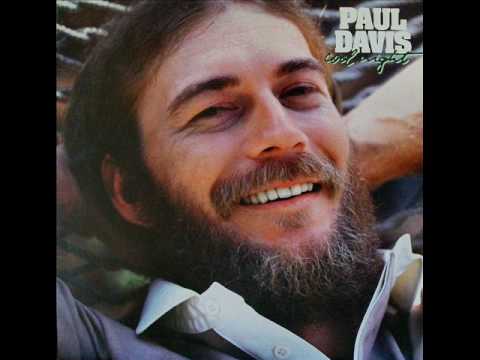


→ More from the 1980s File
View all 1980s hits →


Keep digging