The 1980s File Feature
When I Fall In Love
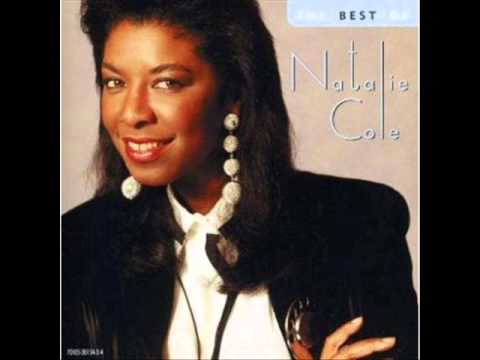
"When I Fall In Love" — Natalie Cole's Standard Revisited A Song Older Than Rock and Roll Some songs exist outside of any particular era, residing instead in…
01 The Story
"When I Fall In Love" — Natalie Cole's Standard Revisited
A Song Older Than Rock and Roll
Some songs exist outside of any particular era, residing instead in that timeless space where melody and lyric have achieved a kind of permanence. "When I Fall In Love" is such a song. Written by Edward Heyman with music by Victor Young, it had been recorded and performed since the early 1950s, passing through the interpretations of artists across multiple generations. Doris Day had given it one of its most celebrated early readings; Nat King Cole had made it a signature. By the time Natalie Cole approached the song in 1988, it carried enormous weight as a piece of the American songbook canon.
The fact that Nat King Cole had recorded it gave his daughter's version a dimension of personal resonance that no other artist could quite replicate. Natalie Cole had spent her career navigating the particular challenge of being the daughter of one of American music's most beloved figures, building her own identity while inevitably operating in the shadow of her father's extraordinary legacy. A recording of one of his most celebrated songs was therefore a complex artistic and personal undertaking.
Goodnight Miss Ann and the Everlasting Catalogue
By 1988, Natalie Cole had been a recording artist for more than a decade, establishing herself as a significant talent in her own right with early soul and R&B work that drew on but was not limited to her famous family connections. Her 1975 debut had produced the number-one hit This Will Be (An Everlasting Love), launching a career that crossed multiple genres and audiences. The late 1980s found her shifting toward the sophisticated adult-contemporary territory that would eventually produce her most celebrated work.
"When I Fall In Love" appeared in 1988, reaching the Billboard Hot 100 for a single week at position 95 on August 27, 1988. The chart performance was modest, reflecting the song's positioning as part of a broader project rather than a commercial pop calculation. The song's value was not measured in chart positions but in the emotional and artistic territory it represented.
The Art of the Standard
Interpreting a song from the American songbook requires a specific set of skills that differ from original composition. The singer must find something new to say within a melody and lyric that is already deeply familiar to listeners, must bring genuine feeling to words they may have heard hundreds of times, and must honor the song's history without being imprisoned by previous interpretations. Natalie Cole's vocal approach throughout her career demonstrated the capacity for exactly this kind of interpretive intelligence.
Her voice, warmer and more openly emotional than her father's more intimate and understated style, brought its own quality to the song. Where Nat King Cole's version had a serene, quietly confident feeling, Natalie's approach could convey a different dimension of the lyric's content, one shaped by her own experience and artistic sensibility.
Foreshadowing the Unforgettable
The recording of "When I Fall In Love" in 1988 can be read, in retrospect, as part of Natalie Cole's gradual movement toward the project that would define her legacy: the 1991 album Unforgettable... with Love, a full-scale tribute to her father's catalog that paired her voice with his original recordings and original orchestrations of his material. That album became a phenomenon, winning seven Grammy Awards including Album of the Year, and it made Natalie Cole one of the most celebrated artists of the early 1990s.
The work she did with standard material in the late 1980s was the preparation for that achievement, the period during which she was finding her relationship with this repertoire and developing the interpretive confidence to inhabit it completely. "When I Fall In Love" belongs to that preparatory chapter, a beautiful song delivered by a gifted artist on the way to something extraordinary.
A Voice Worthy of the Song
The challenge of any great standard is that it has already been performed by some of the finest singers in the world, and the question for any new interpreter is whether they have something genuinely personal to bring to the material. Natalie Cole did. Her voice carried her own history, her own emotional complexity, and a warmth that was distinctly her own even as it inevitably carried echoes of her father's timbre. That combination of personal and inherited quality made her relationship to this material uniquely resonant, something no other artist could replicate.
Listen to this recording as the work of someone still discovering the depth of her connection to a tradition that was both professional and deeply personal, and hear the beauty of that discovery in every phrase.
"When I Fall In Love" — Natalie Cole's singular moment on the 1980s charts.
02 Song Meaning
The Promise of Total Love: The Meaning of "When I Fall In Love" as Sung by Natalie Cole
The Song and Its Enduring Architecture
Edward Heyman's lyric and Victor Young's melody have survived decades and hundreds of interpretations because they address something that never becomes obsolete: the experience of falling in love completely and the way that experience changes a person's relationship with time, commitment, and vulnerability. The song makes a promise, one that is both romantic and existential, concerning the total nature of the love being offered and the permanence with which it will be given. This promise is the song's emotional center, and it has resonated with listeners across every era since the song was written because the desire it describes does not diminish with time or fashion.
Natalie Cole's 1988 interpretation brought her own voice and experience to this architecture, finding within it something personal and immediate even as she honored the song's canonical status.
Completeness and the Fear of the Half-Commitment
One of the most interesting qualities of the lyric is its implicit critique of the half-hearted gesture. The song draws a contrast between the complete love being offered and the kind of fleeting, incomplete romantic investment that leaves people hurt and disappointed. The narrator is declaring a different kind of love, one that will not waver, one that is given fully rather than conditionally. This distinction carries considerable emotional weight, especially for listeners who have experienced the pain of loving someone who was not fully present.
For Natalie Cole, whose personal life had included considerable difficulty and whose family history involved the particular pain of early loss (her father died when she was fifteen), the themes of complete love and permanence carried dimensions of personal meaning that informed her interpretation even when not explicitly expressed.
The Songbook Tradition and Its Cultural Role
By 1988, the American songbook tradition that produced "When I Fall In Love" had been declared commercially irrelevant multiple times by critics and industry figures focused on contemporary pop trends. Yet the songs persisted, and artists kept returning to them because they offered something that contemporary pop writing did not always provide: melodic sophistication and lyrical craftsmanship built to last rather than to respond to an immediate cultural moment.
Natalie Cole's engagement with this material was an act of cultural affirmation, a statement that these songs retained their value and their emotional truth regardless of what was currently dominating the radio charts. The modest chart performance of her 1988 version mattered less than the artistic commitment it represented.
Legacy and the Inheritance of Song
For Natalie Cole specifically, "When I Fall In Love" carried meaning that extended beyond its content as a love song. Her father's version was one of the most celebrated recordings in the song's history, and choosing to record it herself was an act of engagement with a musical inheritance that was both gift and burden throughout her career. The way she navigated that inheritance, with honesty and genuine artistry, reflects the larger story of a singer who understood that honoring the past and finding her own voice were not mutually exclusive acts.
The song's themes of permanent, unconditional love resonate across every listen, in every era, because the emotional state it describes remains the most desired and most elusive of human experiences. Natalie Cole gave it one of its most genuinely felt contemporary readings.
→ More from Natalie Cole
View all Natalie Cole hits →


→ More from the 1980s File
View all 1980s hits →
Keep digging