The 1980s File Feature
Texas In My Rear View Mirror
Texas In My Rear View Mirror: Mac Davis Charts His Homecoming Mac Davis built one of the more unlikely careers in American popular music. He arrived in the i…
01 The Story
Texas In My Rear View Mirror: Mac Davis Charts His Homecoming
Mac Davis built one of the more unlikely careers in American popular music. He arrived in the industry as a songwriter, crafting hits for other artists throughout the 1960s, and only later discovered that his own voice and personality could carry a recording in its own right. By 1980, when he released "Texas In My Rear View Mirror," he was a recognizable television personality as well as a recording artist, hosting his own NBC variety series and working across country and pop formats with considerable ease. The song became one of the defining statements of his recording career, a moment where his Texas roots and his showbiz life converged in a single, knowing narrative.
Davis was born in Lubbock, Texas, and that geography never entirely left his songwriting sensibility. Even during his years as a Hollywood songwriter and later as a television host, his material returned repeatedly to the landscapes, attitudes, and emotional textures of the American Southwest. "Texas In My Rear View Mirror" gave that nostalgia a specific frame: the narrator leaves Texas behind, convinced that the wider world holds everything worth wanting, only to discover that the place he left has never really left him. It is a classic return-of-the-prodigal structure, rendered with the wry self-awareness that Davis had made his signature across two decades of professional work.
The recording was released on Casablanca Records, a label better known in 1980 for its disco and hard rock roster than for country-leaning pop. Davis's presence on the label represented an interesting commercial gambit. Casablanca was looking to diversify its catalog as the disco boom faded, and Davis brought an established audience and a proven track record of crossover appeal. The production reflected the era, blending country instrumentation with the kind of polished studio sheen that characterized mainstream adult contemporary records at the turn of the decade.
The song performed well on the country charts and received significant airplay in markets where Davis already had a loyal following from his television work. His NBC variety show had run from 1974 to 1976 and had given him a national profile that extended well beyond the traditional country music audience. That crossover visibility helped "Texas In My Rear View Mirror" reach listeners who might not have sought out a country single but who recognized Davis as a television personality and were willing to follow him into the format.
Davis's songwriting credentials gave the recording an additional layer of credibility. He had written "In the Ghetto" for Elvis Presley, which reached number three on the Billboard Hot 100 in 1969, and he had also written "A Little Less Conversation" for Presley. His ability to inhabit a character's perspective, to find the telling detail that made a song feel lived-in rather than constructed, carried over into his own recordings. "Texas In My Rear View Mirror" benefited from that craft: the lyric never lapsed into pure sentimentality, finding instead a tone that acknowledged the absurdity of homesickness without dismissing the genuine emotion underneath it.
The country music landscape in 1980 was in a period of significant transition. The outlaw movement associated with Willie Nelson and Waylon Jennings had opened up the format's commercial possibilities in the mid-1970s, and by the turn of the decade a wider range of artists and approaches were finding space on country radio. Urban cowboy culture, sparked in part by the 1980 film of the same name, was bringing new listeners to the format. Davis occupied an interesting position in this landscape, rooted enough in Texas identity to feel authentic but polished enough in his presentation to appeal to the pop-crossover audience that the urban cowboy moment was cultivating.
The recording sessions for the album that contained "Texas In My Rear View Mirror" drew on Nashville session talent while maintaining the production values that Davis had developed through his years working in Los Angeles. That blend of Nashville craftsmanship and California polish was itself a kind of musical metaphor for the song's subject matter: a man who carries two homes inside him and cannot fully belong to either. The arrangement gave Davis's voice room to move between the rueful and the celebratory, and his delivery made the most of the lyric's understated humor.
Davis continued recording and performing through the 1980s and beyond, but "Texas In My Rear View Mirror" remained one of the recordings most closely associated with his name. It appeared on compilation albums and greatest-hits packages that tracked his career across multiple decades, and it received renewed attention whenever Texas music and Texas identity became topics of cultural conversation. The song's central conceit, that you can drive away from a place without ever truly leaving it, proved durable enough to resonate with listeners well past its original chart moment. For a songwriter who had spent years giving other people the words they needed, it was a particular kind of satisfaction to find that his own story was the one worth telling.
02 Song Meaning
The Long Road Home: What "Texas In My Rear View Mirror" Says
"Texas In My Rear View Mirror" operates on a central irony that gives the song most of its emotional power. The narrator leaves his home state with something close to relief, persuaded that ambition requires departure and that the wider world holds rewards unavailable to those who stay put. The rear view mirror of the title captures that attitude precisely: Texas is something being left behind, reduced to a diminishing image, something the narrator expects to outgrow. The song's emotional arc turns that expectation on its head, revealing that what looks like progress can also be a form of loss.
The thematic territory is one that Mac Davis knew personally. His own departure from Lubbock to pursue a career in music and entertainment gave the lyric a specific biographical grounding, even though the song functions as something more universal than pure autobiography. Many listeners who had never set foot in Texas recognized the experience the song described: the younger self convinced that home was a limitation, and the older self who discovered that the place had lodged itself somewhere permanent, in memory and in identity. That universal quality helped the song reach beyond the regional audience that its Texas-specific imagery might have suggested.
The emotional register of the recording is deliberately balanced between humor and sentiment. Davis was known as a performer who could find the funny note inside a genuinely felt emotion, and the song gave him room to work in that mode. The narrator's self-awareness about his own nostalgia, his ability to mock himself even while genuinely feeling the pull of home, prevented the song from collapsing into straightforward tearjerker territory. That tonal complexity reflected Davis's overall artistic sensibility and was part of what distinguished his work from more earnest country-pop contemporaries.
The song also touches on questions of identity and belonging that had particular resonance in 1980. The urban cowboy moment of that year, driven by the John Travolta film and the country music crossover boom it accelerated, had made Texas identity a commercially significant cultural marker. "Texas In My Rear View Mirror" engaged with that moment from an unusual angle, neither celebrating the state uncritically nor dismissing the nostalgia as false. Instead, it examined what Texas meant to someone who had chosen to leave, and found that the choice had not resolved the question.
For Davis's catalog, the song represented a kind of personal reckoning. He had spent years writing songs that gave other artists the words to express their experiences, and he had developed a television persona that was warm and entertaining but not especially revealing. "Texas In My Rear View Mirror" was more nakedly personal than much of his work, drawing on a biographical reality that listeners could recognize even without knowing the specific details. The song's durability in his catalog, its continued presence on compilation albums and radio retrospectives, suggests that it struck listeners as the truest statement he had made about his own life. Released on Casablanca Records in 1980, it remained a country radio staple for years after its initial chart run. In a career full of professional accomplishments, the song that lasted was the one that admitted what he had left behind.
→ More from Mac Davis
View all Mac Davis hits →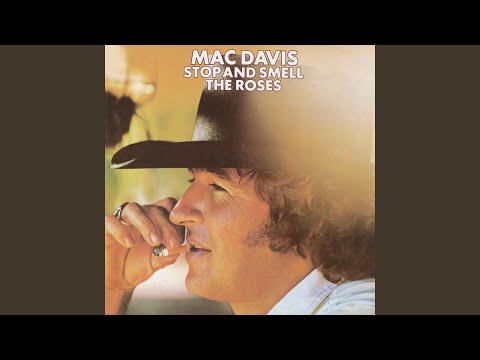



→ More from the 1980s File
View all 1980s hits →



Keep digging