The 1980s File Feature
The NeverEnding Story
The NeverEnding Story — LimahlA Fantasy World in Search of Its ThemeThe summer of 1984 belonged, in significant part, to a young Wolfgang Petersen film and t…
01 The Story
The NeverEnding Story — Limahl
A Fantasy World in Search of Its Theme
The summer of 1984 belonged, in significant part, to a young Wolfgang Petersen film and the extraordinary synthetic grandeur of its title song. The NeverEnding Story, both the film and its Giorgio Moroder-produced track, arrived at a particular cultural moment when synthesizers had colonized pop music so completely that the line between film score and hit single had effectively dissolved. Limahl, formerly of Kajagoogoo and still carrying the faint glow of "Too Shy"'s success, was tapped to voice a melody that needed to feel simultaneously epic and intimate, fantastic in the literal sense of the word. The assignment required a voice that could sell wonder to a mainstream pop audience without tipping into pure kitsch.
The Giorgio Moroder Touch
The production pedigree behind The NeverEnding Story is considerable. Giorgio Moroder, the Munich-based synthesizer pioneer who had already transformed how disco and electronic pop sounded through his work with Donna Summer and his Oscar-winning film scores, brought his characteristic precision and orchestral scale to the project. The result is a track that sounds like a theme for something larger than itself, a quality particularly suited to a fantasy film about a boy reading a book in an attic while a world-ending storm approaches. Moroder's synthesis work gave the song its peculiar combination of grandeur and wistfulness: sounds that suggest strings without being strings, movements that feel orchestral while living entirely in the electronic domain.
That sonic paradox, emotional warmth generated by entirely artificial means, was Moroder's signature and it served the track's themes with almost uncanny precision. The song sounds like imagination itself feels: bigger than any single instrument, shaped by will rather than wood and wire.
A Slow and Steady Climb
The track's American chart trajectory had the patient rhythm of a song that built through word of mouth and radio rather than an immediate commercial blitz. It debuted on the Billboard Hot 100 on March 23, 1985 at number 87, the film having opened in the United States the previous summer. Through the spring, it climbed steadily, position by position, week by week, the record gathering momentum as younger audiences encountered both the movie and the soundtrack. It peaked at number 17 during the week of June 15, 1985, and it spent 19 weeks in total on the chart. That kind of slow climb was characteristic of how film-soundtrack singles sometimes built: audiences who had seen the movie brought the song into their lives weeks or months after the theatrical run.
Limahl After Kajagoogoo
For Christopher Hamill, known professionally as Limahl, the song represented the fullest and most lasting expression of his solo career. He had departed Kajagoogoo under publicly awkward circumstances, and the solo path had been uncertain until the Petersen project arrived. His voice, with its particular blend of vulnerability and theatrical scale, was well-suited to a track that needed to sell cinematic wonder to a mainstream pop audience. The recording gave him an identity independent of his former band, an association so complete that for a certain generation of listeners he simply is that song in the way that some artists become permanently synonymous with a single moment.
The Endless Afterlife
Few songs from the era have aged as gracefully or maintained as devoted a following. The NeverEnding Story has appeared in television shows, advertising campaigns and cultural references across four decades, each rediscovery introducing it to a new generation of listeners who had no memory of 1984. The title proved prophetic in ways beyond the purely cinematic. 65 million YouTube views on a song that charted in 1985 tell you something significant about the endurance of its particular magic: the melody is simple enough to survive any context, and the nostalgia it triggers runs deep enough to outlast the culture that produced it. Press play on a rainy afternoon and you will understand immediately why nobody ever entirely let it go.
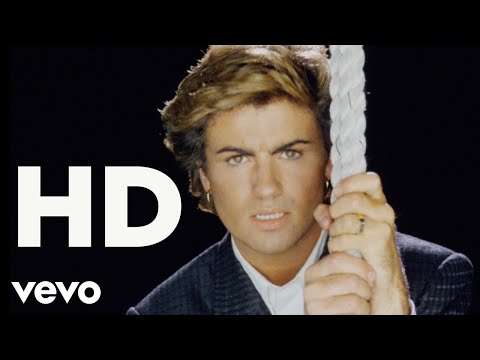
“The NeverEnding Story” — Limahl's singular moment on the 1980s charts.
02 Song Meaning
The Meaning Behind The NeverEnding Story — Limahl
A Song About What Stories Do to Us
The lyrics of The NeverEnding Story are concerned with what happens when a person falls into a world of imagination and cannot quite come back. The song describes the experience of storytelling from the inside, the sensation of being pulled through a narrative so complete that the real world goes quiet while you are inside it. That is a precise description of what cinema and literature do at their best, and the song captures it without becoming abstract or philosophical. It gives form to the feeling most readers and filmgoers know but rarely hear named.
Fantasy as Emotional Truth
The film it soundtracked, based on Michael Ende's novel, is preoccupied with the same territory: a grieving child finds in fantasy a means of processing real emotional pain that the ordinary world cannot accommodate. The song operates as a complement to that theme rather than a simple commercial add-on. When Limahl sings about turning time around, about a world of made-up things that nevertheless feels like home, he describes the strange paradox at the center of all fiction: that invented worlds can speak truths that the real one sometimes cannot. The song thus works on two levels simultaneously, as entertainment and as genuine meditation on why humans tell stories at all.
The 1980s and the Appeal of Escape
The early to mid-1980s carried a particular appetite for fantasy in popular culture. The anxieties of the Cold War, the economic volatility of the decade's early years, and a broader cultural restlessness drove audiences toward worlds beyond the everyday. The NeverEnding Story arrived in that context with near-perfect timing: a song explicitly about the consoling power of imagination, wearing the period's most characteristic sonic clothes. Synthesizers that sounded like orchestras; production that made a pop song feel like a cinematic event. The historical moment and the song's themes aligned in a way that amplified both.
Childhood as the Reader's Standpoint
The lyrical address of the song is notably inclusive. Listeners are invited into the experience rather than told about it from the outside, and the emotional target is partly the child in every adult listener who remembers what it felt like to be completely absorbed in a story. That intergenerational reach explains why the song has never quite left the cultural conversation: each new generation of children encounters the film and the song and adds their own layer of attachment to it, while their parents feel the pull of a memory that is both personal and collective.
Why It Still Resonates
There is a quality of yearning in The NeverEnding Story that transcends its period nostalgia. The song is not merely about missing a childhood feeling; it captures the persistent human desire for worlds richer and stranger than the one we actually inhabit. That desire does not diminish with age or cultural shift, which is why a track from 1984 still accumulates 65 million YouTube views and still moves listeners who were not alive when it first charted. The story, as the title insists, really does not end.
→ More from the 1980s File
View all 1980s hits →



Keep digging