The 1980s File Feature
When We Get Married
When We Get Married: Larry Graham's Funk Bass Meets Doo-Wop Romance "When We Get Married" had been part of the American popular music landscape for more than…
01 The Story
When We Get Married: Larry Graham's Funk Bass Meets Doo-Wop Romance
"When We Get Married" had been part of the American popular music landscape for more than two decades before Larry Graham brought it into the funk and soul era in 1980. The song was originally written and recorded by The Dreamlovers in 1961, becoming a significant doo-wop hit that captured the romantic optimism and vocal group tradition of the early 1960s. Graham's recording, released on Warner Bros. Records, represented a fundamental reimagining of the song's emotional and musical context, translating its classic sentiment into the contemporary production language of late-1970s and early-1980s funk and soul.
Larry Graham's position in popular music was unique. He had first achieved fame as the bassist for Sly and the Family Stone, the groundbreaking San Francisco group whose work in the late 1960s and early 1970s had virtually reinvented the language of funk and soul. Graham's contribution to that group's sound was enormous: he is widely credited with developing or significantly advancing the technique known as "slap bass," a percussive approach to the electric bass that produced a striking, rhythmically emphatic sound that became one of the defining textures of 1970s funk. After leaving Sly and the Family Stone, Graham formed his own group, Graham Central Station, which released a series of albums and singles through the mid-1970s that allowed him to develop his musical ideas more fully as a bandleader and frontman.
By 1980, when Graham recorded "When We Get Married," he was at a transitional point in his career, moving away from the group context of Graham Central Station toward a solo career. The recording represented a departure from the harder, more complex funk of his earlier work, emphasizing instead the romantic soul ballad tradition and showcasing his abilities as a vocalist in a more conventional way. The choice of the Dreamlovers' doo-wop classic as his vehicle was deliberate: Graham had grown up with the original recording and felt a genuine emotional connection to the song's material. His decision to record it was an act of personal tribute as much as commercial calculation.
"When We Get Married" reached the top thirty on the Billboard Hot 100 and performed even more strongly on the R&B singles chart, where it reached the top ten, confirming that Graham's audience was enthusiastically receptive to this more romantic, accessible side of his artistry. The song's chart performance demonstrated that the funk audience that had followed him through his work with Sly Stone and Graham Central Station was capable of following him into different musical territory as long as he brought genuine commitment and personal feeling to the material.
The production of the recording reflected the sonic values of the soul mainstream in 1980, a moment when the post-disco landscape was producing a style of R&B that emphasized smooth surfaces and emotional warmth over the rhythmic complexity and energy of the preceding decade's funk and disco. Graham's production choices, working within the Warner Bros. Records framework, gave the song a glossy, contemporary sheen that remained faithful to the original's romantic core while updating its sonic palette sufficiently to ensure radio programmability in the early 1980s format environment.
Graham's vocal performance on "When We Get Married" was notably different from his work on his funkier recordings. Where his earlier material often featured him in a percussive, rhythmically driving mode that foregrounded his bass-player's instincts, the love song context brought out a softer, more vulnerable quality in his voice. He sang the song as though its message was genuinely his own, which in a real sense it was: the romantic optimism of the doo-wop era, its conviction that love and commitment were the most important things in the world, was something that Graham clearly found sustaining and meaningful regardless of the era in which it was expressed.
The cultural context of the recording was noteworthy. Graham had converted to the Jehovah's Witnesses faith in 1975, and his subsequent artistic choices, including his decision to record material that celebrated romantic love and commitment within a traditional framework, reflected the influence of that spiritual transformation on his personal values. The marriage-oriented sentiment of "When We Get Married" aligned naturally with a worldview that placed family and committed partnership at the center of a good life, and Graham's sincerity in performing the song was grounded in genuinely held convictions.
The song's doo-wop source material represented a tradition of romantic sincerity that connected Graham's 1980 recording to a much longer arc in Black American popular music, from the street-corner harmonies of the 1950s through the soul revolution of the 1960s and the funk era of the 1970s to the smoother R&B of the early 1980s. By recording the Dreamlovers' composition, Graham acknowledged this lineage explicitly, situating his own work within a continuum of Black musical tradition that had always found in romantic love one of its most powerful and enduring subjects.
02 Song Meaning
Commitment and Continuity: The Meaning of "When We Get Married"
"When We Get Married" belongs to a long tradition of popular songs that treat romantic commitment as a culminating life event rather than simply one emotional experience among many. The song's subject matter, the anticipation of marriage and the promises made in contemplation of a shared future, places it within the doo-wop tradition's characteristic emotional register: earnest, forward-looking, unambiguous in its conviction that love and commitment are the most important things in the world. Larry Graham's interpretation of this material was colored by his own personal and spiritual values in ways that gave the recording an additional dimension of sincerity.
Graham had spent the years before recording this song as a practitioner of one of the most kinetically exciting musical styles in popular music, a form in which rhythmic complexity and physical energy were the primary communicative tools. His decision to center his solo recording on a gentle, sincerely felt love song represented a genuine artistic disclosure, a willingness to reveal a personal and vulnerable dimension that his earlier, more ferocious musical persona had not foregrounded. The contrast between the innovative funk bassist and the romantic crooner was not a contradiction but a revelation of range, both musical and emotional.
The doo-wop original from which the song derived carried within it a set of cultural associations that Graham's recording reactivated. Doo-wop had been a music of streets and neighborhoods, of young people singing together about the things that mattered most to them, and the marriage song had been one of the genre's central vehicles because it combined the most intimate personal aspiration with a gesture toward the future and the community. Graham's updating of this material for a 1980 audience did not erase these associations but transported them into a new sonic context while preserving their emotional core.
The song's fantasy of marriage was specifically a fantasy of permanence, of choosing a person and committing to them with the explicit intention of never making a different choice. In the context of 1980, when divorce rates had risen substantially and the permanent family structures that the doo-wop era had taken for granted were increasingly contested, this fantasy carried particular emotional weight. Graham's spiritual convictions gave his performance of this aspiration an unusual credibility, because his audience knew that he was not merely playing a romantic character but expressing values he genuinely held.
The recording succeeds, finally, because Graham's voice communicates genuine longing for exactly what the song describes: the peace and fullness of a love that has found its permanent form in the structure of marriage and shared life. This is not the longing of someone who has never known stability but the longing of someone who has sought it and values it, who understands that the romantic sentiment of the doo-wop era was not naive but profoundly wise in its insistence that love and commitment were worth celebrating and protecting. The song offers that wisdom, and Graham's performance offers his whole self in support of it.
→ More from Larry Graham
View all Larry Graham hits →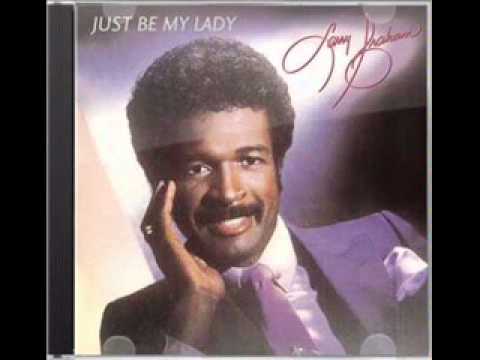
→ More from the 1980s File
View all 1980s hits →
Keep digging