The 1980s File Feature
I Don't Need You
I Don't Need You — Kenny Rogers (1981) By 1981, Kenny Rogers had achieved a commercial dominance in country music that few artists in any genre had matched. …
01 The Story
I Don't Need You — Kenny Rogers (1981)
By 1981, Kenny Rogers had achieved a commercial dominance in country music that few artists in any genre had matched. The late 1970s and early 1980s represented the peak of his commercial power, a period during which he delivered hit after hit across country and pop formats simultaneously, becoming one of the few artists who could genuinely claim to be a mainstream American superstar rather than a genre-specific phenomenon. "The Gambler," "Lucille," and his duet with Dolly Parton on "Islands in the Stream" were already lodged in the popular consciousness, and Rogers had established himself as a reliable architect of accessible, emotionally resonant narratives delivered in his warm baritone.
"I Don't Need You" arrived in this context as another demonstration of Rogers's commercial instincts. Released in 1981 on Liberty Records, the song was written by Rick Christian, a Nashville songwriter whose work aligned perfectly with the kind of polished, story-driven country-pop that Rogers had made his signature. The production reflected the era's approach to country-pop crossover: orchestrated arrangements that softened the genre's harder edges, a glossy sonic texture designed to work equally well on country and pop radio formats, and a tempo and dynamic that made the song emotionally accessible to the widest possible audience.
"I Don't Need You" reached number one on the Billboard Hot Country Singles chart, Rogers's expected home turf, and more significantly it climbed to the top three of the Billboard Hot 100, the main American pop chart. That Hot 100 performance confirmed what Rogers and his label already understood: that his audience extended well beyond country radio and into mainstream pop and adult contemporary territory. The song's crossover success was not accidental but the product of deliberate artistic and commercial choices made by Rogers, his producers, and his label throughout this period of his career.
The production was handled with the kind of care that major Nashville operations applied to records aimed at the pop market as well as the country market. String arrangements, clean guitar work, and a production aesthetic that foregrounded Rogers's voice rather than burying it in sonic complexity all contributed to a sound that radio programmers in multiple formats found appealing. The arrangement walked the precise line between country authenticity and pop palatability that Rogers had been navigating for several years by the time this record was released.
Liberty Records, the label home of Rogers at this period, was investing heavily in him as their flagship artist and had built a promotional infrastructure designed to deliver his records to as many radio formats as possible. The label's work on "I Don't Need You" reflected this strategy, with promotional campaigns targeting both country and pop radio programmers and music video production as that medium was beginning its rise as a promotional tool even before MTV had fully established itself as a cultural force.
The chart run for the single was substantial, spending multiple weeks at or near the top of the country chart and maintaining a strong presence on the Hot 100 for an extended period. For an artist who had been delivering consistent hit singles for several years, this was nonetheless an impressive commercial performance that reinforced Rogers's position at the absolute summit of the country-pop crossover market.
The album from which the single was drawn, also titled I Don't Need You, was another commercial success for Rogers, further extending the remarkable run of successful album projects that had defined his career since the late 1970s. Rogers was releasing material at a pace that few artists could sustain while maintaining consistent commercial quality, and the album performed strongly on both the country albums chart and the broader pop albums chart.
The era in which "I Don't Need You" was released was one of genuine complexity for Nashville. Country music was in a period of commercial expansion and mainstream visibility, partly because of crossover artists like Rogers himself who were blurring the boundaries between country and pop in ways that alarmed purists but expanded the genre's commercial footprint dramatically. The "countrypolitan" and "country pop" sounds that Rogers embodied were controversial within Nashville's traditional community but were undeniably effective at building audiences across demographic groups that pure country sounds did not reach.
The song's success also needs to be understood within the context of Rogers's sustained chart dominance during this period. Rather than representing a singular breakthrough, "I Don't Need You" was part of a multi-year run of top-performing singles that established Rogers as a commercial phenomenon with few peers. Within that remarkable run, the song stands as evidence of his ability to deliver emotionally compelling material across genre lines with consistency and commercial reliability.
02 Song Meaning
What "I Don't Need You" Is About — Independence, Loss, and Country-Pop Storytelling
"I Don't Need You" occupies a familiar but emotionally durable position within country music narrative: the aftermath of a relationship, rendered from the perspective of someone who has achieved, or is at least claiming, emotional independence from a former partner. The title's assertion of self-sufficiency is somewhat more complex than it first appears, because the very act of declaring that one does not need another person implies that the question of need has been seriously entertained. The song's emotional power derives from this tension between assertion and vulnerability.
Kenny Rogers was, by 1981, a master of the kind of character-driven emotional narrative that country music had developed as its central literary tradition. His greatest commercial successes, including "The Gambler" and "Lucille," were built around clearly defined narrators navigating morally and emotionally complex situations. "I Don't Need You" extends this tradition into more explicitly romantic territory, placing Rogers's narrator in the position of someone processing the end of a significant relationship.
The emotional register of the song is one of dignified resilience rather than either self-pity or triumphant indifference. This is a crucial distinction. Rogers does not perform the material as an embittered rejection or a celebration of freedom; instead, the tone is more nuanced, acknowledging that the relationship mattered while asserting that survival and independence are possible. That tonal sophistication is part of what allowed the record to cross over into adult contemporary and pop formats, where listeners were generally more receptive to emotional complexity than to the more straightforward heartbreak narratives that dominated certain corners of country radio.
The song's narrative also carries implicit dignity for both parties. The narrator is not attacking or diminishing the former partner but rather making a declaration about his own emotional state and capacity. This generosity of spirit in the face of romantic ending is characteristic of the best country-pop songwriting, which at its finest manages to honor the complexity of human relationships rather than reducing them to simple winners and losers.
Within Rogers's catalog, "I Don't Need You" represents the romantic and personal dimension of his storytelling, the counterpart to the more dramatic narrative songs that established his reputation. Where "The Gambler" and similar tracks were built around extended metaphors and character studies, "I Don't Need You" operates more directly as an emotional statement from a first-person narrator. Both modes were essential to Rogers's commercial appeal, and the song demonstrates his skill in the more intimate, emotionally direct mode of country songwriting.
For listeners in 1981, the song arrived during a period when the Reagan-era cultural landscape placed significant emphasis on self-reliance and individual resilience. The song's thematic content, while not explicitly political, resonated with those broader cultural currents. The declaration of not needing another person carried extra emotional weight in a moment when independence and self-sufficiency were widely valorized cultural ideals. Rogers's delivery, warm and assured without being aggressive, gave the theme a human texture that made the cultural resonance feel personal rather than ideological, which is precisely what successful popular music accomplishes at its best.
→ More from Kenny Rogers
View all Kenny Rogers hits →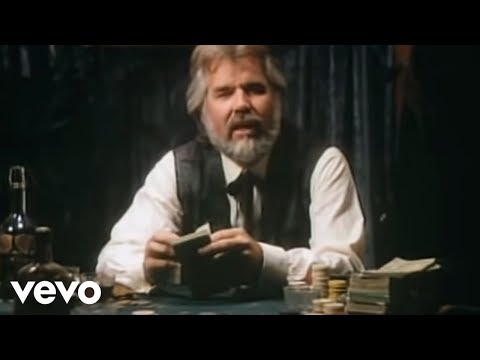

→ More from the 1980s File
View all 1980s hits →


Keep digging