The 1980s File Feature
Blaze Of Glory
Kenny Rogers and "Blaze Of Glory": A 1981 Single From a Career at Its Commercial Peak In the autumn of 1981, Kenny Rogers was one of the most commercially do…
01 The Story
Kenny Rogers and "Blaze Of Glory": A 1981 Single From a Career at Its Commercial Peak
In the autumn of 1981, Kenny Rogers was one of the most commercially dominant artists in American popular music. His run of hit singles and albums through the late 1970s and into the 1980s had established him as a crossover phenomenon whose appeal extended from country radio to the pop mainstream, and the release of "Blaze Of Glory" that November arrived at a moment when his commercial infrastructure was operating at full capacity. The single debuted on the Billboard Hot 100 on November 21, 1981, entering at number 86. It climbed steadily over the following weeks, reaching its peak position of number 66 on December 12, 1981, and holding that position for two consecutive weeks before beginning its descent. The single spent nine weeks on the chart in total.
The single was drawn from Rogers's album "Share Your Love," which was released on Liberty Records in 1981. The album was produced by Lionel Richie, who was at that point one of the most sought-after producers and songwriters in popular music, having recently achieved enormous success with his own solo material as well as with projects for other artists. The Richie-Rogers collaboration on "Share Your Love" was commercially successful, and it represented a deliberate effort to position Rogers's sound at the intersection of country and adult contemporary pop in a way that would maximize his crossover appeal.
"Blaze Of Glory" was not the album's lead single or its most successful chart entry, but it exemplified the production style that Richie brought to the project: polished, warm, and built around Rogers's distinctively weathered baritone. The arrangement employed the lush orchestration and sophisticated chord progressions that characterized Richie's production work during this period, placing Rogers's voice in a context that felt simultaneously luxurious and emotionally accessible. The result was a record that fitted comfortably into the adult contemporary format that was, by 1981, one of the dominant categories in American commercial radio.
Kenny Rogers had built his career on a series of persona-defining recordings that emphasized storytelling, moral complexity, and emotional directness. His 1978 single "The Gambler" had achieved the kind of cultural saturation that few recordings accomplish, becoming a reference point far beyond the country music community. The success of "The Gambler" and the subsequent "Coward of the County" (1979) established Rogers as an artist capable of creating characters and narratives that resonated with listeners across demographic categories, and this capacity informed the reception of his subsequent releases throughout the early 1980s.
Liberty Records had acquired Rogers's contract as part of the complex corporate restructuring of the EMI label family in the United States, and the label invested substantially in the promotion of "Share Your Love" and its associated singles. The promotional campaign for the album emphasized the Richie-Rogers collaboration as a creative event rather than simply a commercial product, and this framing generated considerable press coverage that complemented the radio promotion campaign. The timing of "Blaze Of Glory"'s release in the holiday shopping season of 1981 was strategically advantageous, as Rogers's established fanbase was reliable in its purchasing behavior during this period.
The Hot 100 chart performance of number 66 placed "Blaze Of Glory" solidly in the middle tier of commercial success for an artist of Rogers's stature. It was not a breakthrough single in the manner of his earlier major hits, but it demonstrated the continued strength of his commercial presence at a time when many artists who had peaked in the late 1970s were experiencing declining chart fortunes. Rogers's ability to sustain Hot 100 relevance into the 1980s was a function of his crossover positioning, which allowed him to draw listeners from country, pop, and adult contemporary formats simultaneously.
The nine-week chart run of "Blaze Of Glory" was consistent with the performance patterns of Rogers's mid-period singles: substantial enough to confirm his commercial viability, but not of the magnitude of his signature recordings. The single's performance on the country chart, where Rogers maintained his most loyal audience, contributed to the overall commercial picture of a recording that served its primary purpose of sustaining the artist's profile between more significant commercial events. In the broader context of Rogers's career, "Blaze Of Glory" represents the productive consistency of an artist who understood how to maintain commercial relevance across multiple radio formats during a period of rapid change in the American music industry.
02 Song Meaning
Defiance and Dignity: Reading Kenny Rogers's "Blaze Of Glory"
"Blaze Of Glory," recorded by Kenny Rogers and released in 1981 from the album "Share Your Love," belongs to a tradition of popular song in which the central speaker stakes a claim to identity and dignity in the face of an indifferent or hostile world. The title phrase itself carries a long history in American vernacular expression, evoking the image of someone who refuses to submit quietly to defeat or erasure, choosing instead to make their exit or their stand in a manner that commands attention and respect. This is a fundamentally theatrical image, one that romanticizes resistance and invests the individual act of defiance with moral significance.
The thematic content of the song fits naturally within the narrative sensibility that Kenny Rogers had developed across his career as a storytelling artist. From "The Gambler" onward, Rogers had demonstrated a consistent interest in characters who face difficult circumstances with a combination of practical wisdom and emotional resilience. The gambler's famous advice about knowing when to hold and when to fold is, at its core, a philosophy of strategic dignity: understanding one's situation clearly enough to navigate it on one's own terms. "Blaze Of Glory" operates within this same philosophical register, valorizing the individual who meets adversity without capitulating to it.
The production by Lionel Richie shaped the song's emotional register in important ways. Richie's arrangements during this period tended toward a warmth and spaciousness that made even emotionally demanding content feel approachable, and his work on "Share Your Love" consistently positioned Rogers as a figure of assured, mature authority rather than aggressive defiance. This means that the "blaze of glory" of the title is presented not as a reckless explosion but as a considered, even dignified assertion of self, which is consistent with the persona Rogers had built over the preceding decade.
The adult contemporary context in which the song was received in 1981 also shaped how its thematic content was understood. Adult contemporary radio listeners of that era were generally receptive to material that combined emotional directness with melodic sophistication, and they brought to such recordings an expectation of personal relevance: songs in this format were understood as addressing the emotional lives of listeners who had moved beyond adolescent romance into the more complex terrain of adult experience. "Blaze Of Glory" spoke to this audience's sense of themselves as people who had survived enough to understand the value of facing difficulty with composure.
The phrase "blaze of glory" also carries a secondary connotation related to the end of things: it suggests a final, brilliant flourish before extinction, which gives the song an undertone of elegy alongside its surface defiance. This combination of bravado and melancholy is characteristic of the best work in the country-pop tradition, which has always understood that genuine emotional resonance requires acknowledging vulnerability even when the surface narrative is one of strength. Rogers's vocal performance on the recording communicates both dimensions simultaneously, the gravelly authority of his voice lending credibility to the defiant stance while its warmth signals the emotional complexity beneath.
In the context of Rogers's career as a whole, "Blaze Of Glory" represents his consistent engagement with questions of personal integrity under pressure: how individuals maintain their sense of self when circumstances threaten to overwhelm them. This thematic consistency across his most memorable recordings is one reason his appeal was so durable across different demographic groups and musical formats, because the underlying questions are ones that most adults encounter at some point in their lives regardless of their cultural background or musical preferences.
→ More from Kenny Rogers
View all Kenny Rogers hits →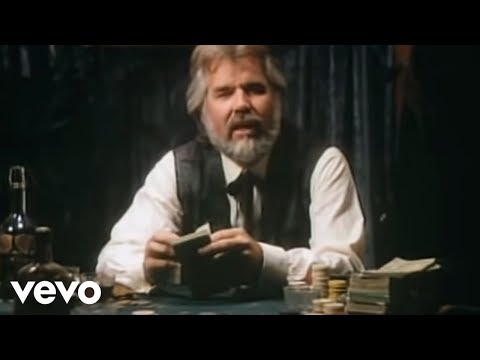




→ More from the 1980s File
View all 1980s hits →



Keep digging