The 1980s File Feature
A Love Song
A Love Song: Kenny Rogers and the 1982 Hot 100 The fall of 1982 found Kenny Rogers at a career crossroads that was simultaneously a commercial peak and a mom…
01 The Story
A Love Song: Kenny Rogers and the 1982 Hot 100
The fall of 1982 found Kenny Rogers at a career crossroads that was simultaneously a commercial peak and a moment of artistic consolidation. He had spent the previous several years building himself into one of the dominant forces in American popular music, crossing from country into adult contemporary with a consistency that few artists of any genre had managed. The Gambler had established his persona; subsequent albums had extended his commercial reach into territory that pure country acts could not access. “A Love Song” was part of that continuing project, a track that positioned Rogers in the adult contemporary space where his most devoted mainstream audience lived.
Rogers at Commercial Peak
By October 1982, Kenny Rogers was a genuine crossover phenomenon. His collaborations with Dolly Parton, including “Islands in the Stream,” were either recently completed or in progress; his television specials were attracting massive audiences; his name on a product meant something to a broad and loyal demographic. The Rogers brand in 1982 was built on warmth, craftsmanship, and the sense that he was genuinely invested in the songs he was singing, whether they were country ballads or pop crossover material. “A Love Song” was designed for and delivered to the audience that had come to trust that brand.
The Chart Journey
“A Love Song” entered the Billboard Hot 100 on October 16, 1982, at number 79. The ascent over the following weeks was steady and purposeful: 79, 68, 62, 53, before reaching its peak of number 47 on November 13, 1982. Ten weeks total on the chart was a solid run that placed it comfortably in the mainstream conversation without challenging for the very top of the chart. On the Adult Contemporary chart, where Rogers had built his most devoted mainstream following, the performance was considerably stronger.
The Title's Directness and What It Promised
Calling a song simply “A Love Song” was either an act of supreme confidence or artistic humility, and in Rogers's case it was probably both simultaneously. The title announced exactly what the listener was going to get, without embellishment or conceptual complication. In the fall of 1982, when the adult contemporary market was crowded with ballads of varying emotional complexity, the directness of the title was itself a kind of artistic statement: this is exactly what it says it is, nothing more and nothing less, and that simplicity is offered as a value rather than a limitation.
Production and the Adult Contemporary Sound
The production on “A Love Song” was characteristic of Rogers's early 1980s recordings: polished, warm, and built to showcase the voice rather than overwhelm it. The arrangements of the period tended toward the lush, with orchestration that emphasized emotional support for the vocal line rather than rhythmic drive or sonic experimentation. Rogers's voice in this period had a quality of earned authority that was well matched to this production approach: it was the voice of someone who had been singing these kinds of songs long enough to know exactly how much or how little was needed to make them work.
Rogers's Legacy in Commercial Country-Pop
Kenny Rogers's contribution to the development of country-pop as a commercial category is significant and sometimes underappreciated. He demonstrated across a decade of recordings that a country artist with genuine commercial instincts could build a mainstream audience without abandoning the emotional directness that defined the genre. “A Love Song” belongs to the peak period of that demonstration, a track that shows the commercial country-pop template working exactly as designed: warmth, craft, and the reassurance of an artist who knows exactly what he is doing and why. Press play and hear the fall of 1982 through one of its most reliable voices.
The Christmas Season and Adult Contemporary
The fall timing of “A Love Song's” chart run placed it in the period when adult contemporary radio programmers were beginning to think about holiday programming and the emotional landscape it required. Ballads of love and warmth were particularly well positioned to succeed in this environment, and the track's slow but steady climb through October and November reflected the alignment between its emotional register and the season's demands. Rogers had an instinctive understanding of seasonal radio dynamics that came from years of operating in the country and adult contemporary markets, and records like “A Love Song” were designed with that understanding built in, positioned to find their audience precisely when that audience was most receptive to what they were offering.
“A Love Song” - Kenny Rogers's singular moment on the 1980s charts.
02 Song Meaning
The Genre Announcement: What “A Love Song” Promises and Delivers
Titling a song “A Love Song” is one of the more interesting choices a songwriter can make, because it does not describe content so much as announce genre. The title is a metacommentary: this is a love song, in the same way that one might say this is a photograph or this is a poem. That reflexive quality, the song identifying itself as a member of a category rather than simply being a member of it, opens onto a set of questions about what love songs are for and what makes a particular instantiation of the form successful or unsuccessful.
The Generic Contract
Every love song enters into a kind of contract with its listener: here are the emotional conventions I am going to invoke, here is the territory I am going to navigate, here is what you can expect from the next three or four minutes of your listening time. Kenny Rogers's “A Love Song” announces this contract explicitly in its title, leaving no ambiguity about what is being offered. In doing so, it places particular pressure on the execution: if you promise a love song and deliver something that does not fulfill the emotional expectations the genre implies, the failure is more visible than if the title had been less specific.
Rogers as Interpreter
Kenny Rogers's particular gift as a performer was his ability to make romantic sincerity sound earned rather than performed. There was always a quality of lived experience in his delivery, a sense that he was drawing on something real rather than simply executing a professional assignment. That quality was essential for a song with a title as nakedly sincere as “A Love Song”: a more detached performer would have made the directness seem naive or calculated. Rogers made it seem honest, which was the only way the premise could work.
The Social Function of the Love Song
Love songs serve a variety of social functions that go beyond the obvious one of expressing romantic feeling. They provide a shared vocabulary for emotions that are otherwise difficult to articulate; they create communal experiences around private feelings; they give people a way to communicate with each other about what they feel without having to find their own words. “A Love Song” was particularly well suited to these functions because its generic directness made it maximally available as a vehicle for projection. Any listener with any experience of romantic love could locate their own experience within its framework without the song's specificity getting in the way.
1982 and the Market for Emotional Directness
The early 1980s were a complicated moment for emotional directness in mainstream pop. New wave and post-punk were bringing ironic distance and self-consciousness to mainstream radio; synthesizer pop was creating emotional experiences that were deliberately artificial and distancing. Against this backdrop, a song that simply announced itself as a love song and then delivered one had a kind of countercultural quality, an insistence on the value of unmediated emotional expression that was slightly at odds with the prevailing aesthetic winds. Rogers's adult contemporary audience was precisely the demographic that valued this kind of emotional directness, and they received it gratefully.
The Quiet Ambition of Simplicity
There is something quietly ambitious about choosing to make a love song called “A Love Song,” about committing to the most fundamental version of the form without irony or conceptual elaboration. That commitment requires a belief that the form itself, done with craft and sincerity, is sufficient. Rogers held that belief consistently across his commercial peak years, and the audience that followed him trusted it. The song and its title are, in this sense, a statement of artistic values: directness, warmth, and the conviction that a love song, simply and honestly made, is one of the most valuable things popular music can offer.
→ More from Kenny Rogers
View all Kenny Rogers hits →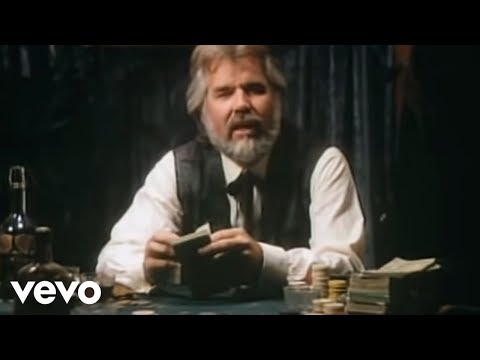




→ More from the 1980s File
View all 1980s hits →




Keep digging