The 1980s File Feature
Please Be The One
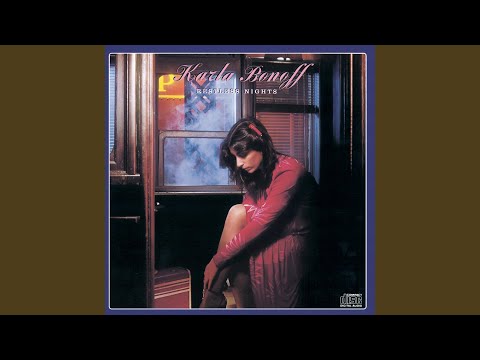
The Story Behind Please Be The One by Karla Bonoff There's a particular strain of early-1980s Los Angeles singer-songwriter music that never quite gets its d…
01 The Story
The Story Behind "Please Be The One" by Karla Bonoff
There's a particular strain of early-1980s Los Angeles singer-songwriter music that never quite gets its due: warm, unhurried, built around acoustic guitar and a voice that sounds like it trusts the listener to sit still for four minutes. Karla Bonoff made a career out of exactly that sound, and by the time "Please Be The One" arrived in the fall of 1982, she had already spent nearly a decade as one of the genre's most respected, if commercially under-recognized, practitioners.
A Songwriter's Songwriter
Bonoff had built her reputation as much through other artists' recordings of her songs as through her own releases. Linda Ronstadt had turned several of Bonoff's compositions into hits during the 1970s, cementing her standing within the tight-knit Laurel Canyon-adjacent circle of California singer-songwriters that included Ronstadt, J.D. Souther, and the Eagles' extended orbit. By 1982, Bonoff was working to translate that songwriting credibility into a recording career of her own, and "Please Be The One" arrived as part of that ongoing effort, a plainspoken plea for romantic commitment delivered in her characteristically unadorned style, four years removed from her self-titled debut album that had first introduced her as a performer in her own right.
The Sound of a Steady Climb
The production favors the clean, radio-friendly soft rock that defined so much of adult contemporary programming in the early 1980s: gentle percussion, tasteful guitar work, and Bonoff's warm, slightly husky voice out front, carrying the song's emotional weight without ever straining for drama. It is a style built for patience rather than immediacy, the kind of record that grows on a listener over repeated plays rather than announcing itself in the first ten seconds. The arrangement leaves plenty of open space around the vocal, a production choice consistent with the broader California soft-rock sound of the period, which favored clarity and warmth over layered studio effects.
A Gradual Ascent up the Hot 100
That patient quality showed up in the song's chart trajectory as well. "Please Be The One" debuted on the Billboard Hot 100 on September 25, 1982, at number 85, and climbed steadily over the following weeks, reaching its peak of number 63 during the week of October 16, 1982, where it held for two consecutive weeks before beginning its descent. In total, the song spent seven weeks on the chart, a modest but respectable run for an artist working outside the era's dominant pop and rock trends, built on steady adult contemporary and album-oriented radio support rather than any single explosive moment. The gradual climb, rather than a fast entry followed by a quick fade, suggests a song that found its audience slowly, through repeated exposure rather than an immediate hook.
A Changing Radio Landscape
1982 was a transitional year for American radio, with synthesizer-driven new wave and the earliest MTV-era visual pop beginning to crowd out the singer-songwriter tradition that had dominated the previous decade. Bonoff's music, rooted in acoustic instrumentation and unadorned vocal performance, represented something of a holdover from that earlier era even as it found a comfortable home on adult contemporary playlists that valued exactly those qualities. Her ability to chart at all in that shifting environment speaks to the durability of well-crafted, sincere songwriting even as the broader pop conversation moved toward synthesizers and drum machines.
A Career Built on Craft
Bonoff never became a major chart presence in her own right, but that was never really the point of her career. Her songs were covered widely, admired by peers, and valued for a kind of emotional directness that didn't rely on studio spectacle. "Please Be The One" stands as one of the clearer examples of her own voice carrying that same songwriting sensibility to the airwaves, a modest hit from an artist whose influence extended well beyond her own chart numbers.
Put it on and let the unhurried arrangement do its work; this is a song built to be lived with, not just heard once.
"Please Be The One" — Karla Bonoff's singular moment on the 1980s charts.
02 Song Meaning
The Meaning Behind "Please Be The One"
"Please Be The One" is built around a request stated almost as plainly as its title suggests: a hope, spoken aloud, that a particular person will turn out to be the lasting partner the narrator has been searching for. There is no elaborate metaphor standing between the listener and the feeling; the song trusts direct, conversational language to carry its emotional weight, which was very much in keeping with Karla Bonoff's broader songwriting style and her reputation among peers as a writer of unusual candor.
Vulnerability Without Performance
What distinguishes the song within the crowded field of early-1980s romantic ballads is its lack of theatrical flourish. The narrator does not dramatize her uncertainty or perform heartbreak for effect; she simply states her hope and her hesitation, letting the plainness of the language do the emotional work. That restraint is characteristic of the Laurel Canyon songwriting tradition Bonoff emerged from, where confessional honesty mattered more than vocal pyrotechnics or lyrical ornamentation, a lineage that also produced hits for Linda Ronstadt throughout the 1970s.
The Adult Contemporary Sensibility
The song's themes of cautious hope and romantic commitment fit squarely within the adult contemporary format that embraced it, a radio category built around listeners past their teenage years who wanted music that reflected more grounded, less melodramatic experiences of love. Where much of the era's pop chart aimed for youthful urgency, Bonoff's music spoke to an audience looking for something steadier and more reflective, an audience that had already lived through disappointment and understood the value of caution mixed with hope rather than blind certainty.
A Woman's Voice in a Genre Often Dominated by Men
Bonoff's presence as a female singer-songwriter working in a soft rock idiom often associated with her male peers gave the song a particular resonance. The plea at its center, asking a partner to be worthy of trust rather than simply declaring love unconditionally, carries an implicit strength: a narrator who has been disappointed before and is choosing hope carefully rather than naively, aware of the risk even as she takes it and unwilling to pretend otherwise.
The Emotional Arithmetic of Asking
There is something quietly bold in a song built entirely around a request rather than a declaration. Instead of proclaiming certainty about a relationship's future, the narrator openly admits she does not yet know how things will turn out, and asks anyway. That vulnerability, choosing to hope out loud rather than protecting herself with detachment, gives the song its emotional core and distinguishes it from more triumphant love songs of the same period, which tended to skip past doubt altogether.
Why Listeners Responded
The song resonated with listeners precisely because it did not oversell its emotion. Its steady climb to number 63 on the Hot 100 reflected a slow-building audience connection built on repeated listens rather than an immediate hook, the natural result of a song that rewards patience with the same quality it asks for in love.
→ More from Karla Bonoff
View all Karla Bonoff hits →
→ More from the 1980s File
View all 1980s hits →
Keep digging