The 1980s File Feature
Hold On
Hold On — Kansas (1980) Note: This entry covers the Kansas song from 1980, not the Wilson Phillips single of 1990 or the En Vogue recording of the same name.…
01 The Story
Hold On — Kansas (1980)
Note: This entry covers the Kansas song from 1980, not the Wilson Phillips single of 1990 or the En Vogue recording of the same name.
"Hold On" was released in 1980 on Kirshner/Epic Records as a single from the album "Audio-Visions," representing Kansas at a significant transitional moment in their career. The song marked a noticeable shift toward a more accessible, radio-friendly sound that retained the group's hallmark instrumental sophistication while reaching toward the mainstream pop and rock audience that had begun to dominate commercial radio as the 1970s turned into the 1980s. The single became one of the group's most commercially successful, demonstrating that Kansas could adapt their approach without entirely abandoning the qualities that had originally distinguished them.
Kansas had formed in Topeka in the early 1970s and had spent several years building a reputation as one of the most technically accomplished and musically ambitious bands in American progressive rock. The group's combination of extended instrumental passages, complex time signatures, violin, and classical musical influences with hard rock power distinguished them from both the heavy metal and soft rock categories that dominated the commercial landscape of the mid-1970s. Albums like "Leftoverture" in 1976 and "Point of Know Return" in 1977 established them as commercial forces as well as critical favorites among listeners who wanted something more demanding from their rock music.
"Leftoverture" and "Point of Know Return" both went platinum, with the latter producing the massive hit "Dust in the Wind," one of the most unlikely top-ten singles in the history of American radio, an acoustic meditation on mortality and impermanence that reached number six on the Billboard Hot 100 in 1978. The success of "Dust in the Wind" demonstrated that Kansas's audience was larger and more diverse than the progressive rock category might have suggested, extending into the mainstream pop audience that responded to melodic accessibility regardless of genre affiliation.
By the time "Audio-Visions" was being recorded, the group was navigating significant internal tensions. Several key members were grappling with personal and spiritual transformations that would eventually lead to departures and lineup changes, and the musical direction of the group was being pulled between the progressive ambitions that had defined their early work and the commercial pressures of an industry that was increasingly rewarding simpler, more radio-friendly rock. "Hold On" represents the accommodation these tensions produced, a song that maintains the group's harmonic sophistication and emotional depth while presenting them in a more compact, radio-ready format.
The production of "Hold On" reflects the cleaner, more direct sound that characterized rock production at the dawn of the 1980s. The song builds from a relatively sparse beginning to a fuller arrangement, featuring the guitar and keyboard interplay that had always been central to the Kansas sound but deploying them in service of a more straightforward pop-rock structure than the group had typically favored. Steve Walsh's vocal performance is among the most emotionally direct in the Kansas catalog, bringing an urgency and warmth to the material that helped translate it to a radio audience unfamiliar with the group's more extended compositional work.
The single reached the top 40 on the Billboard Hot 100 and performed well on album rock radio, where the group had long been a reliable presence. The "Audio-Visions" album itself reached a respectable chart position, though it did not match the commercial heights of the group's late-1970s peak. For a progressive rock band navigating the transition to a new decade, these results were respectable evidence that the audience had not abandoned them even as the group's sound and approach evolved.
The broader context of 1980 rock is important for understanding what "Hold On" represented. The progressive rock movement that had flourished in the mid-1970s was under significant commercial and critical pressure as punk, new wave, and the emerging MTV aesthetic challenged its dominance. Bands associated with prog were frequently criticized for excess and self-indulgence, and the market had moved decisively toward shorter, more direct rock records. Kansas's turn toward a more accessible sound on "Audio-Visions" was a pragmatic response to these pressures, and "Hold On" was the most commercially successful expression of that response.
Shortly after the album's release, Walsh departed the group, creating a void that would eventually be filled by John Elefante, whose more overtly spiritual lyrical concerns would shape the next phase of the band's evolution. The period of "Audio-Visions" thus represents a kind of final statement from the Walsh-era Kansas, and "Hold On" carries within it some of the emotional weight of a band in transition, reaching for stability and connection at a moment of significant internal and external change.
02 Song Meaning
What "Hold On" Is About
Note: This entry covers the Kansas song from the "Audio-Visions" album (1980), not Wilson Phillips' or En Vogue's recordings of similar titles.
"Hold On" by Kansas is a song about perseverance in the face of uncertainty and change, a thematic concern that resonates particularly powerfully given the band's own circumstances at the time of its creation. The exhortation to hold on functions on multiple levels simultaneously, as practical advice to an individual in emotional distress, as a broader spiritual injunction to maintain faith through difficult circumstances, and as what sounds in retrospect like an unconscious statement about the band's own struggle to maintain its identity through a period of transition and internal fragmentation.
The spiritual dimension of the lyric connects "Hold On" to the broader current of religious and quasi-religious feeling that runs through much of Kansas's most significant work. "Dust in the Wind," the group's most celebrated song, had engaged directly with questions of mortality and cosmic insignificance. "Hold On" approaches similar existential territory from a different angle, asserting the value of persistence and faith rather than dwelling on the inevitability of loss. Where "Dust in the Wind" was contemplative and resigned, "Hold On" is urgent and encouraging, addressing someone in crisis and urging them toward a posture of determination rather than despair.
The emotional register of the song is one of genuine concern and care for the person being addressed, a quality that gives it an intimacy somewhat different from the more grandly impersonal philosophical meditations in the Kansas catalog. The narrator is not speaking from a position of detached wisdom but from one of engaged emotional investment, actively urging the listener toward a particular emotional and behavioral response to difficulty. This quality of direct emotional engagement was one of the elements that made the song more accessible to a mainstream pop audience than much of the group's progressive rock catalog, which tended toward the abstract and the conceptual.
The song also functions as a document of the spiritual searching that characterized Kansas during this period. Several band members were undergoing significant personal transformations in their relationship to faith and religion, and the lyrical content of "Audio-Visions" as a whole reflects this spiritual preoccupation. "Hold On" participates in this current of feeling without being overtly evangelical, maintaining enough ambiguity in its spiritual referents to function as a straightforwardly human song about perseverance as well as a more specifically religious statement about the importance of maintaining faith.
For the band's catalog as a whole, "Hold On" occupies the interesting position of a crossover achievement, a song that drew a larger audience than typical Kansas material without betraying the group's essential artistic values. Its emotional sincerity, harmonic sophistication, and the genuine urgency of Steve Walsh's vocal performance all reflect the qualities that had made Kansas distinctive, even as the song's structure and radio accessibility represented an accommodation to commercial realities. The result is a song that stands as one of the more accessible entries in the Kansas catalog while retaining enough of the group's character to function as a genuine artistic statement rather than a mere commercial calculation.
→ More from Kansas
View all Kansas hits →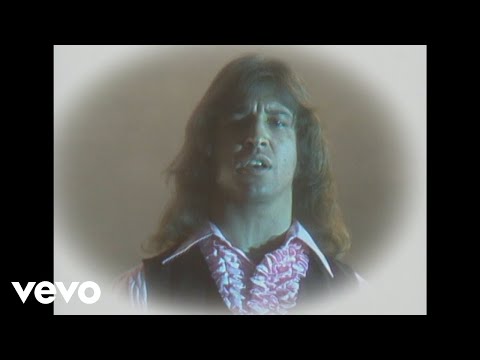



→ More from the 1980s File
View all 1980s hits →

Keep digging