The 1980s File Feature
Layin' It On The Line
Layin' It On The Line — Jefferson Starship: Recording, Release, and Chart History "Layin' It On The Line" was released in 1984 from Jefferson Starship's albu…
01 The Story
Layin' It On The Line — Jefferson Starship: Recording, Release, and Chart History
"Layin' It On The Line" was released in 1984 from Jefferson Starship's album Nuclear Furniture on Grunt Records, distributed through RCA. The track represented one of the band's commercial successes during a period when Jefferson Starship had successfully reinvented themselves as a mainstream rock and pop act, having moved considerably from their psychedelic rock and countercultural origins as Jefferson Airplane in the late 1960s. The band's commercial rebirth in the 1980s was built on a willingness to embrace contemporary production values, synthesizer-heavy arrangements, and the kind of hook-driven song structures that dominated the decade's rock radio landscape.
Jefferson Starship had achieved enormous commercial success with their 1985 album Knee Deep in the Hoopla, which produced the number-one hit "We Built This City" and the top-ten single "Sara." However, "Layin' It On The Line" preceded that commercial peak, appearing on Nuclear Furniture the year before and demonstrating that the band had already developed the musical approach that would generate those larger hits. The track reached the upper reaches of the Billboard Mainstream Rock chart, confirming Jefferson Starship's place in the mainstream rock radio landscape of the early 1980s.
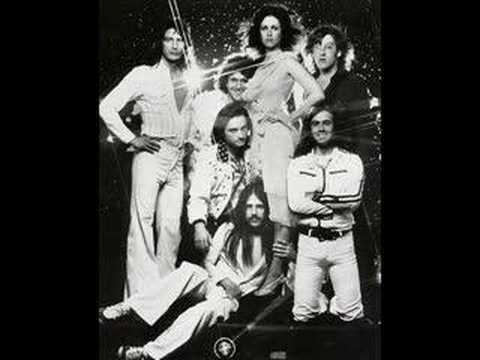
The band's lineup during this period was substantially different from the classic Jefferson Airplane configuration. Grace Slick remained as a primary vocalist and one of the band's most commercially potent assets, her distinctive voice being one of the most recognizable in rock history. Mickey Thomas, who had joined the band in 1979 after his own hit "Fooled Around and Fell in Love" with Elvin Bishop, served as co-lead vocalist and had been central to the band's commercial repositioning since his arrival. The Thomas-Slick vocal partnership gave Jefferson Starship a range and commercial flexibility that had not been available during the Grace Slick and Marty Balin era.
Nuclear Furniture was produced with the polished, synthesizer-enhanced sound that had become standard in mainstream rock production by 1984. Peter Wolf and Jeremy Smith produced the album, and their work reflected the broader production philosophy of the period, in which rock bands incorporated the sonic palette of electronic pop without abandoning the guitar-based structures that identified the music as rock. The result was a sound that fit comfortably on AOR and mainstream rock radio while also having enough pop accessibility to reach broader audiences.
Grunt Records was a label that had been founded by Jefferson Airplane members in the early 1970s as a means of maintaining greater creative control over their output. Its distribution arrangement with RCA gave the label access to major-label infrastructure while preserving some degree of independence. By the early 1980s, this arrangement was functioning primarily as a conventional major-label release vehicle, and Nuclear Furniture was marketed and distributed accordingly through RCA's commercial channels.
The cultural context of 1984 placed Jefferson Starship in an interesting position. The band's history stretched back to the San Francisco psychedelic scene of the late 1960s and included a period of radical countercultural engagement that seemed to bear no relationship to the polished radio rock they were now producing. Critics who had followed the band from its origins frequently expressed ambivalence or outright hostility toward the commercial direction, while newer audiences encountered Jefferson Starship purely as a contemporary rock act without necessarily knowing or caring about that history.
"Layin' It On The Line" fit within the band's early-1980s approach of producing clean, radio-friendly rock with strong melodic hooks and professional production. Its placement on Nuclear Furniture made it part of the commercial buildup toward the massive success that Knee Deep in the Hoopla would represent the following year. The single's performance on mainstream rock charts demonstrated that Jefferson Starship had successfully completed their commercial reinvention, whatever one thought of the artistic merits of that reinvention relative to their earlier work.
02 Song Meaning
Layin' It On The Line — Jefferson Starship: Meaning, Themes, and Lyrical Interpretation
"Layin' It On The Line" operates within the classic rock tradition of romantic commitment songs, focusing on the emotional vulnerability of declaring deep feeling for another person and the risk that entails. The phrase "laying it on the line" carries connotations of exposure and risk, of placing something valuable in a position where it can be lost. Applied to romantic feeling, it suggests a narrator who has reached a point where concealment is no longer possible or desirable, who has committed to full emotional disclosure regardless of outcome.
This thematic territory was well-suited to the commercial rock ballad format that Jefferson Starship was pursuing in the early 1980s. The emotional grammar of commitment, vulnerability, and desire was the dominant language of mainstream rock and pop in this period, and bands that could deliver it convincingly within polished production frameworks found consistent commercial success. Jefferson Starship's approach on this track is straightforward rather than experimental, presenting familiar emotional content through the sonic vocabulary of contemporary AOR rock without attempting to reframe or subvert the conventions of the form.
Grace Slick's vocal presence on the album carries a particular weight of history that listeners familiar with her career would inevitably bring to any performance she gave in this period. She had been one of the most powerful and distinctive voices in rock since the late 1960s, capable of a kind of operatic intensity that set her apart from contemporaries. By the early 1980s, her delivery had evolved alongside the band's commercial repositioning, maintaining its distinctive timbre while adapting to the smoother production environments she was now working within.
Mickey Thomas's co-lead vocal role gave the band's romantic material an additional dimension. His voice was warmer and more conventionally pop-oriented than Slick's, and the interplay between their different vocal qualities gave Jefferson Starship's early-1980s output a textural richness that pure-pop acts of the period lacked. The combination of Thomas's accessible warmth and Slick's more powerful and distinctive instrument created a vocal identity that was commercially flexible and helped explain the band's ability to reach both mainstream rock and pop audiences simultaneously.
Thematically, the track engages with the specific emotional logic of making a commitment after a period of uncertainty or guardedness. The romantic narrative implies a history of hesitation that has been overcome, a decision to move from protected emotional distance to complete vulnerability. This kind of narrative arc resonated strongly with audiences in the early 1980s who were consuming enormous quantities of romantic rock music that addressed themes of love, loss, and commitment from various angles.
In the broader context of Jefferson Starship's trajectory, "Layin' It On The Line" represents the band fully committed to a commercial pop-rock identity that had little relationship to their countercultural origins. Whether that represented artistic growth, commercial calculation, or simply the natural evolution of a band whose membership and values had changed substantially since the late 1960s remains a matter of perspective. What is clear is that the track demonstrates a professional competence in its chosen commercial idiom, delivering what mainstream rock radio wanted in 1984 with enough conviction to justify its presence in the band's catalog and to contribute to the commercial momentum that led to their greatest commercial successes the following year.
→ More from Jefferson Starship
View all Jefferson Starship hits →



→ More from the 1980s File
View all 1980s hits →




Keep digging