The 1980s File Feature
Never Die Young
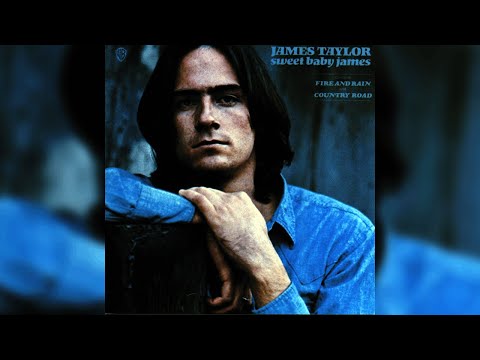
"Never Die Young" — James Taylor James Taylor in His Middle Period The spring of 1988 found James Taylor in a particularly secure phase of a long and disting…
01 The Story
"Never Die Young" — James Taylor
James Taylor in His Middle Period
The spring of 1988 found James Taylor in a particularly secure phase of a long and distinguished career. The singer-songwriter who had helped define the introspective folk-pop idiom in the early 1970s had survived the commercial uncertainties and personal difficulties of subsequent years to arrive at a consistent, artistically fulfilled middle period. His 1985 album That's Why I'm Here had demonstrated that his audience remained devoted and that his songwriting continued to reward close attention. When Never Die Young arrived as both an album and a single in early 1988, it extended this creative consistency into new thematic territory.
"Never Die Young" addresses something that pop music rarely attempts with genuine seriousness: the passage of time, the change that comes between youth and adulthood, and the question of what, if anything, can be held onto as life moves forward. For Taylor, then in his late thirties and decades past the youthful idealism of his early career, these were not abstract themes but lived ones.
The Sound of Quiet Reflection
The production of "Never Die Young" suits its subject with care. The arrangement is clean and warm, built around acoustic guitar and Taylor's distinctive vocal style, which had always prioritized intimacy and conversational directness over dramatic effect. The record doesn't reach for the kind of polished arena sound that dominated 1988 radio; instead it maintains the spare, personal quality that had always been Taylor's aesthetic signature.
The album was produced by Don Grolnick, who worked with Taylor on several projects during this period and understood how to serve the material without overproducing it. The result is a record that sounds unhurried and thoughtful, exactly the qualities its lyrical themes required. Taylor's guitar playing, always an essential part of his artistic identity, is present and integrated rather than buried under production layers.
Chart Performance in Context
The track entered the Billboard Hot 100 on April 2, 1988, debuting at number 88. Over the following weeks it climbed steadily: to 85, then 82, reaching its peak position of number 80 on April 23, 1988. After five weeks on the chart it began its descent, ultimately spending five weeks in total on the Hot 100. A peak of 80 was modest for an artist of Taylor's stature, and the record performed somewhat better on the adult contemporary chart, where his audience was most concentrated and where the radio format aligned better with his sound.
The adult contemporary performance of "Never Die Young" was more representative of Taylor's genuine commercial position in 1988. He was not a Top 40 artist in the traditional sense; his audience skewed older and had been with him through multiple decades of work. The Hot 100 position captured some of that broader crossover, while the adult contemporary performance reflected where his core listeners actually lived on the radio dial.
Generational Reflection as a Theme
By 1988, a generation that had come of age in the late 1960s and early 1970s was approaching middle age. The cultural idealism of that earlier era, the sense that youth culture could reshape society in fundamental ways, had encountered the friction of time, of compromise, of the gap between what was hoped for and what was achieved. Taylor's album addressed this generational experience with compassion rather than bitterness, asking what it meant to maintain one's values and one's sense of life's possibilities as the decades accumulated.
This thematic territory made the record particularly meaningful to listeners who shared Taylor's generational position. They were not teenagers anymore; the music of their youth was now classified as "classic rock" rather than current; the world had moved in directions both expected and surprising. A song that acknowledged this passage of time without either sentimentalizing it or dismissing it spoke directly to something they were living.
The Enduring Taylor
"Never Die Young" stands as representative of James Taylor's mature period at its best: thoughtful, musically accomplished, emotionally honest, and uninterested in chasing contemporary trends. The album from which it came has aged gracefully, retaining the quality that Taylor's best work has always possessed: the sense that an artist is speaking directly from lived experience rather than constructing an artistic persona. Press play and you hear someone in genuine conversation with time, with memory, and with the stubborn human desire to hold onto what matters.
"Never Die Young" — James Taylor's singular moment on the 1980s charts.
02 Song Meaning
"Never Die Young" — Themes and Meaning
Time's Passage and the Will to Persist
The thematic center of "Never Die Young" is the tension between the fact of aging and the human refusal to entirely surrender the qualities associated with youth: hope, openness, the sense of life's boundless possibility. Taylor's lyrical argument is not that people literally stay young or that the passage of time can be reversed; it's that certain essential qualities of engagement with the world can be maintained through conscious effort and through love. This distinction between chronological aging and spiritual or emotional stasis gives the song its particular warmth, distinguishing it from both saccharine denial and resigned acceptance.
Love as the Preserving Force
Within the song's thematic structure, romantic partnership functions as a primary means by which the youthful spirit is sustained. The relationship described is not the electric, uncertain energy of new love but something more settled and more sustaining: a partnership that provides the emotional resource to engage with life's ongoing difficulties without calcifying into bitterness or withdrawal. Taylor's approach to romantic love has always been domestic in the best sense, grounded in the real textures of ongoing commitment rather than in dramatic romantic gesture, and this song exemplifies that approach.
The Generational Context
To fully understand the resonance of "Never Die Young," one has to understand the specific generational position from which it was written and received. The baby boom generation, which had invested so much of its collective identity in the countercultural idealism of the 1960s and early 1970s, was in its mid-thirties to mid-forties by 1988. The question of whether the values of that earlier era could survive the compromises of adult life, of careers and mortgages and family responsibilities, was not merely a personal question but a cultural one. Taylor's song addressed that cultural question in personal terms, which is exactly how the best popular music engages with social experience.
Singer-Songwriter Honesty
The singer-songwriter tradition in which Taylor operates has always placed a premium on autobiographical authenticity: the sense that the performer is drawing from real experience rather than constructed narrative. "Never Die Young" participates fully in this tradition. The themes it addresses were clearly alive in Taylor's own life at the time of writing; his personal history, his artistic evolution, his navigation of the gap between youthful promise and middle-aged reality, provided the raw material that the song transformed into something accessible to a much wider audience. This quality of personal grounding is what separates singer-songwriter work at its best from the more generic emotional territory of standard pop composition.
Accessibility and Depth
One of the achievements of "Never Die Young" is its ability to engage with genuinely complex emotional territory without becoming inaccessible. The themes of time, memory, love as sustaining force, and the maintenance of youthful spirit are ancient ones; they run through poetry and philosophy as well as through popular music. Taylor's gift was always for making complex emotional experience feel approachable without simplifying it, for speaking plainly about difficult things without surrendering their difficulty. This balance between accessibility and depth is what made his work resonate across decades and explains why "Never Die Young" continues to speak to listeners long after its moment on the charts.
→ More from James Taylor
View all James Taylor hits →



→ More from the 1980s File
View all 1980s hits →


Keep digging