The 1980s File Feature
Innocent Eyes
Innocent Eyes — Graham Nash's Quiet Statement in Spring 1986Spring 1986 was a season of quiet contradictions on the pop charts. Massive, processed production…
01 The Story
Innocent Eyes — Graham Nash's Quiet Statement in Spring 1986
Spring 1986 was a season of quiet contradictions on the pop charts. Massive, processed production dominated the upper reaches of the Hot 100, while a handful of artists operating in older idioms found small pockets of audience who still wanted something closer to the ground. Graham Nash, whose career had traced one of the more remarkable arcs in popular music, arrived that April with a solo single that felt like a deliberate counterstatement to the prevailing sound.
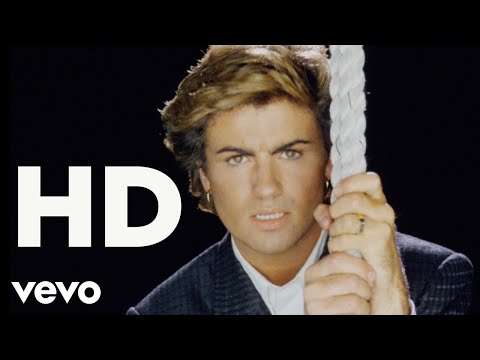
Graham Nash in 1986
By the mid-1980s, Nash had been a major figure in popular music for roughly two decades. His work with the Hollies in the 1960s had established his melodic gifts; his subsequent involvement with Crosby, Stills and Nash had made him one of the defining voices of a generation. Through the 1970s and into the 1980s, he continued releasing solo material while maintaining his association with the CSN configuration in various forms. A man with that pedigree approaching the Hot 100 in 1986 was navigating a landscape that had moved significantly from the world in which he had first made his name, and Innocent Eyes was his attempt to find his footing in it.
The Sound of the Single
Nash brought to Innocent Eyes the same melodic instinct that had characterized his work from the beginning, though the production context was contemporary enough to fit within the sonic conventions of the time. The result sat in that middle ground between classic songcraft and modern presentation that several artists of Nash's generation were exploring with varying degrees of success in the mid-1980s. What made his version distinctive was the vocal quality: that specific warm clarity that had always been his signature, still present and still capable of carrying a lyrical idea with conviction.
The Chart Run
The Hot 100 history for Innocent Eyes shows a modest but steady arc. The single debuted on April 26, 1986, at number 94 and climbed through 87 and 86 before reaching its peak of number 84 on May 17, 1986. After that week it began to recede, spending seven weeks on the chart in total. By the standards of Nash's biggest commercial moments, this was a quiet performance; by the standards of what artists of his vintage were typically achieving on the 1986 Hot 100, it was a respectable showing.
The Album and Its Context
The single came from Nash's album Innocent Eyes, a record that found him working in the contemporary studio environment of the mid-decade while maintaining the lyrical focus that distinguished his songwriting. The album received attention from listeners who had followed Nash's career closely, and the chart presence of the title track, even at modest levels, confirmed that he retained a meaningful audience beyond the nostalgic touring circuit. The album Innocent Eyes was Nash's most commercially visible solo work in years, keeping his name on radio at a moment when many of his peers had retreated entirely.
Persisting Through Changing Tides
One of the things that makes Innocent Eyes worth returning to is what it represents: an experienced artist taking seriously the obligation to keep making music that connects, without abandoning the qualities that made his voice worth hearing in the first place. Play it and hear Nash at a crossroads, the sincerity intact, the craft evident, the determination to remain present and engaged with an audience unmistakable in every bar.
“Innocent Eyes” — Graham Nash's singular moment on the 1980s charts.
02 Song Meaning
Innocent Eyes — Seeing Clearly in a World That Complicates Vision
A title like Innocent Eyes is doing several things at once. It describes a quality of perception; it implies a contrast with eyes that are no longer innocent; it suggests both a tribute and a lament. For Graham Nash, an artist who had spent decades observing the world and writing about what he saw, the phrase carried particular resonance.
Innocence as Perspective
The concept of innocence in the song functions primarily as a way of seeing rather than a moral category. Innocent eyes perceive the world without the accumulated weight of disappointment, compromise, or cynicism; they register things as they are rather than as they have been systematically understood to be. Nash used this as a lyrical lens in the mid-1980s, a moment when the political and cultural idealism of his generation had been tested thoroughly by the decades between Woodstock and the Reagan years. The song carries an implicit comparison between a purer mode of perception and whatever comes after experience has done its work.
Nash's Political and Social Awareness
Graham Nash had always written songs with a social dimension, from his early work with Crosby, Stills, Nash and Young onward. Innocent Eyes fits within that tradition, though it approaches its subject with more personal intimacy than the explicitly political material of his earlier career. The mid-1980s gave him plenty to think about: the nuclear anxiety that pervaded the decade, the idealism of the 1960s now visible in retrospect, a world that seemed to have traded certain kinds of openness for efficiency and calculation. Those themes run beneath the surface of the song's more personal lyrical content.
Longing for Uncomplicated Connection
At the interpersonal level, the song is about the desire to see and be seen without the filters that experience constructs. Innocent eyes in another person are valuable not only for what they see but for how they make you feel seen in return: without judgment, without the accumulated residue of past hurt. That longing for uncomplicated connection is one of the oldest themes in romantic writing, and Nash brings to it the emotional intelligence of someone who has genuinely lived enough to know what has been lost.
The 1986 Listener and the Song's Reach
For audiences encountering Innocent Eyes on spring 1986 radio, the song offered something that much of the surrounding pop did not: a lyrical depth that rewarded attention rather than just delivering a hook and a rhythm. Nash's fan base in the mid-1980s was composed largely of listeners who had followed him across the previous two decades, people who brought their own accumulated experience of the world to the material and found in it a reflection of their own negotiation between what they had hoped for and what they had found. That exchange between song and listener is what keeps a track meaningful long after its chart run ends.
→ More from the 1980s File
View all 1980s hits →



Keep digging