The 1980s File Feature
I'm Not Perfect (But I'm Perfect For You)
"I'm Not Perfect (But I'm Perfect For You)" — Grace Jones Owns the Late 1980s Pop Fringe An Icon Operating on Her Own Terms By 1986, Grace Jones had spent th…
01 The Story
"I'm Not Perfect (But I'm Perfect For You)" — Grace Jones Owns the Late 1980s Pop Fringe
An Icon Operating on Her Own Terms
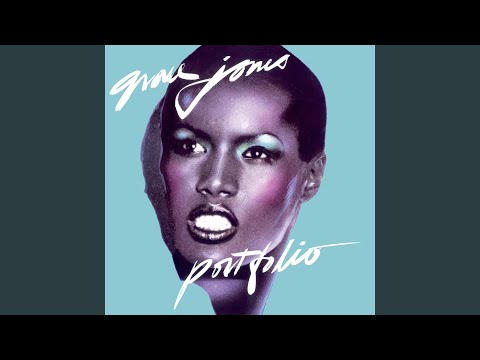
By 1986, Grace Jones had spent the better part of a decade redefining what a pop star could be. Her work in the late 1970s and early 1980s had established her as something genuinely singular: a Jamaican-American performer whose presentation, collaborations, and artistic ambitions placed her outside any comfortable commercial category. She had worked with Jean-Paul Goude on imagery that belonged to the art world as much as the pop world, collaborated with producers Sly Dunbar and Robbie Shakespeare to create a sound that merged reggae rhythms with new wave aesthetics, and built a career on a foundation of uncompromising individuality. By the time Inside Story arrived in 1986, Jones had nothing left to prove to anyone but herself.
"I'm Not Perfect (But I'm Perfect For You)" was one of the album's standout moments, a song that leaned into self-aware humor and confident charm with the same conviction Jones brought to her more confrontational material. Written and produced by Bruce Woolfson, the track had a lighter, more playful character than some of her most celebrated work, but it was lighter in the way that genuinely confident artists can afford to be: without any loss of authority.
The Sound and Its Peculiar Charm
The production on "I'm Not Perfect" positioned it within the synth-pop and polished pop-rock landscape of late 1986, but with characteristic Jones-ian idiosyncrasies that kept it from feeling generic. The arrangement had bounce and personality, and Jones's vocal delivery was simultaneously tongue-in-cheek and entirely committed, a combination that required considerable skill to maintain without tipping into self-parody or earnestness.
The song's title itself announced its conceit with refreshing directness: an admission of imperfection paired with an assertion of suitability. That paradox was the song's engine, and Jones played it with the kind of wink-to-the-audience that only an artist fully secure in their persona can execute. The production's clean, mid-1980s sheen gave the track an accessible surface that invited listeners who might have found her more experimental work intimidating.
Charting on the Hot 100
The chart story of "I'm Not Perfect" reflects the position Grace Jones occupied in the commercial pop landscape by 1986: respected and genuinely acclaimed, but not primarily oriented toward mainstream radio domination. The song debuted on the Billboard Hot 100 on November 29, 1986, at position 95, and worked its way steadily upward over the following months. Peaking at number 69 on January 10, 1987, after spending 9 weeks on the chart, the record confirmed that Jones had the audience to generate chart activity without the conventional promotional machinery that drove bigger pop hits to the top.
A number 69 peak might seem modest, but in context it represents a genuine commercial crossover for an artist whose appeal was largely concentrated in alternative, club, and art-pop circles. The fact that the song spent nine weeks on the Hot 100 suggested real staying power, a record that was finding new listeners through word of mouth and club play even as it never quite broke into the upper reaches of the chart.
Grace Jones and the Culture of 1986
The mid-1980s pop landscape was a complicated terrain for artists who did not fit neatly into existing commercial formats. The major pop stars of the era commanded enormous promotional resources and radio access, while artists operating in more specialized zones had to work harder for every chart position they achieved. Grace Jones navigated this landscape on her own terms, building a fan base that was deeply loyal precisely because they understood they were getting something that mainstream pop did not offer.
Her influence on the aesthetics of the period, particularly on artists who were pushing against genre boundaries, was substantial even when not immediately visible in chart positions. The androgynous, high-concept, theatrically aware pop performer that became a recognized archetype in subsequent decades owed considerable debts to the groundwork Jones had laid throughout the late 1970s and 1980s.
A Song That Suits Its Singer Perfectly
"I'm Not Perfect (But I'm Perfect For You)" remains one of the more accessible entry points into Grace Jones's catalog precisely because of its self-aware charm. The song laughed at itself without losing dignity, acknowledged limitation without performing humility, and delivered a pop hook wrapped in a sensibility that was entirely its own. For anyone curious about what made Grace Jones such an enduring figure in pop culture history, this record offers a well-lit door. Press play and hear what confidence sounds like when it has something to say.
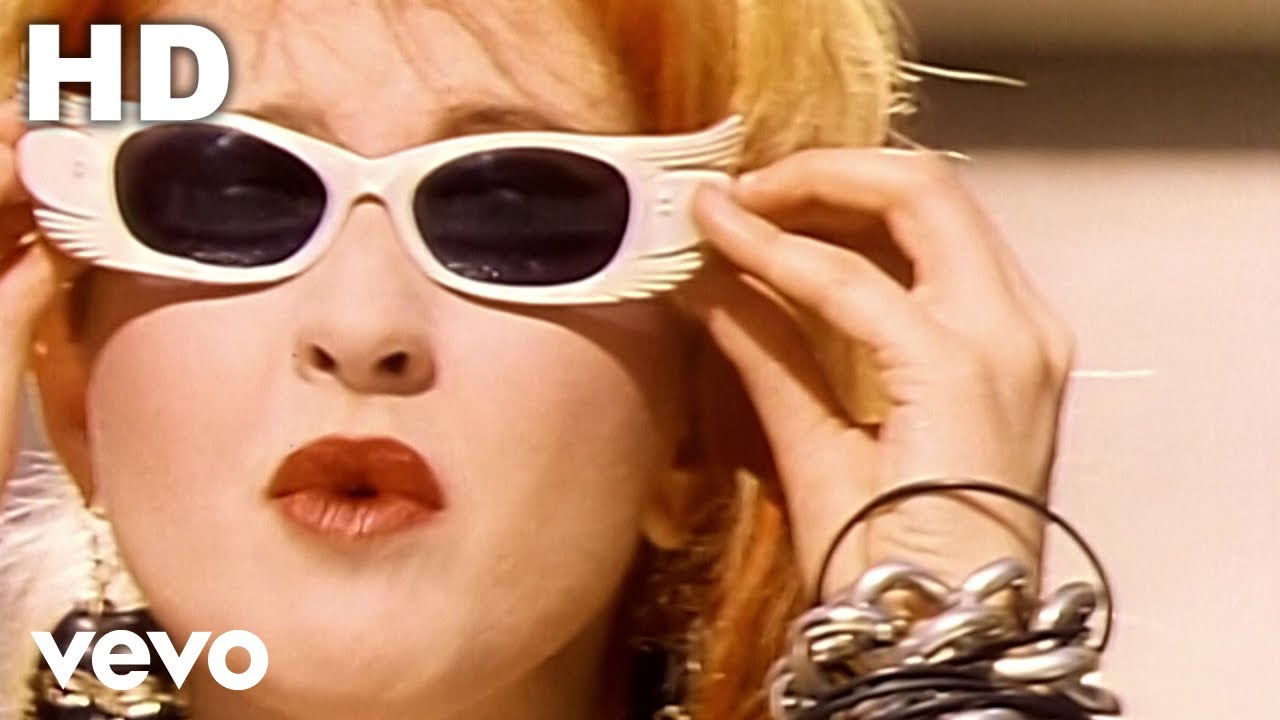
"I'm Not Perfect (But I'm Perfect For You)" — Grace Jones' singular moment on the 1980s charts.
02 Song Meaning
"I'm Not Perfect (But I'm Perfect For You)" — Self-Acceptance, Desire, and the Limits of the Ideal
The Freedom in Admitting Imperfection
There is a particular kind of romantic confidence that comes from acknowledging your own flaws before anyone else can use them against you. "I'm Not Perfect (But I'm Perfect For You)" built its entire emotional architecture around exactly that move: a pre-emptive, playful, thoroughly unbothered declaration of imperfection. The song did not apologize, did not seek forgiveness, and did not offer promises of improvement. It offered something rarer and more valuable: honesty about limitations paired with absolute certainty about compatibility.
That combination was distinctly Grace Jones. An artist who had spent her career refusing to conform to conventional standards of beauty, femininity, or pop stardom was well positioned to deliver a song about rejecting perfectionism as a prerequisite for love. The message aligned naturally with everything she had communicated through her visual and musical identity across the previous decade.
Pop's Obsession with Perfection, Subverted
Popular music in the mid-1980s was saturated with images and lyrics that traded heavily in aspirational idealism: perfect bodies, perfect romances, perfect lives. Music videos and production aesthetics alike favored a gleaming, airbrushed version of reality that left limited room for the messiness of actual human experience. "I'm Not Perfect" functioned as a gentle but pointed subversion of that entire framework.
By naming imperfection in the title and making it the song's central conceit, the record invited listeners to consider a different kind of romantic proposition: not the fantasy of finding someone flawless, but the reality of finding someone whose particular set of imperfections happens to fit yours. That reframe was both philosophically interesting and emotionally resonant for anyone who had found the perfection-obsessed pop mainstream of the era slightly exhausting.
Humor as an Artistic Tool
What distinguished the song within Grace Jones's catalog was its tonal lightness. Her most celebrated work tended toward intensity, whether the cool alienation of her early records or the muscular reggae-new wave hybrids of her commercial peak. "I'm Not Perfect" allowed for humor, for a kind of self-deprecating charm that was no less characteristic but considerably warmer in its register.
Using humor in a love song requires careful calibration. Too much comedy and the emotional stakes evaporate; too little and the comic premise becomes merely a gimmick. The song navigated that balance well, keeping the wit alive without letting it undermine the genuine affection at the lyric's core. Jones's delivery was central to making that work: she was funny without being a comedian and sincere without being earnest.
Gender, Power, and the Jones Persona
Grace Jones's identity as a performer was always implicitly about power: who had it, who wanted it, and how the dynamics of desire and presentation complicated conventional assumptions about gender and attraction. "I'm Not Perfect" engaged with those themes at a lower temperature than some of her more confrontational recordings, but they were still present. A woman declaring herself imperfect while simultaneously asserting her unique suitability as a partner was not a passive romantic statement; it was an active one, claiming agency in the romantic negotiation rather than waiting to be evaluated and found acceptable.
That active quality gave the song a feminist undertone that did not need to announce itself. The lyric was simply written from the perspective of someone who had already done the work of self-assessment and arrived at a comfortable conclusion, which was itself a quietly radical position in the pop landscape of 1986.
Lasting Resonance
The song's durability lies in its central argument's permanent applicability. The proposition that compatibility matters more than perfection is not a culturally specific idea; it translates across generations because the human tendency to demand impossible standards in romantic partners is a permanent feature of emotional life. Grace Jones articulated a counterargument to that tendency with wit, warmth, and the particular authority that came from being perhaps the most unapologetically individual pop artist of her era.
"I'm Not Perfect (But I'm Perfect For You)" — Grace Jones' singular moment on the 1980s charts.
→ More from Grace Jones
View all Grace Jones hits →
→ More from the 1980s File
View all 1980s hits →
Keep digging