The 1980s File Feature
Yes Or No
Yes Or No: The Go-Go's Final Statement Before the Silence By the time the Go-Go's released Talk Show in September 1984, the band that had conquered the early…
01 The Story
Yes Or No: The Go-Go's Final Statement Before the Silence
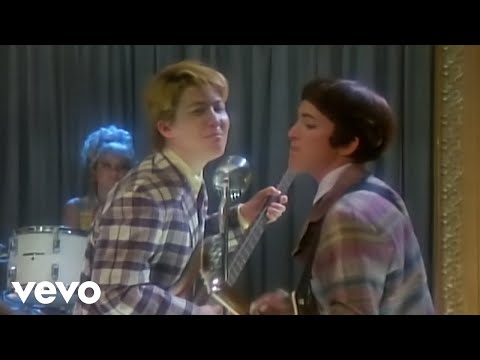
By the time the Go-Go's released Talk Show in September 1984, the band that had conquered the early decade with "We Got the Beat" and "Vacation" was operating under significant internal strain. Lineup changes, creative disagreements, and the pressures of sustained commercial success had eroded the group's cohesion. "Yes Or No," issued as a single from that album, charted modestly, reaching number 84 on the Billboard Hot 100 and spending three weeks on the chart — a far cry from the band's earlier chart dominance, but a song that encapsulated the tougher, more assertive direction the group had been pursuing.
The Go-Go's had formed in Los Angeles in 1978 as part of the city's burgeoning punk scene, initially playing with a raw energy that clubs like the Masque helped incubate. By the time they broke mainstream with Beauty and the Beat in 1981 — the first debut album by an all-female band writing their own material to reach number one on the Billboard 200 — they had refined their sound into polished new wave pop without entirely abandoning the rhythmic urgency that had distinguished them from the start. Vacation followed in 1982, producing another Top 10 hit in the title track, and cementing their reputation as one of the most commercially successful female-fronted bands of the era.
Talk Show represented a deliberate shift. Produced by David Kahne, it leaned into harder, more textured rock arrangements, with guitarist Charlotte Caffey and drummer Gina Schock driving a sound that was less immediately sunny than their earlier records. "Yes Or No" fits that profile precisely. Built around a propulsive guitar riff and an insistent drum pattern, the track has an urgency that distinguishes it from the breezy hooks of "Our Lips Are Sealed" or "Head Over Heels." Belinda Carlisle's vocal delivery is sharper and more pointed, reflecting a song that deals in emotional confrontation rather than carefree exuberance.
The lyrical core of the song is a demand for clarity in a relationship defined by ambiguity and evasion. The narrator is tired of being strung along by a partner unwilling to commit to a definitive position, and the insistence on a binary answer reflects a matured emotional worldview. This directness was part of the Talk Show identity — the band was signaling that they had grown beyond teenage pop concerns into something more complex and more adult.
Charlotte Caffey's guitar work on the track merits particular attention. Her riff-driven approach gives "Yes Or No" a harder edge that aligns the song more closely with the contemporary rock radio landscape of 1984, when bands like Cyndi Lauper and Pat Benatar were demonstrating that female artists could command rock credibility alongside pop appeal. The production by Kahne maintained enough brightness in the mix to keep the track accessible, but the underlying architecture was genuinely muscular.
The commercial underperformance of Talk Show as an album and "Yes Or No" as a single has often been attributed to the fractures within the band rather than any failure of the music itself. By mid-1985, the Go-Go's had announced their breakup, with internal tensions , particularly around songwriting credits and revenue sharing , proving irreconcilable. Belinda Carlisle launched a successful solo career, eventually scoring a number one hit with "Heaven Is a Place on Earth" in 1987. The other members pursued various solo and collaborative projects with varying degrees of commercial success.
The Go-Go's reconvened multiple times in subsequent decades, including a full reunion in 1994 and later tours, and in 2021 they were inducted into the Rock and Roll Hall of Fame, recognition long overdue for a band whose influence on female-fronted rock and new wave pop was foundational. Talk Show and its singles, including "Yes Or No," have been reassessed more favorably in retrospect as critics recognized that the album represented genuine artistic growth rather than commercial decline.
In the broader arc of the Go-Go's catalog, "Yes Or No" stands as a document of a band straining against the limits of the image that had made them famous. Its modest chart position belied its importance as a creative statement , a signal that the group had ambitions beyond the sunny pop that had defined their commercial peak. That the record-buying public in 1984 did not fully embrace that evolution is part of the complicated legacy of a band that was, in many respects, ahead of the curve from the very beginning. The Go-Go's remain one of the most important acts in American rock history, and "Yes Or No" is a small but revealing piece of that larger story.
02 Song Meaning
The Demand for Definition: Reading "Yes Or No"
"Yes Or No," released by the Go-Go's in 1984 from their final studio album Talk Show, operates on a thematic foundation that is both simple in its surface articulation and psychologically resonant in its implications. The song's central preoccupation is with indecision as a form of emotional cruelty — the way that a partner who refuses to commit to a clear answer effectively exerts control over the person waiting for resolution. It is, in essence, a song about the politics of ambiguity in romantic relationships.
The narrator of the song has reached a breaking point. She is no longer willing to interpret signals, read between lines, or accept the comfortable vagueness that her partner has used to maintain the relationship without actually defining it. The binary of the title — yes or no — is not a simplification of complex emotional reality but rather a refusal to participate further in evasion. Belinda Carlisle's delivery communicates this with a controlled intensity that stops short of rage but makes clear that patience has been exhausted.
This thematic territory was somewhat atypical for the Go-Go's, whose earlier hits had tended toward romantic celebration, playful infatuation, or bittersweet longing. "Our Lips Are Sealed" dealt in secrecy but with a sense of complicity and warmth; "Vacation" was essentially escapist fantasy. "Yes Or No" is more confrontational, placing the narrator in an adversarial position relative to her partner and demanding accountability. It reflects the band's deliberate effort on Talk Show to present themselves as mature artists dealing with adult emotional complexity rather than teenage pop fantasists.
The song also carries a feminist subtext that was consistent with the Go-Go's broader cultural positioning. As an all-female band that had broken significant barriers in American rock music, the Go-Go's were always implicitly commenting on gender dynamics, even when the commentary was embedded in pop hooks rather than explicit statement. A woman demanding a definitive answer from an evasive partner — refusing to wait passively for that partner to decide her emotional fate , aligns with a broader cultural moment in which women's agency in relationships was being actively renegotiated.
The musical arrangement reinforces the lyrical tone with unusual precision. The driving guitar riff that underpins the track has an insistent, almost aggressive quality that mirrors the narrator's refusal to be deflected. The rhythm section locks in with a tightness that communicates resolve rather than anxiety. There is no musical ambiguity in "Yes Or No" , the production choices model the very clarity that the narrator is demanding, creating a coherent relationship between form and content that elevates the song above its modest chart performance.
Charlotte Caffey's compositional instincts, evident throughout Talk Show, gave "Yes Or No" a rock architecture that grounded Carlisle's vocal in something more durable than the synth-pop textures that dominated mainstream radio in 1984. That decision to root the song in guitar-driven rock gave it a timelessness that pure synthesizer production of the era often lacks in retrospect.
In the context of the Go-Go's discography, "Yes Or No" functions as a closing argument. It appeared on what would be the band's final album before their initial breakup in 1985, and its thematic emphasis on demanding resolution rather than tolerating ambiguity reads almost prophetically in that context. The band itself was in a state of unresolved tension, and the song's insistence on clarity anticipates the eventual, definitive break that came just months after Talk Show's release. The Go-Go's said yes or no to continuing together, and the answer, for the time being, was no.
→ More from Go-Go's
View all Go-Go's hits →



→ More from the 1980s File
View all 1980s hits →



Keep digging