The 1980s File Feature
Turn Your Love Around
"Turn Your Love Around" — George Benson's Silken Swing at the Top Five The Sound of a Guitarist Who Could Do It All Picture the autumn of 1981. Synthesizers …
01 The Story
"Turn Your Love Around" — George Benson's Silken Swing at the Top Five
The Sound of a Guitarist Who Could Do It All
Picture the autumn of 1981. Synthesizers were muscling their way onto every radio frequency, new wave acts were plastering themselves across MTV, and the rules for what constituted a pop hit were being rewritten on a weekly basis. Against that backdrop, George Benson arrived with something warm, polished, and disarmingly smooth. "Turn Your Love Around" did not fight the era's glossy production values; it wore them elegantly. The track sat at the intersection of R&B, pop, and jazz-influenced funk, showcasing a musician who had spent years proving he could thrive in whatever sonic territory he chose to inhabit.
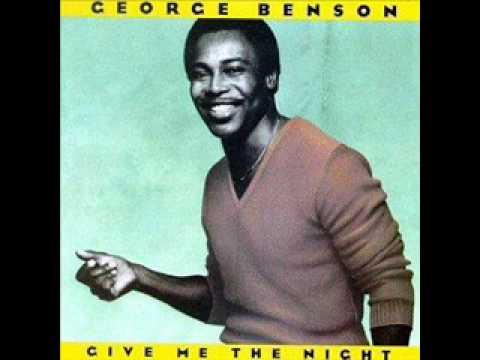
Benson had already conquered the jazz world as a virtuoso guitarist before crossing into mainstream pop success with Breezin' in 1976, an album that became the first jazz record to be certified platinum. By the time Give Me the Night arrived in 1980, produced by Quincy Jones, Benson had established himself as one of the most commercially successful crossover artists of his generation. "Turn Your Love Around" followed as a single from his next studio album, The George Benson Collection, in 1981, and it demonstrated that the momentum built during those landmark years had not faded.
Crafting a Chart-Friendly Gem
"Turn Your Love Around" was written by Bill Champlin, Jay Graydon, and Steve Lukather, three names synonymous with the West Coast studio scene of that era. Graydon in particular was known for crafting polished, radio-ready compositions that could accommodate a vocalist with serious chops without becoming mere vehicle songs. The production gave Benson room to deploy his signature technique of singing in close unison with his guitar lines, a trick he had refined over years of live performance and recording. That guitar-voice interplay is what made his records feel alive in a way that pure studio pop could not replicate.
The arrangement breathes with a quiet confidence. Layered horns, crisp rhythm guitar, and a rhythm section built for the dance floor all coexist without crowding the track. Benson's vocal sits front and center, but his guitar work shimmers in the spaces between phrases. The song does not overstay its welcome, landing its hook and exiting before the listener has time to want anything more.
A Steady Climb to the Peak
The single entered the Billboard Hot 100 on October 24, 1981, debuting at number 86. From there it moved with steady purpose, climbing week by week through the upper reaches of the chart. By February 6, 1982, "Turn Your Love Around" had peaked at number 5, a remarkable achievement during one of the most competitive periods in pop music history. The track spent a total of 22 weeks on the Hot 100, a run that confirmed it as one of the year's most durable radio staples rather than a quick flash of attention.
The song also performed strongly on the R&B charts, where Benson had a loyal following that had tracked his career from his early jazz recordings through his pop breakthrough. Radio programmers across formats found it easy to slot; the production was polished enough for adult contemporary listeners and rhythmically engaging enough for R&B audiences.
Benson at the Height of His Commercial Power
The early 1980s represented the commercial zenith of Benson's career as a pop recording artist. He had proved, across several consecutive albums, that jazz credibility and mainstream chart success were not mutually exclusive. In a market that often forced artists to choose one identity or another, Benson maintained his. He continued to release instrumental guitar recordings alongside his vocal pop material, never abandoning the technique and musicianship that had made him respected in serious musical circles long before the pop world came calling.
"Turn Your Love Around" arrived at a moment when Benson's audience was at its broadest. The record's Grammy Award win for Best R&B Song at the 1983 Grammy ceremony underlined the critical acknowledgment that accompanied its commercial success. It was a song that sounded effortless precisely because the people who made it had spent decades earning that ease.
A Legacy in Smooth Motion
Decades on, "Turn Your Love Around" endures as a touchstone for a certain strain of early-1980s production: sophisticated but accessible, rhythmically alive but never aggressive. It represents a high-water mark for the West Coast session scene's influence on mainstream R&B, and it captures George Benson at a moment when his gifts as both a guitarist and a vocalist were being enjoyed by the widest possible audience. The song occupies a specific and irreplaceable spot in the decade's musical history, a reminder that craftsmanship and charm can carry a record far without needing a gimmick.
Turn it up and let that guitar-voice interplay wash over you. It sounds just as effortless today as it did on those autumn radio afternoons in 1981.
"Turn Your Love Around" — George Benson's singular moment on the 1980s charts.
02 Song Meaning
"Turn Your Love Around" — The Art of Romantic Persuasion
An Invitation, Not a Demand
At its core, "Turn Your Love Around" is a song about romantic persistence delivered without desperation. The narrator addresses a partner who has withdrawn emotionally, urging them to redirect their feelings and reconnect. The appeal is warm, confident, and rhythmically irresistible, which suited George Benson's vocal personality perfectly. There is no anguish in the delivery; instead, the song carries the quiet certainty of someone who believes the relationship is worth fighting for and knows the right notes to make that case.
This kind of romantic optimism was a recurring theme in the smooth R&B of the early 1980s, a genre that often preferred to celebrate connection rather than dwell in heartbreak. The emotional register of the track sits comfortably between desire and reassurance, which gave it broad appeal across age groups and relationship statuses. Whether the listener was newly in love or working to restore something that had cooled, the song offered something useful.
The Language of Smooth R&B
The thematic vocabulary of the song draws on the conventions of soul and R&B love songs stretching back through the 1970s. The idea of turning someone's emotions around, of reversing a cooling or a withdrawal, carries an implicit belief in the speaker's own powers of persuasion. It is a theme that depends on charm as much as sincerity, and Benson's delivery supplied both in abundance. His signature vocal-guitar unison technique reinforced the lyrical message; the instrument and the voice moved as one, suggesting a kind of wholeness that the song's romantic plea was reaching toward.
The production context matters here too. The track's polished sheen, its layered instrumentation and impeccably placed horn accents, created a listening environment that itself felt like a form of romantic persuasion. You could not help but be drawn in by the sound before the words had fully landed.
Romance in a Shifting Cultural Moment
The early 1980s was a complicated time for romantic expression in popular music. New wave and post-punk were pulling toward irony and emotional distance, while mainstream R&B held on to the warmth and directness of the previous decade. Songs like "Turn Your Love Around" served a real cultural function: they offered listeners a space for uncomplicated feeling in an era that was beginning to intellectualize emotion as a matter of artistic credibility.
George Benson occupied an interesting position in that cultural conversation, rooted in jazz tradition and therefore carrying a certain sophistication, but singing for a pop audience that responded most strongly to immediacy and melody. The song threaded that needle. It was knowing without being cold, professional without being sterile.
Why It Resonated Then and Still Holds Up
The lasting appeal of "Turn Your Love Around" rests on simplicity executed at the highest level. The sentiment is clear, the delivery is superb, and the production creates a world the listener wants to inhabit for the duration of the track. Songs that accomplish all three of those things simultaneously are rarer than their apparent ease suggests. Benson and his collaborators understood that the best pop records feel inevitable, as though no other arrangement or vocal approach could possibly have worked.
For listeners discovering the track decades after its 1981 release, it serves as a window into a moment when the gap between jazz musicianship and pop radio was at its narrowest. The song makes that narrowing feel natural rather than forced, which is its deepest artistic accomplishment.
"Turn Your Love Around" — George Benson's singular moment on the 1980s charts.
→ More from George Benson
View all George Benson hits →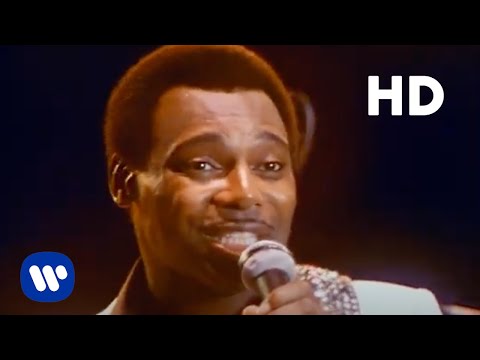


→ More from the 1980s File
View all 1980s hits →
Keep digging