The 1980s File Feature
Don't Look Back
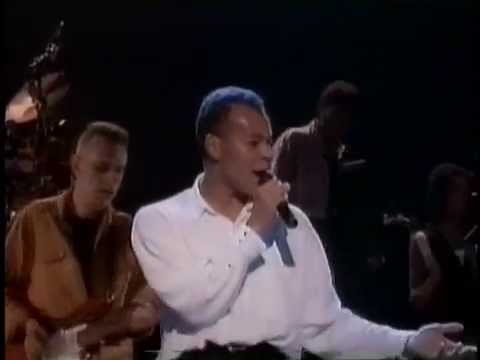
"Don't Look Back" — Fine Young Cannibals Ride the Wave The Summer of Their Success The summer of 1989 belonged to Fine Young Cannibals in a way that few band…
01 The Story
"Don't Look Back" — Fine Young Cannibals Ride the Wave
The Summer of Their Success
The summer of 1989 belonged to Fine Young Cannibals in a way that few bands can claim to have owned a season. The Raw and the Cooked, the Birmingham trio's second and ultimately final studio album, had entered the UK charts in January and the US charts shortly after, and by the time summer arrived the record had achieved something remarkable: it topped the album charts in both the United Kingdom and the United States simultaneously. She Drives Me Crazy had already reached number one on the Hot 100 in March, followed by Good Thing reaching the same peak in May. The band's commercial trajectory was at an extraordinary zenith.
Into this environment, the label released Don't Look Back as a third single from the album, extending a campaign that was already operating at a level most acts never approach. Roland Gift, David Steele, and Andy Cox had constructed a sound so immediately recognizable, so specific in its combination of ska rhythms, soul vocals, and post-punk economy, that each new release felt like an event rather than simply a follow-up.
Roland Gift's Singular Voice
The central reason Fine Young Cannibals registered so powerfully on radio was Roland Gift's voice, one of the genuinely distinctive instruments in British pop of the decade. Gift's falsetto had a quality that was simultaneously vulnerable and commanding, capable of conveying anguish and assertiveness within the same phrase. His style bore the influence of soul and rhythm and blues tradition but filtered through a sensibility formed in the post-punk environs of early-1980s Birmingham, where the lines between genres were more porous than elsewhere.
On Don't Look Back, Gift's vocal performance is at its most controlled, matching the song's forward momentum with a performance that never oversells the emotion. The arrangement, tight and rhythmically precise, gave him the space to work with restraint, trusting the melody to carry the feeling rather than forcing the vocal to do everything.
The Chart Ascent
The single entered the Billboard Hot 100 on August 12, 1989, debuting at number 76. What followed was a steady, impressive climb: the track moved through the chart with consistent upward momentum over twelve weeks, reaching its peak position of number 11 during the week of October 7, 1989. A top-fifteen placement for a third consecutive single from the same album was a commercial performance that underscored how thoroughly Fine Young Cannibals had captured the attention of American radio audiences in 1989.
The twelve-week chart run, longer than the brief viral spike of a novelty hit, reflected the song's staying power with programmers and listeners alike. Radio stations kept returning to it because audiences kept requesting it, a cycle that sustained commercial momentum well into autumn.
Production and Sonic Identity
The album was produced by David Steele and Robin Millar, with additional production by the Cannibals themselves. The sonic approach across The Raw and the Cooked was distinctive in its spareness: tight rhythm arrangements, restrained use of keyboards, and a clear prioritization of the rhythm section as the foundation beneath Gift's vocal. In an era when pop production often favored maximalism, the Cannibals' restraint was itself a statement.
Don't Look Back exemplified this economy. The groove is insistent without being cluttered; the arrangement creates space for the vocal to breathe and for the hook to land without competition. The production decisions that made the track work as a radio record were not accidents; they reflected a coherent aesthetic philosophy applied consistently across the album.
The End of an Extraordinary Run
Fine Young Cannibals would not release another studio album after The Raw and the Cooked. The band essentially ceased active recording after 1989, leaving a discography of just two albums but a commercial and artistic legacy that remains significant. Three top-fifteen Hot 100 singles from a single album release in a single year was an achievement that placed them among the most commercially successful British acts of the late 1980s.
Don't Look Back was the final chapter of that extraordinary run. Press play and hear what it sounded like when one of British pop's most original voices was at the peak of its powers.
"Don't Look Back" — Fine Young Cannibals' singular moment on the 1980s charts.
02 Song Meaning
"Don't Look Back" — Forward Motion as an Emotional Philosophy
The Imperative of Moving Forward
Songs built around the instruction to stop looking backward occupy a particular emotional territory: they acknowledge the pull of the past while insisting on the necessity of release. Don't Look Back operates in this space with the directness that was characteristic of Fine Young Cannibals' best work. The title is both command and encouragement, addressed to someone (a partner, or perhaps the narrator themselves) who risks being held in place by what has already happened. The emotional logic is that forward motion is not a betrayal of the past but a necessary act of self-preservation.
This theme resonated with particular force in the late 1980s, a period when the cultural mood was shifting from the triumphalism of early-decade pop toward something more complicated. The optimism of 1984 and 1985 had been replaced by an awareness that the decade's promises had not been evenly distributed, and songs that insisted on resilience and forward movement were answering a genuine emotional need.
Soul Tradition and Post-Punk Economy
Fine Young Cannibals were formed in Birmingham in 1984 by David Steele and Andy Cox, formerly of The Beat, a ska-influenced post-punk band whose records had been among the most politically engaged of the early 1980s. Roland Gift brought a vocal sensibility rooted in soul and rhythm and blues to a rhythmic framework shaped by that post-punk heritage. The combination produced something that drew from multiple traditions without being reducible to any of them.
On Don't Look Back, the soul influence is most audible in Gift's vocal, which deploys the inflections and emotional directness of that tradition in service of a lyric about personal resilience. The instrumentation retains the post-punk economy: nothing is present that does not need to be, and the silence in the arrangement is as carefully managed as the sound. This disciplined approach to production was central to the Cannibals' aesthetic and is what gives their best recordings a timeless quality that overcomes their period settings.
The Courage Required by the Message
The advice embedded in the song title is simpler to deliver than to receive. Looking forward requires releasing the self from the weight of regret, grievance, and attachment, a process that most people find considerably more difficult in practice than in theory. The song understands this difficulty; the insistence of the chorus, the way it returns to the central instruction with fresh urgency each time, suggests that the message is being delivered to someone who needs to hear it more than once.
This quality, of a lyric that acknowledges the difficulty of the advice it offers, is part of what distinguishes the song from more superficial treatments of the same theme. The track does not promise that moving forward will be easy; it insists only that it is necessary, and delivers that insistence with enough musical conviction to be persuasive.
A Third Chapter from a Singular Album
The Raw and the Cooked produced three chart hits in 1989 because each was sufficiently distinct to offer something new to radio audiences while remaining unmistakably from the same creative source. Don't Look Back was the most rhythmically focused of the three singles, placing its emphasis on groove and forward momentum in a way that complemented the more melodically prominent character of its predecessors. As an album, the sequence of singles told a coherent story about the band's range.
The meaning of Don't Look Back is finally inseparable from its function: a record that moves you forward, physically and emotionally, and reminds you through sheer kinetic energy that motion itself can be a form of consolation. That remains as true now as it was in the autumn of 1989.
→ More from Fine Young Cannibals
View all Fine Young Cannibals hits →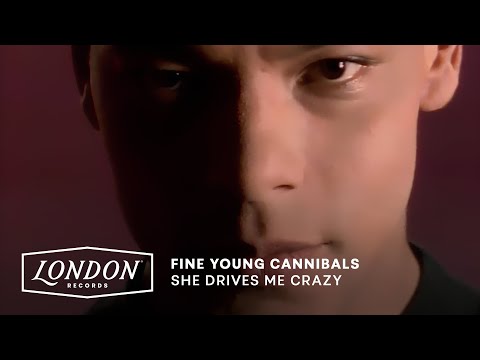
→ More from the 1980s File
View all 1980s hits →
Keep digging