The 1980s File Feature
A Word In Spanish
A Word In Spanish by Elton John There is a moment late in the 1980s when Elton John, one of the most decorated hitmakers in pop history, was quietly working …
01 The Story
"A Word In Spanish" by Elton John
There is a moment late in the 1980s when Elton John, one of the most decorated hitmakers in pop history, was quietly working through a period of reinvention. The flamboyant excess of his 1970s heyday had given way to something more reflective, and in 1988 he released a ballad that traded fireworks for tenderness. "A Word In Spanish" is the sound of a master craftsman dialing the drama down and letting a melody do the speaking.
Where Elton Stood in 1988
By 1988, Elton John had nothing left to prove and yet he kept proving it anyway. The song appeared on his album Reg Strikes Back, a record whose very title nodded to his birth name and signaled a man reclaiming himself after a turbulent stretch. The album marked a comeback of sorts following throat surgery and a period of personal upheaval. His legendary partnership with lyricist Bernie Taupin remained the engine of his best work, and that collaboration shaped this single, pairing Elton's gift for melody with Taupin's evocative words.
A Ballad of Restraint
Musically, "A Word In Spanish" is a lush, romantic ballad built on warm keyboards and a gently swelling arrangement. It avoids the synth-heavy bombast that dominated so much of late-80s radio, opting instead for an old-fashioned sense of craft. Elton's vocal is measured and aching, and the production gives the song room to breathe. The Spanish-language flourishes woven through the arrangement lend it an air of romance and yearning that suits the lyric perfectly.
A Solid Run on the Charts
The single entered the Billboard Hot 100 on September 17, 1988, at number 86, and it made a confident climb. It moved steadily upward through the autumn, passing the 60s and 50s, until it reached its high point. "A Word In Spanish" peaked at number 19 on November 12, 1988, giving Elton another Top 20 entry, and it stayed on the chart for 13 weeks. For an artist with such a deep catalog of hits, it was a respectable showing that confirmed his continued relevance.
Craft Against the Tide
To appreciate this song fully, it helps to remember what late-80s pop radio actually sounded like. The charts were thick with drum machines, gated reverb, and the glossy synthetic textures that defined the decade's production. A traditional piano-and-voice ballad rooted in the songwriting craft of an earlier era could easily have sounded out of step. Yet that very quality became its strength. The song offered a kind of warmth and human scale that the surrounding hits often lacked, a reminder that a great melody and a heartfelt vocal never go out of style. Elton was not chasing the trend so much as standing apart from it, trusting in the durable values of songwriting that had carried him for two decades. That confidence reads in every restrained bar.
A Quiet Entry in a Towering Catalog
In the vast landscape of Elton John's discography, this song is not among his most celebrated, but it occupies a meaningful place as a marker of his late-80s resurgence. It showed that, even decades into his career, he could still deliver a graceful, heartfelt ballad that connected with the public. The song stands as a reminder that Elton's gift for melody never dimmed, even as the trends around him shifted. For longtime fans, it is the kind of deep-catalog gem that rewards rediscovery, a tender ballad that proves his late-period work held real treasures beyond the headline hits. It belongs to the story of an artist who kept making fine records long after he had nothing left to prove.
Press play and let those gentle keyboards carry you, and you will hear one of pop's great melodists choosing tenderness over spectacle.
"A Word In Spanish" — Elton John's singular moment on the 1980s charts.
02 Song Meaning
The Meaning of "A Word In Spanish" by Elton John
"A Word In Spanish" turns on a simple and poignant idea: that some feelings are too large for ordinary language, and that romance reaches for another tongue when the everyday one falls short. It is a meditation on the limits of words and the universality of love.
When Language Fails
The central conceit is that the singer cannot quite say what he feels in plain English, so he reaches for Spanish, a language he associates with passion and romance. The song treats Spanish as the language of the heart, the place feeling goes when ordinary expression runs out. There is something humble and tender in this admission, the sense of a man straining to communicate something deeper than vocabulary allows.
Romance and Longing
At its emotional core, the song is about devotion and the ache of wanting to be understood. The lyrics, penned by Bernie Taupin, frame love as something almost beyond articulation, a force that demands more than the familiar words can hold. The yearning in the song is for connection, for the listener to grasp the depth of feeling behind the singer's halting attempts to explain it.
The Idea of a Universal Language
Beneath the romance lies a gentle observation about love as a shared human experience that crosses borders. By invoking another language, the song suggests that emotion is universal even when the words are not. It is a quietly inclusive idea, the notion that feeling transcends the particular sounds we use to name it.
The Romance of the Foreign Tongue
The choice of Spanish specifically carries its own resonance, and it is worth lingering on. Across decades of English-language pop, Spanish has often been invoked as the language of passion, the tongue associated with heat, romance, and uninhibited feeling. By reaching for it, the singer borrows that whole emotional vocabulary, signaling that his feelings have outgrown the polite restraint of his native speech. There is a kind of vulnerability in this gesture, an admission that he needs a richer, warmer language to do his love justice. The song never tips into cliche because the longing underneath it feels genuine, and the Spanish flourishes in the arrangement reinforce the idea musically rather than merely decoratively.
Why It Connected
The song resonated because almost everyone has felt the frustration of being unable to express something deeply felt. It dignifies that struggle and turns it into a thing of beauty. Paired with Elton's tender melody, the sentiment found a warm reception among listeners who recognized the difficulty of putting love into words. It speaks to anyone who has ever stood before someone they cared for and found that ordinary language simply would not stretch far enough to hold the feeling.
→ More from Elton John
View all Elton John hits →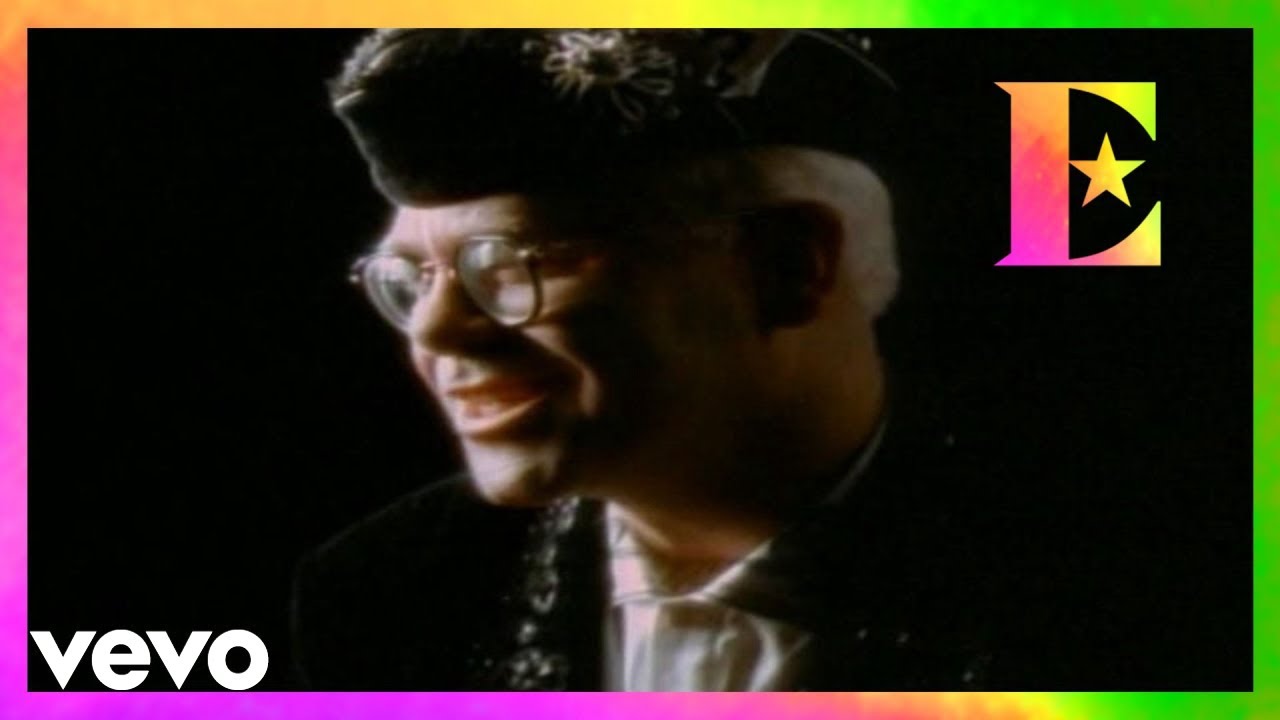




→ More from the 1980s File
View all 1980s hits →
Keep digging